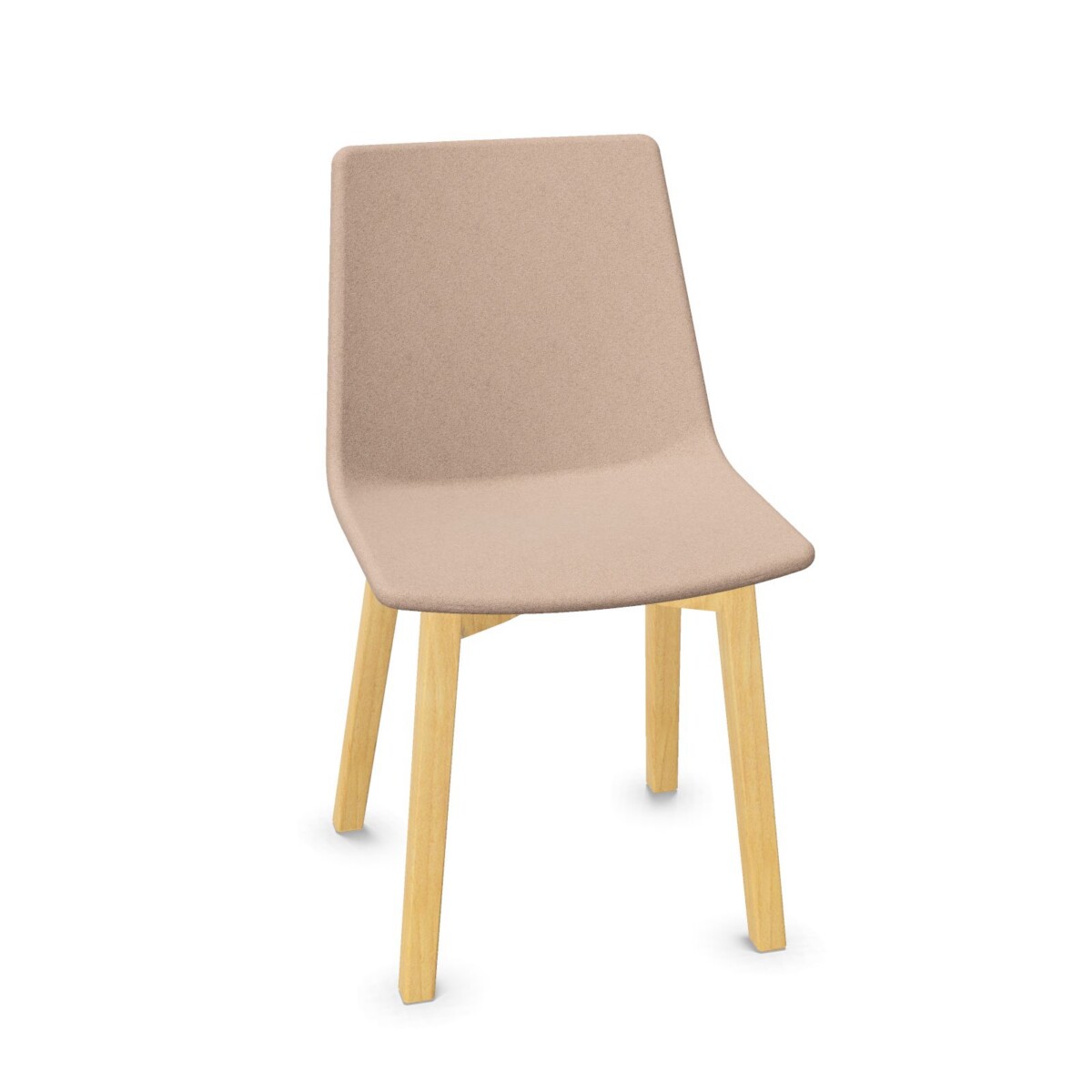
Where Gaber Akami chairs work well
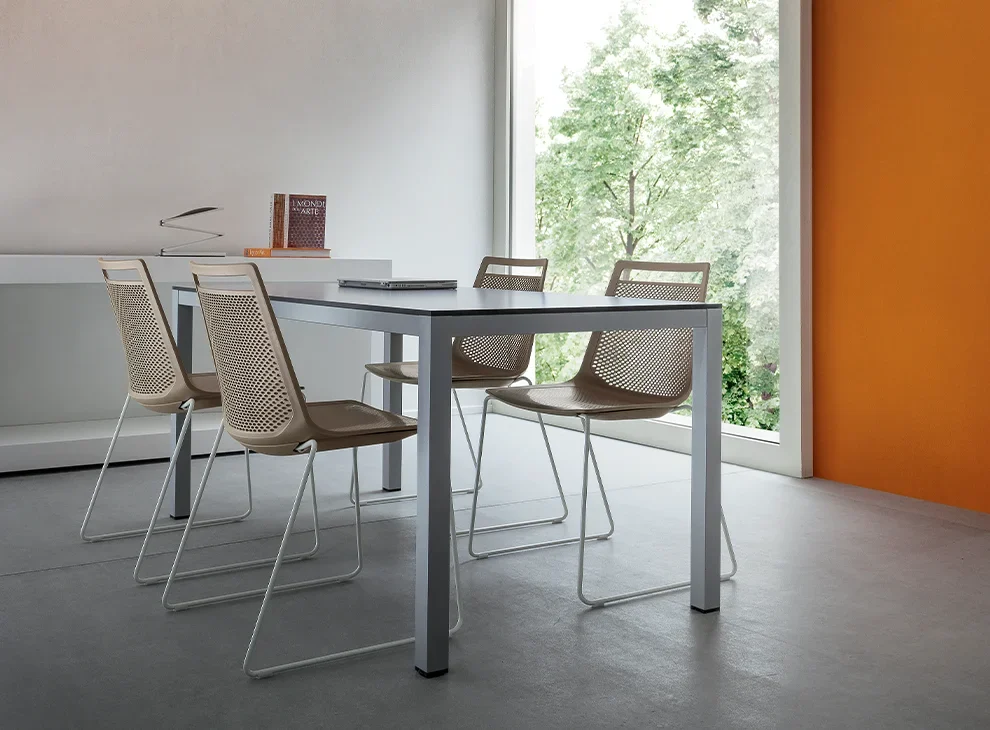
The Akami family is a useful choice for canteens, break rooms and dining areas where chairs need to be moved, arranged and used repeatedly throughout the day. Its multipurpose format also suits meeting rooms, informal collaboration areas and training rooms that require a consistent seating layout.
Because the chairs have no armrests, they can be positioned close to one another or tucked beneath tables more easily than many task or conference chairs. The fixed construction can also help simplify planning for spaces where users do not need individual ergonomic adjustments.
How to choose between the models
Choose the unupholstered model for practical maintenance
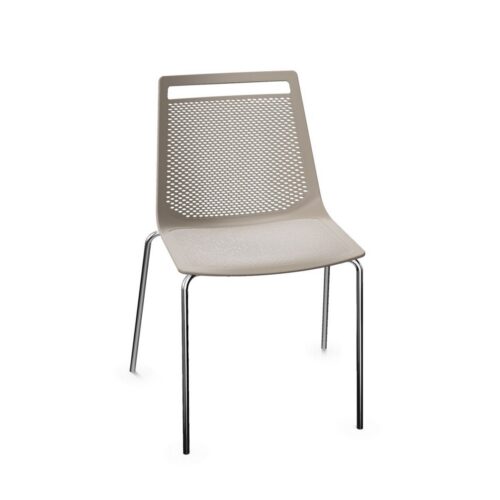
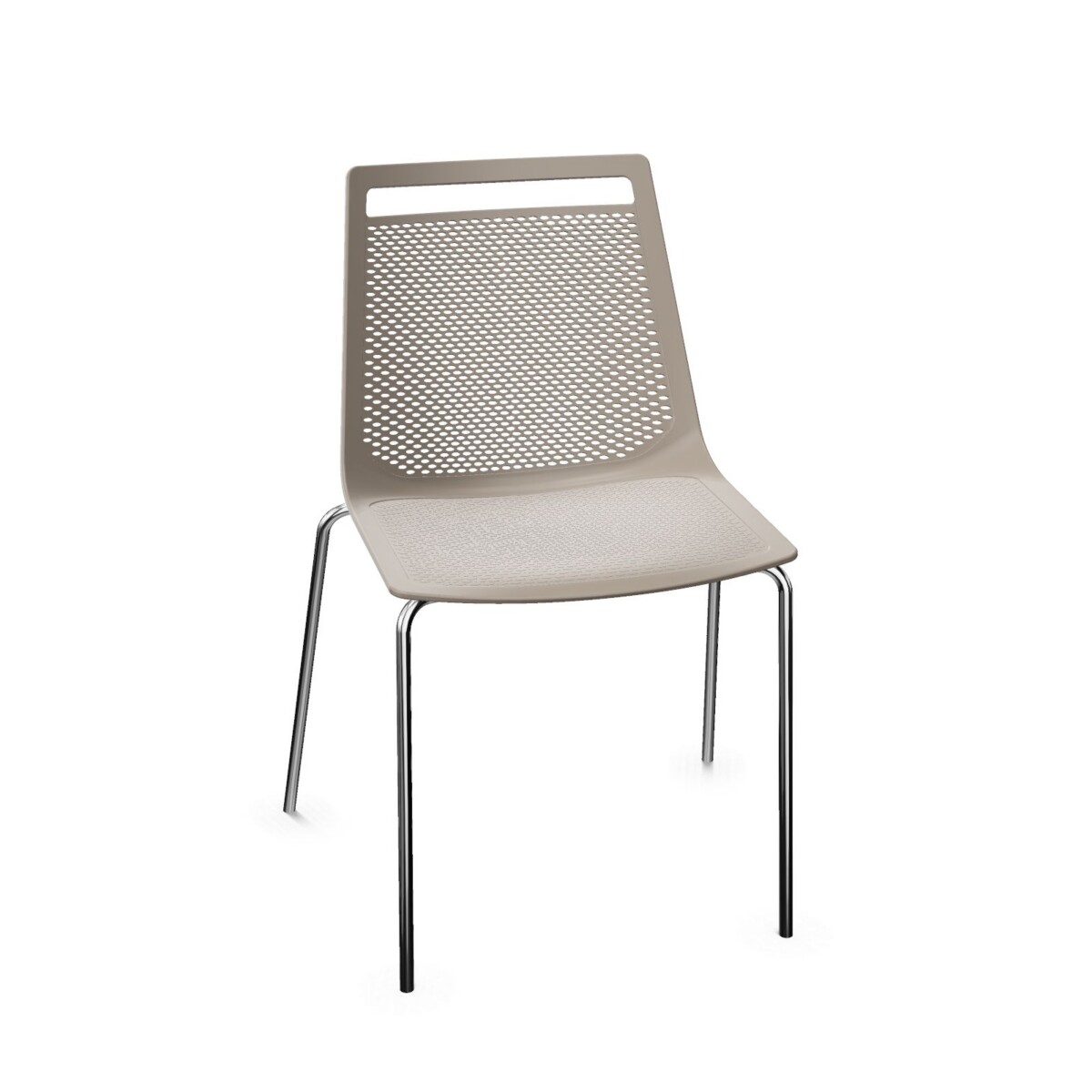
The Akami 4-Leg Without Armrests model uses a polypropylene shell with a chromed steel frame. Its no-upholstery construction is a sensible fit for busy dining and shared areas where a wipe-clean surface and straightforward specification are important. It is 47 cm wide and has a 46 cm seat height.
Choose the upholstered model for added softness
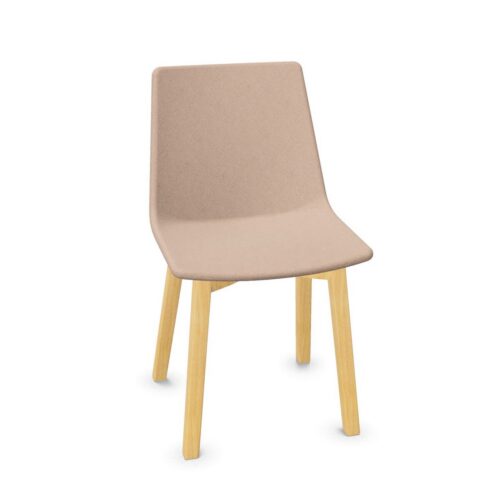
The Akami Upholstered 4-Leg model has a wooden structure and fabric upholstery. Select it when the room calls for a warmer visual character or a softer contact surface, such as in meeting, hospitality or lounge-adjacent settings. It is 46 cm wide and has a 47 cm seat height.
Materials, colours and practical details
Available upholstery colours across the collection include beige, black, blue, brown, green, grey, pink, purple, red, gold and orange. Base finishes are listed in black, grey, silver, white and wood, while the exact combination depends on the selected model and finish configuration. The collection includes plastic, fabric, metal, steel and wood material options.
The chairs are listed with a maximum ballast of 135 kg and a two-year warranty. Circularity is also listed as yes, and fire resistance is specified as Fire Retardant Class 1 IM in the available product facts. Check the relevant catalogue and materials documentation for the exact finish, colour and configuration before ordering.
What to check before specifying
- Measure the table and circulation area to confirm that the 46 or 47 cm chair width works for the planned layout.
- Compare the 46 and 47 cm seat heights with the tables being used.
- Decide whether polypropylene, fabric upholstery or a wooden appearance best suits maintenance needs and room atmosphere.
- Confirm the selected colour and base finish, especially when matching an existing interior scheme.
- Review the available catalogue, user manual and colours and materials documentation for the chosen model.
Myntwork offers Gaber Akami chairs on a monthly lease, allowing businesses to equip shared spaces without treating the seating as a one-off purchasing decision.
Frequently asked questions about Gaber Canteen Chair Akami
What is the main difference between the two Gaber Akami chairs?
The unupholstered model has a polypropylene shell and chromed steel frame, while the upholstered model has a wooden structure with fabric upholstery. Both are armless, four-leg multipurpose chairs without adjustment mechanisms.
Which Gaber Akami chair is easier to maintain?
The polypropylene, no-upholstery model is generally the more straightforward choice for busy canteens and shared areas where a simple surface is preferred. Always follow the care guidance for the selected finish.
Are Gaber Akami chairs suitable for meeting rooms?
Yes. Their fixed four-leg construction and armless format suit meeting, training and collaboration rooms where users do not require adjustable seat height, seat depth, lumbar support or armrests.
Do the Akami models have the same dimensions?
No. The unupholstered chair is listed as 47 cm wide with a 46 cm seat height. The upholstered chair is listed as 46 cm wide with a 47 cm seat height.
What should I confirm before ordering an Akami chair?
Check the required seat height, available floor space, upholstery or shell material, colour, base finish and the documentation for the exact configuration. The listed maximum ballast is 135 kg and the warranty is two years.