Aluminum-colored bases are a finish option on selected desks and a round meeting table. The value describes the visible support beneath the top. It does not tell you the colour of the work surface or prove that the entire frame is made from aluminium. In this selection, straight and corner electrically adjustable desks sit alongside a fixed round table. Their bases are seen and used in different ways, so start with the task and the room layout before deciding how the shared finish should connect them.
Read colour and material separately
Aluminum-colored bases describe appearance, while base material identifies construction. The adjustable desks in this group list steel as their base material and aluminum as a colour option. The round table has metal legs with an aluminum-colour option. A metallic-looking finish should therefore not be treated as a material certificate. If the precise metal or coating matters, check the selected configuration’s specification rather than inferring it from the colour name.
Use the straight adjustable desk well
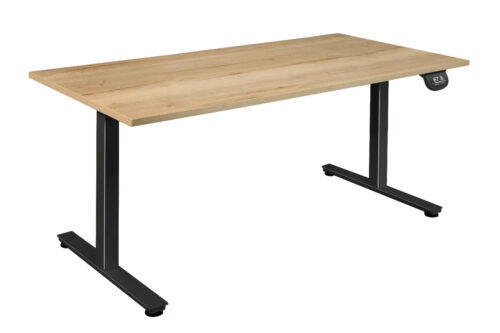
The straight desk gives one user a regular working edge and an electrically adjustable top. Its steel frame may be specified with an aluminum-colour finish, while the melamine top is a separate surface decision. Lay out the screen, keyboard and documents first. Then check where the user sits, where the frame meets the floor and how much of its finish remains visible. The selected base colour should support a workable station rather than dictate the placement of equipment.
Height changes affect the relationship between the desk, its cables and neighbouring furniture. Follow the route from equipment to power at both seated and standing positions. The desk is described as suitable for a cable tray, but that does not mean a tray is supplied with every version. Confirm the chosen accessories and allow space for the chair, the moving top and access to the cables. Aluminum-colored bases are useful here only as part of a desk that can operate without obstruction.
Fit the corner desk to its position
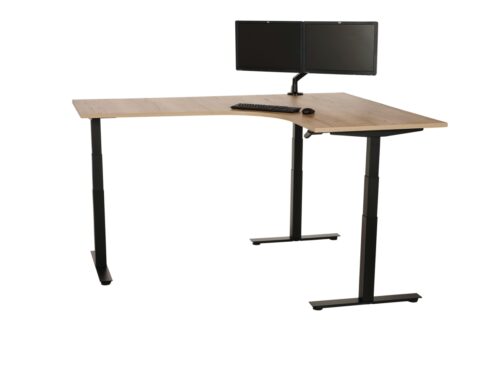
The corner desk is also electrically adjustable and has a steel base beneath a melamine top. Its extended surface changes the user’s reach and the route around the workstation. Decide which way the corner should face before comparing finishes. If the return falls against a wall, check the position of screens and frequently used materials. If it projects into the room, leave a clear path around its outer edge.
An aluminum-colour frame can link straight and corner workstations visually, but their shapes expose different parts of the support. The return may hide one leg while another sits closer to a chair or storage unit. Review the desk with the chair pulled out and equipment in place. Confirm the finish on the selected version; related desks may also be offered with other base colours. This prevents a room plan from relying on a finish that was never specified.
Arrange the round meeting table
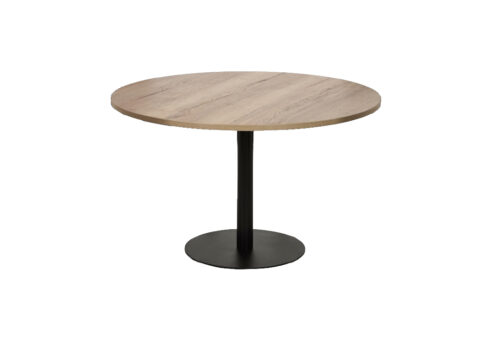
The round table serves shared conversation rather than height-adjustable desk work. It has a fixed structure, a melamine top and metal legs; aluminum is an option for the leg colour. Place the table where people can approach it from the needed sides. Check where chairs can sit without meeting a leg and how far they move back when someone stands. The base is part of that practical arrangement, not simply a matching detail.
A circular top can make it easy for a group to face the centre, but doors, screens and other furniture still determine the usable seating positions. Consider whether the surface needs space for documents or small devices. The aluminum-colour legs may relate to nearby desk frames, while the table keeps its own purpose and fixed height. Do not assume that a common base colour makes the desk and table interchangeable.
Coordinate the finish across the room
Compare aluminum-colored bases with the chosen tops, floor and adjacent furniture. The desks and table have melamine tops, but their shapes and surface options remain separate choices. A related frame finish can give the work and meeting areas a visual connection without making every component identical. Look from seated positions and main walking routes; a support visible in one view may disappear behind chairs in another.
Choose aluminum-colored bases only for the exact desk or table configuration under review. Confirm the finish on the supporting parts and check the top, frame material and accessories separately. That keeps the colour choice tied to the furniture people will use.