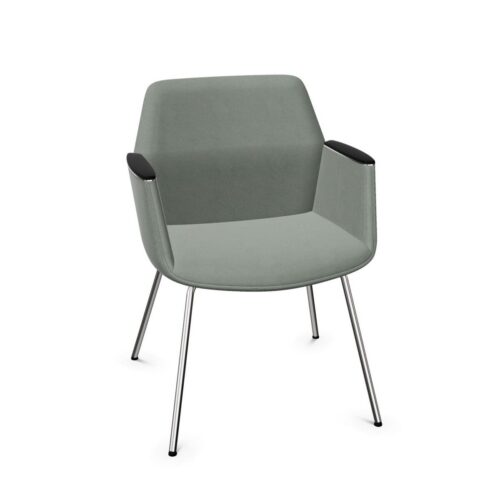
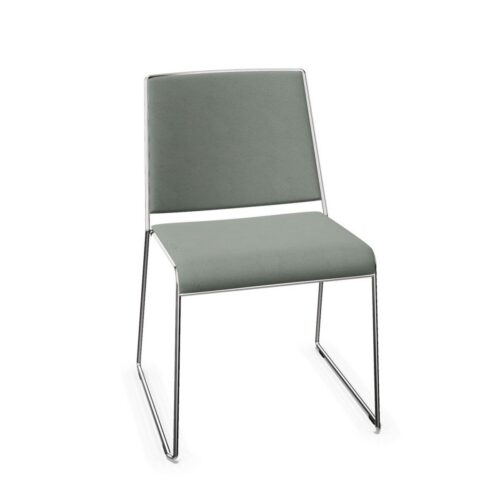
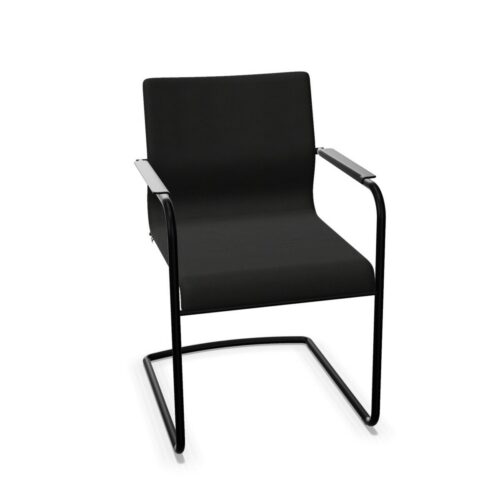
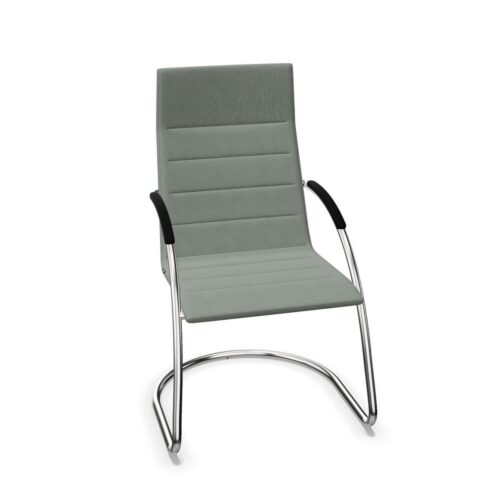
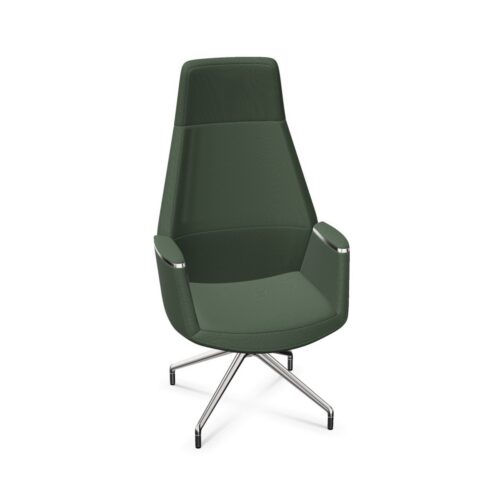
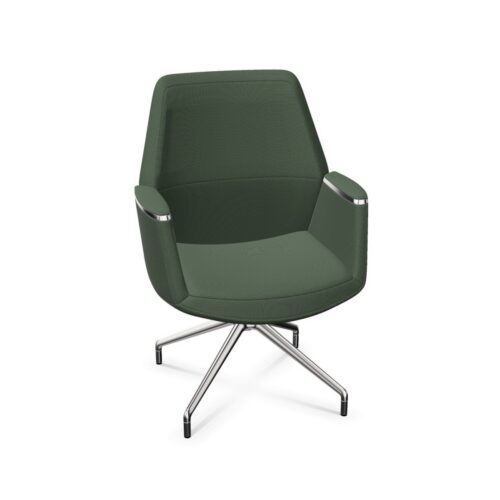
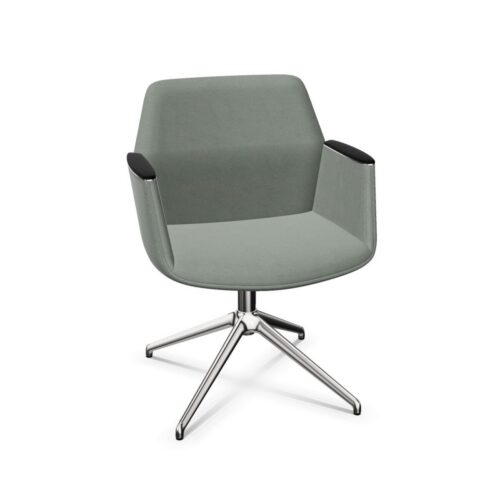
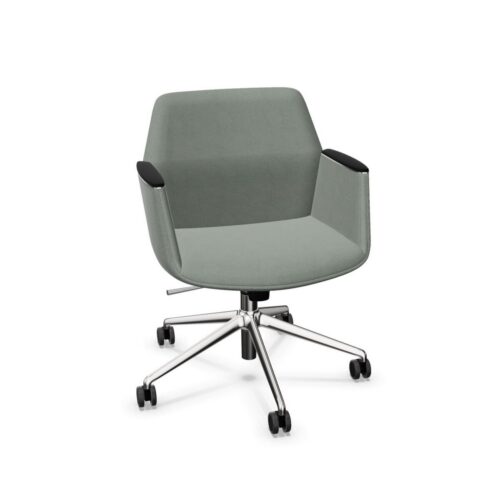
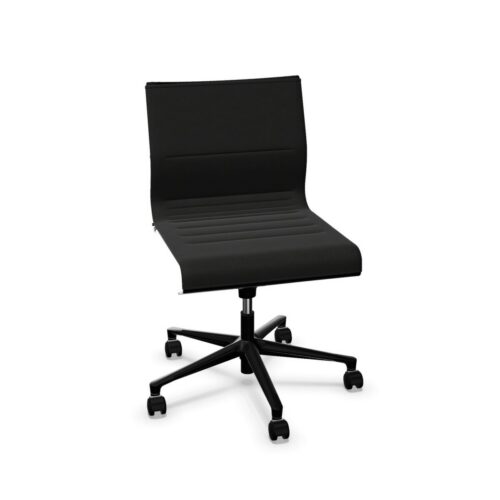
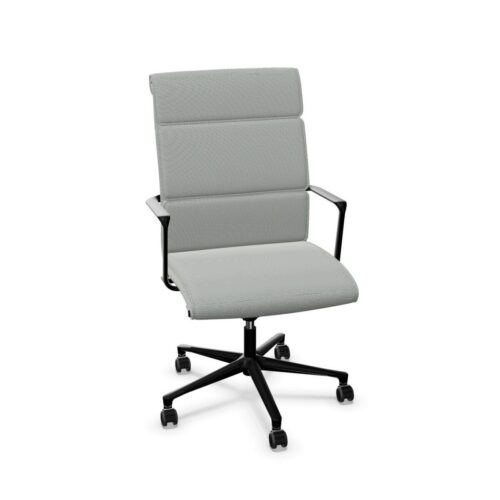
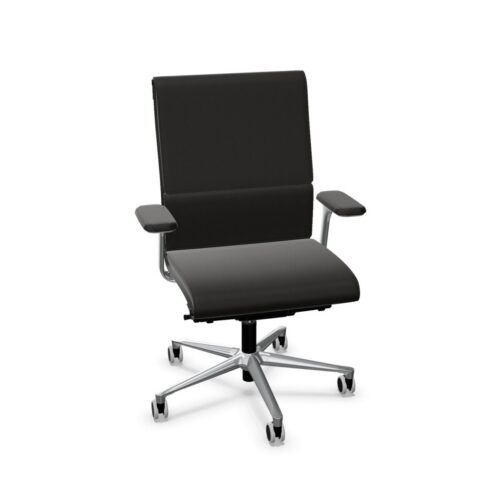
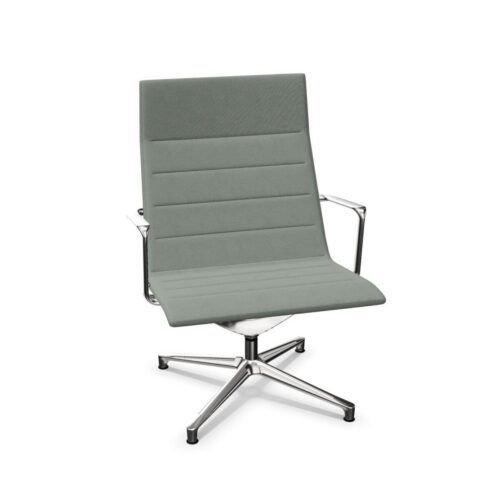
BS 7176 Medium Hazard seating appears across office, executive and conference chairs. The category belongs to the British specification for ignition resistance of non-domestic upholstered seating, assessed using upholstery composites. It is relevant when a project’s fire brief calls for that level. The category does not mean the chair is fireproof, and the tested cover-and-filling combination must match the version selected.
Match the category to the room brief
Medium Hazard is one of the categories used in BS 7176. The category required for a room depends on the use and the responsible fire assessment. It should not be chosen solely because a chair is described as an office chair or because another room used the same level. State the requirement explicitly in the furniture schedule. This helps distinguish a room requirement from a general description of the seating range. It also makes later substitutions easier to assess: a replacement chair needs evidence for the same brief, not just a similar appearance.
For BS 7176 Medium Hazard seating, review the test report or supplier evidence. Look for the standard, hazard level, cover material, filling and any conditions of the result. A change of upholstery colour may be covered if the construction and evidence say so; a different fabric should not be assumed equivalent without confirmation.
Consider daily desk work
A swivel task chair serves an individual desk and may be used for long periods. Compare the adjustments, seat support and back shape with the user and work surface. Armrests need to relate to the desk edge, while the base needs room to move around storage and cables. The fire classification is one requirement among these practical checks.
BS 7176 Medium Hazard seating includes chair forms with mesh and upholstered parts. Examine the exact combination being supplied, especially when a mesh back is paired with an upholstered seat. Evidence for one material assembly should not be treated as a statement about every chair that shares a frame.
Plan conference seating around the group
Four-star, cantilever and conventional meeting chairs change how people enter a room and face a presentation. Choose a base and seat form for the expected meeting length and frequency of rearrangement. Check how armrests fit at the table and leave a route behind occupied chairs. A chair at the end of a table may need to turn toward a screen, while one along the side may remain mostly forward-facing. Small differences in movement can affect the best base choice.
Within BS 7176 Medium Hazard seating, a consistent upholstered finish can relate desk and conference areas. Still, the seating construction may differ. Verify the fire evidence for the specific conference chair rather than borrowing a task-chair report based on appearance.
Keep executive chairs functional
A high-back executive chair may be visually prominent, but its fit at the desk is still the central question. Check the height range, movement, and the way the user turns toward visitors or a nearby table. A chair that suits a private room should not crowd the route around the desk.
Material selection can change both the visual result and the tested upholstery composite. Confirm the precise fabric or leather option and any padding difference before keeping a Medium Hazard claim on the final schedule. The chair’s documentation should follow the chosen version through the project. Keep the report reference beside the fabric code so a later finish change triggers a real check rather than an assumption.
Review the occupied layout and records
When several upholstered chairs fill a room, circulation becomes part of the design. Check doors, routes and the area behind pulled-out seats. The fire strategy for the building also extends beyond the material test for any one chair, so coordinate the furniture specification with the relevant project requirements.
BS 7176 Medium Hazard seating can help meet a defined non-domestic furniture brief. Choose chairs that support the people and activities first, then verify that the selected cover, filling and model have suitable evidence for the required category. Keep both the room plan and the test documents available for review.