Planning an ICF Meeting table
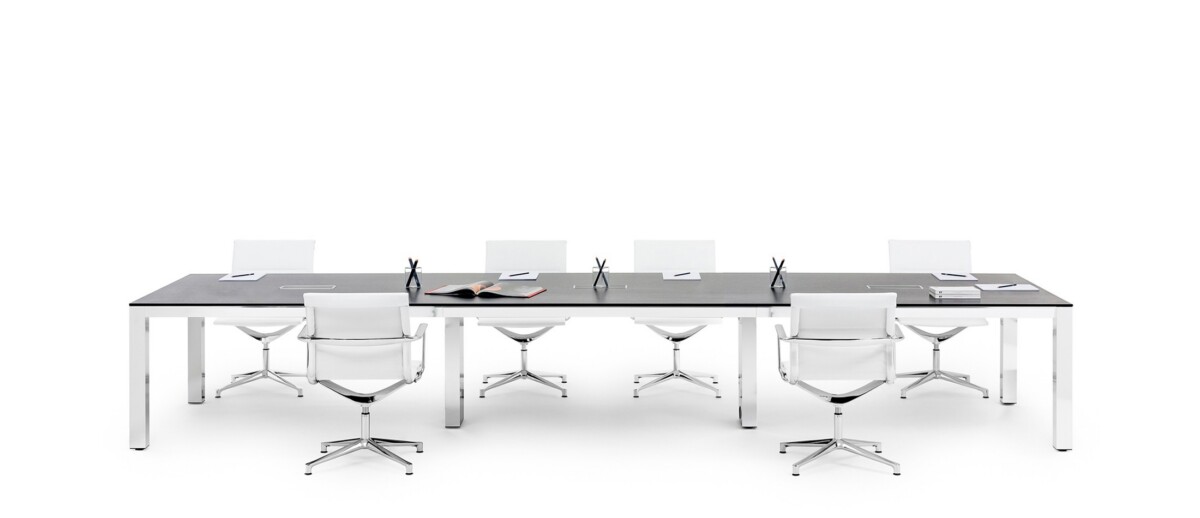
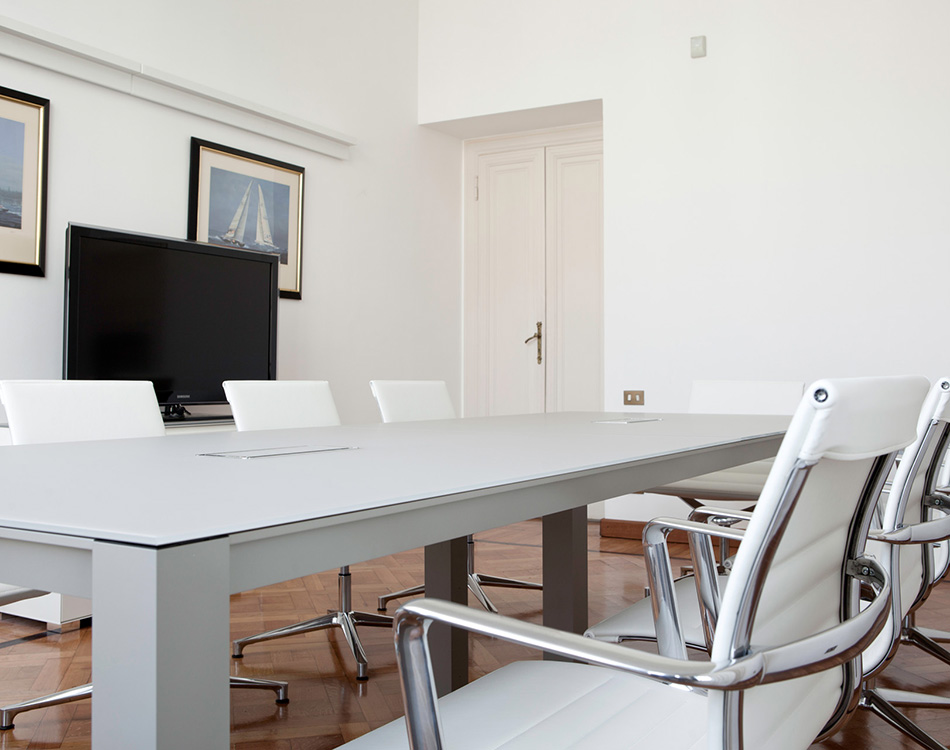
Start by estimating how many people need to sit comfortably at the table during a typical meeting. The collection includes options for 6, 8, 10, 12, 16, and 18 people, but the right capacity depends on the room layout as well as the number of seats. Leave sufficient space around the table for chairs, movement, doors, and nearby storage.
Next, compare the available dimensions. Widths run from 200 to 560 cm, while depths are 120 or 140 cm. Larger tables can support more participants and shared materials, but a smaller format may create better circulation in a compact meeting room. Confirm the room measurements before selecting a configuration.
How the collection models differ
Shape and meeting style
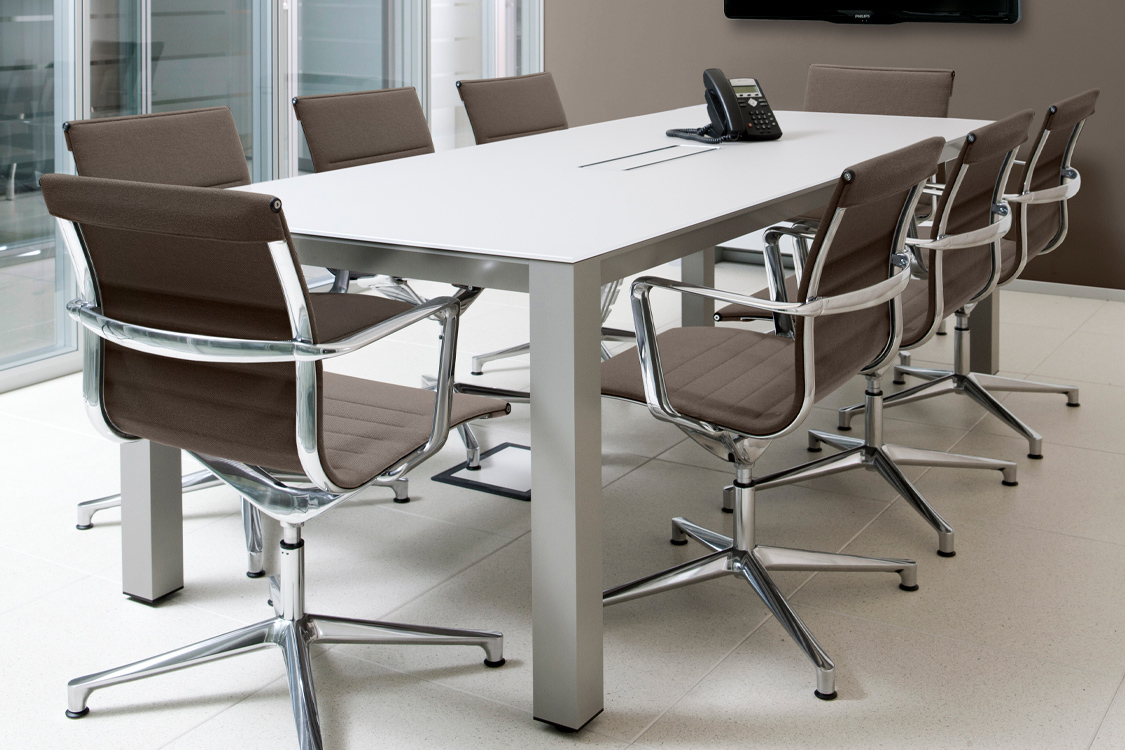
Oval tops can soften the visual presence of a large table and support face-to-face discussion around the perimeter. The family also includes rectangular meeting formats with oval tops, giving planners another way to balance a formal layout with less angular seating positions. A circular configuration is also represented in the collection attributes.
Height and base design
For conventional conference rooms, consider the standard-height oval-top table options. The high meeting configuration is intended for a more upright meeting posture and may suit touchdown discussions or spaces that use taller seating. The frames are steel and are listed as either four-leg or straight-leg designs, so check the specific model details when leg placement and under-table clearance matter.
Materials, colors, and cable management
Table tops are available in melamine or HPL according to the collection attributes, with surface colors including beige, black, brown, grey, and white. Steel bases are offered in black, grey, blue, brown, green, and white. Match the top and base finishes to the surrounding furniture, or use contrast to make the meeting area more visually distinct.
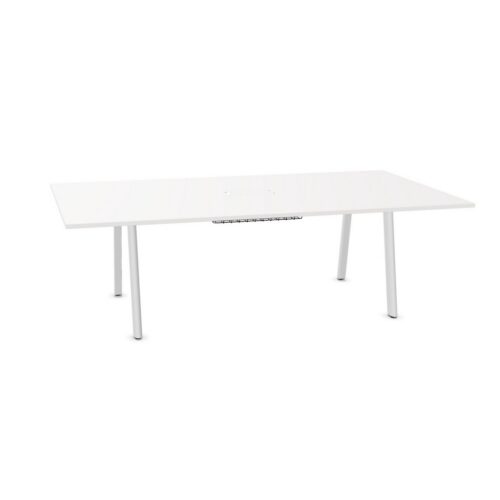
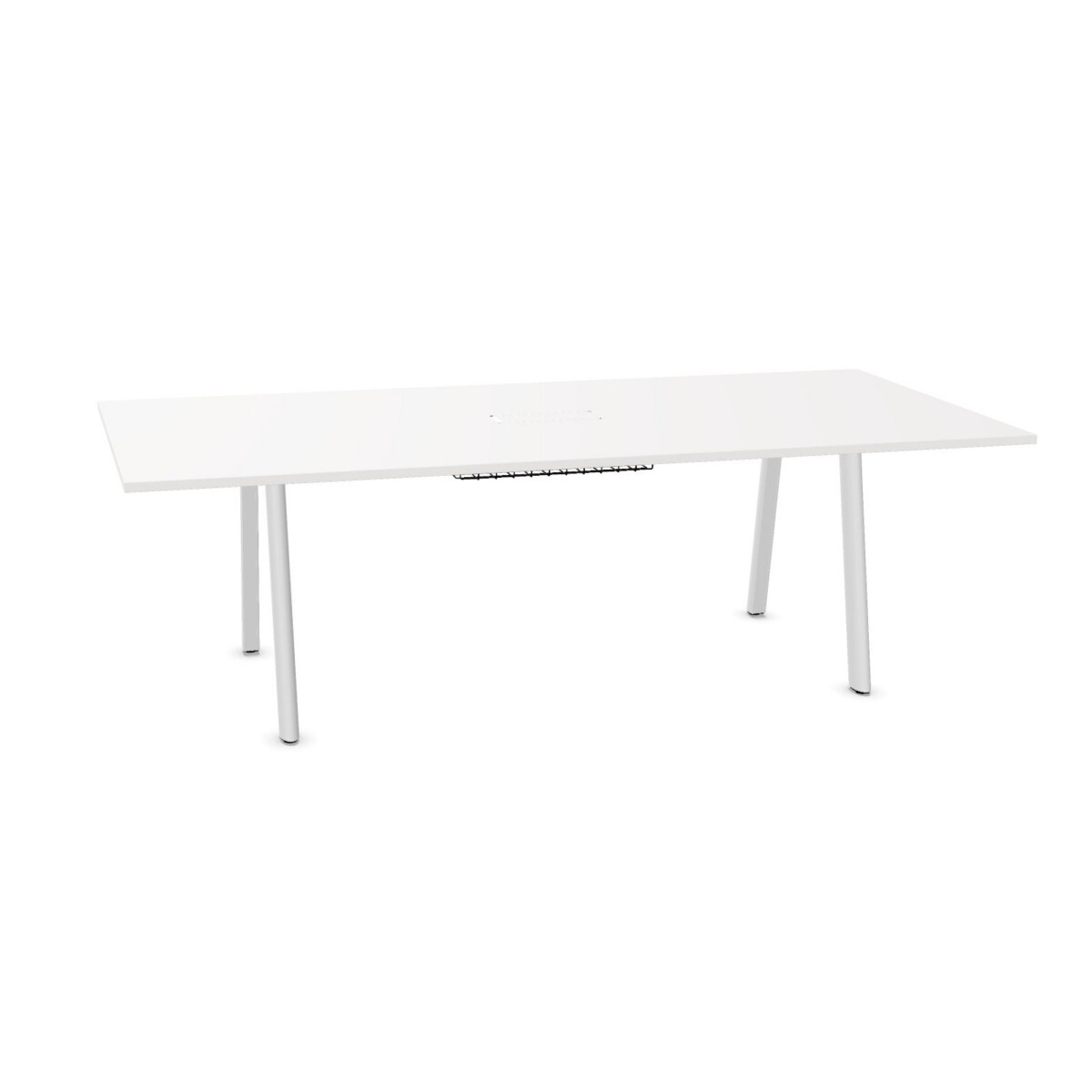
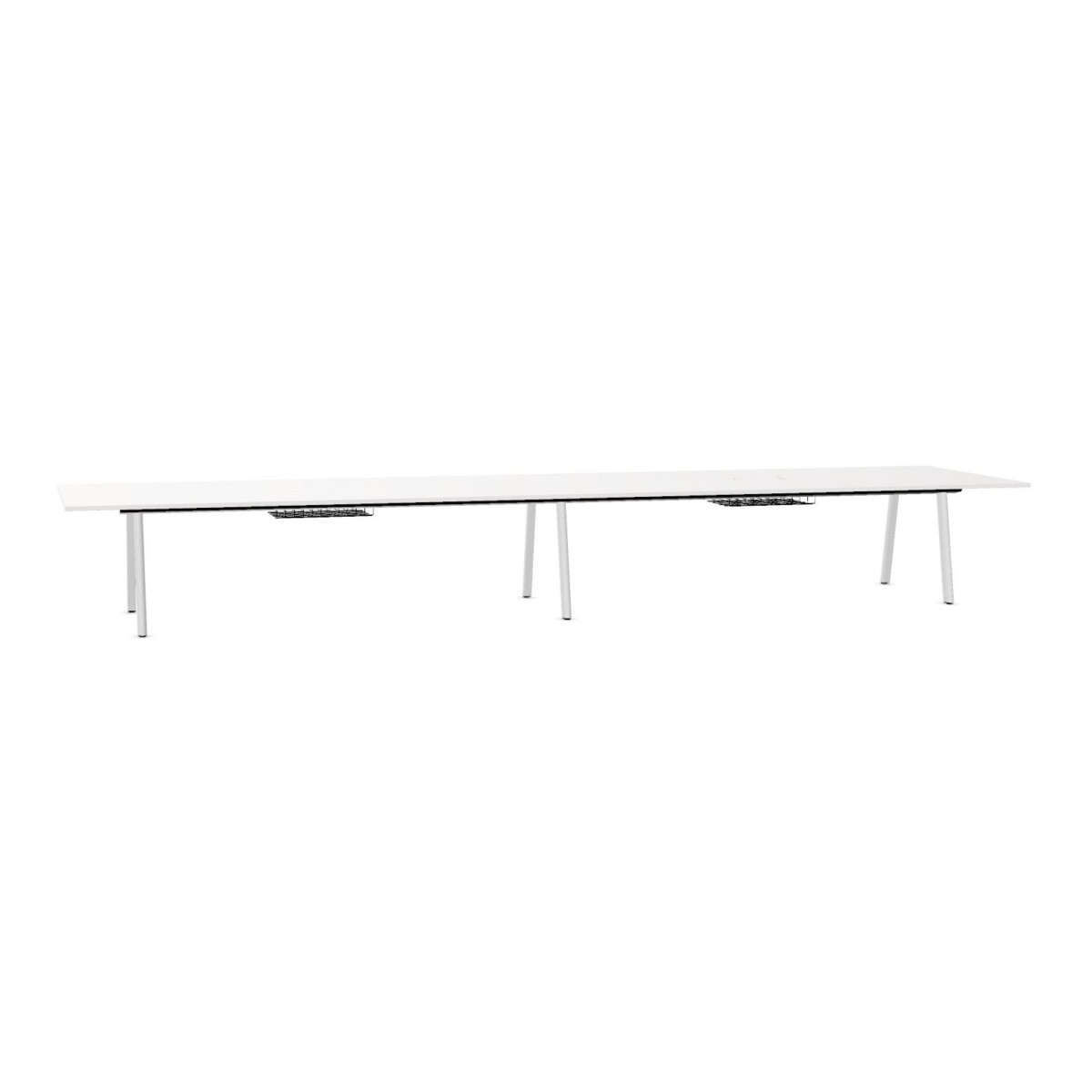
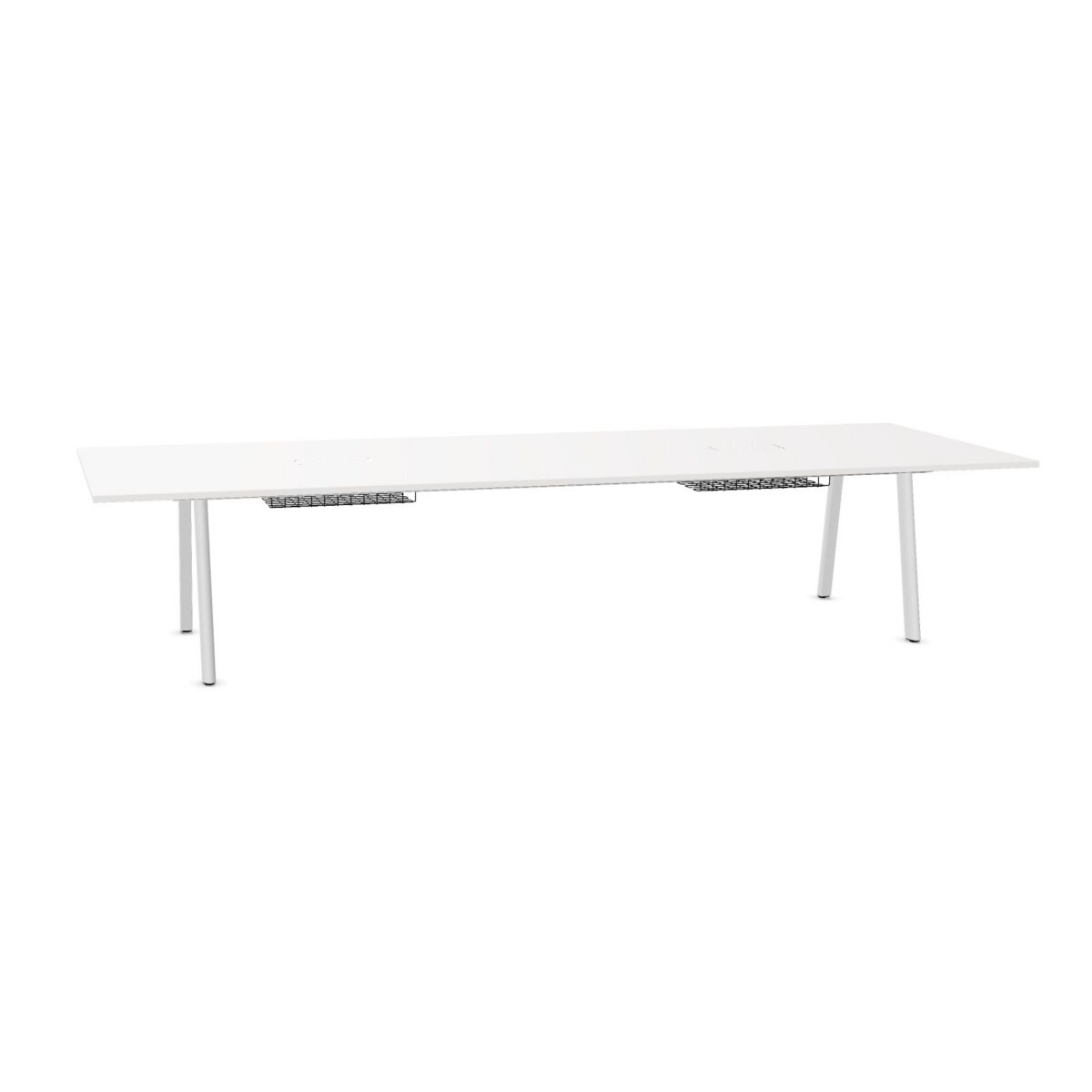
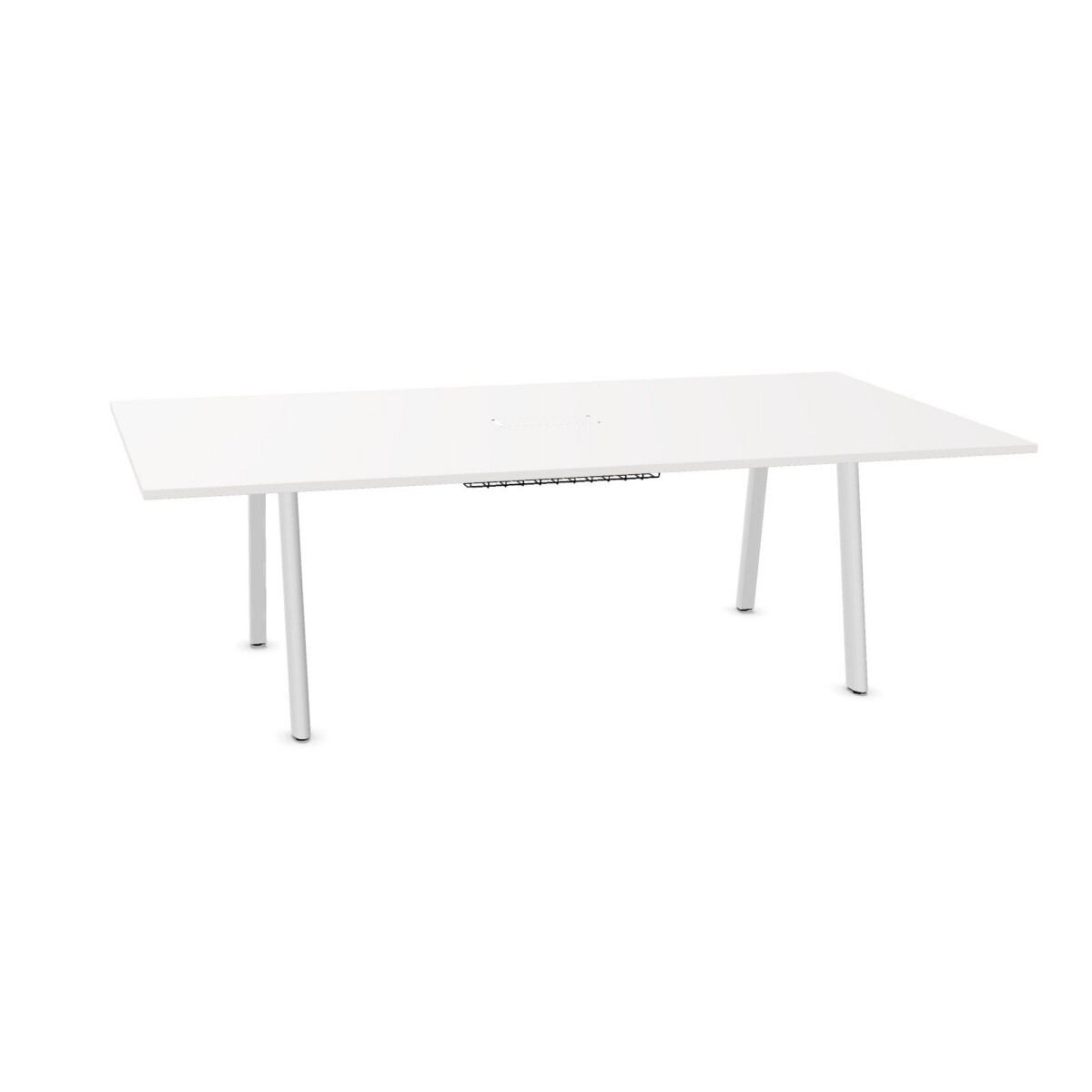
All listed options are suitable for a cable tray, but the tray is not included. If meetings rely on laptops, displays, or conferencing equipment, plan the cable route and check how the selected configuration accommodates power and data access before ordering.
What to check before specifying
- Confirm the required seating capacity and whether the table will be used for formal meetings, workshops, or standing-height collaboration.
- Measure the room, including circulation zones, door swings, chair clearance, and access routes for installation.
- Review the selected top shape, width, depth, height, frame type, and finish rather than relying only on the collection name.
- Decide whether a separate cable tray is needed, since cable-tray compatibility does not mean the accessory is included.
- Use the available dimensions and user-manual or dimensions documentation to validate the final specification.
Myntwork offers ICF Meeting conference tables on a monthly lease, giving businesses a practical way to equip meeting spaces while keeping the specification aligned with current workplace needs.
Frequently asked questions about ICF Conference Table Meeting
How do I choose the right ICF Meeting table size?
Begin with the number of regular users, then check the available widths from 200 to 560 cm and depths of 120 or 140 cm. Allow additional room for chairs, movement, doors, and surrounding furniture.
Are ICF Meeting tables available in different heights?
Yes. The collection includes a standard-height oval-top option and a high meeting configuration. Choose based on the intended posture, seating type, and room use.
Which table shapes are available in the ICF Meeting family?
The collection includes oval-top designs and rectangular meeting formats with oval tops. Circular is also listed in the collection attributes, so confirm the specific shape on the model you are considering.
Can these conference tables support cable management?
Yes. The tables are listed as suitable for a cable tray, but the tray is not included. Check the selected model and plan the required cable-management accessories separately.
What top and base finishes can I specify?
The collection attributes list melamine and HPL tops, with beige, black, brown, grey, and white surface colors. Steel bases are listed in black, grey, blue, brown, green, and white.