Where Gaber Bakhita chairs can be used
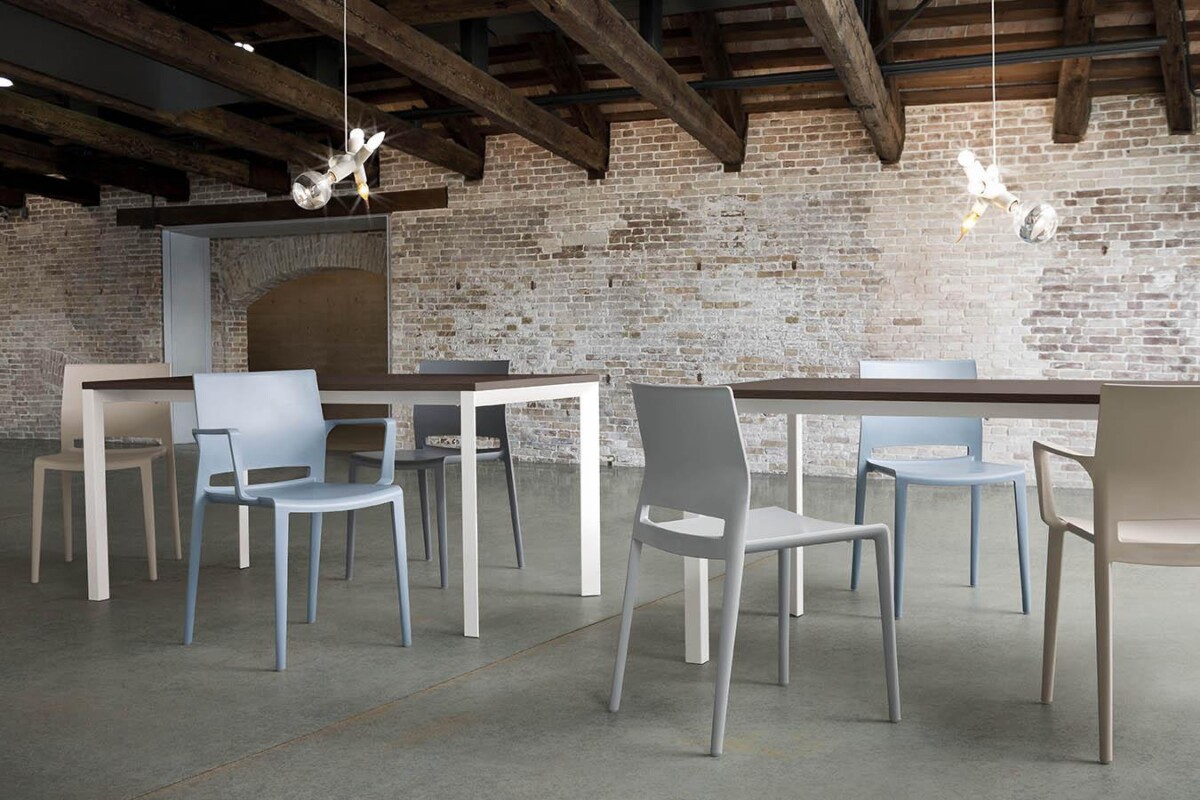
The Bakhita collection is suited to workplaces that need flexible seating rather than task-chair adjustment. Use the armless model around meeting tables, in visitor areas, near collaboration points, or in rooms that need chairs to be stored and rearranged regularly. Its four-leg footprint provides a familiar format for general-purpose seating.
The armrest model can be considered for reception lounges, discussion rooms, waiting areas, and meeting settings where a little more upper-body support is useful. Since neither chair has a mechanism or adjustable seat height, they are best treated as shared visitor and multipurpose chairs rather than replacements for ergonomic workstations.
How to choose between the Bakhita models
Choose the armless chair when flexibility comes first
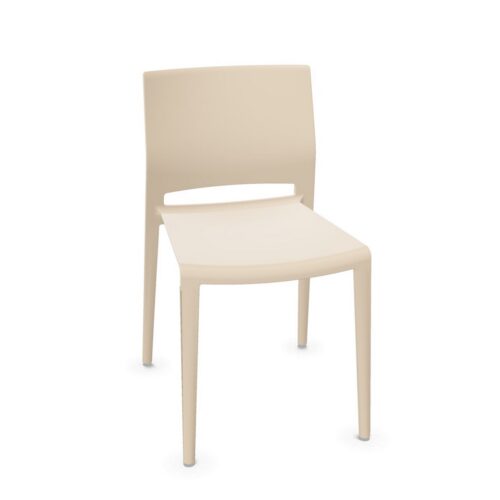
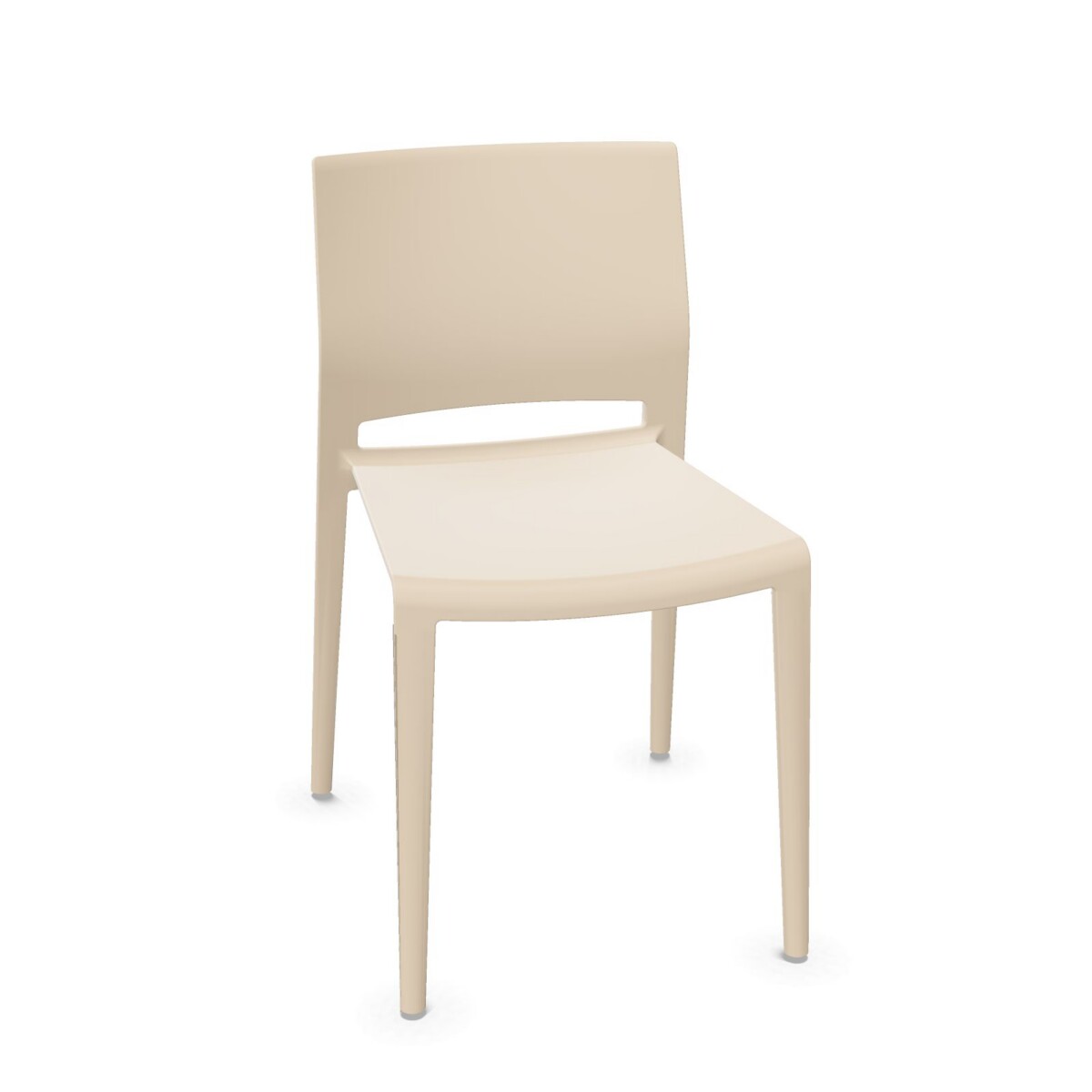
The armless Gaber 4-Leg Chair is the more open configuration. It can make it easier to position chairs side by side, move them around tables, and accommodate different furniture arrangements. It is a practical choice for rooms that change function or need a clean, uncluttered appearance.
Choose armrests for added seating support
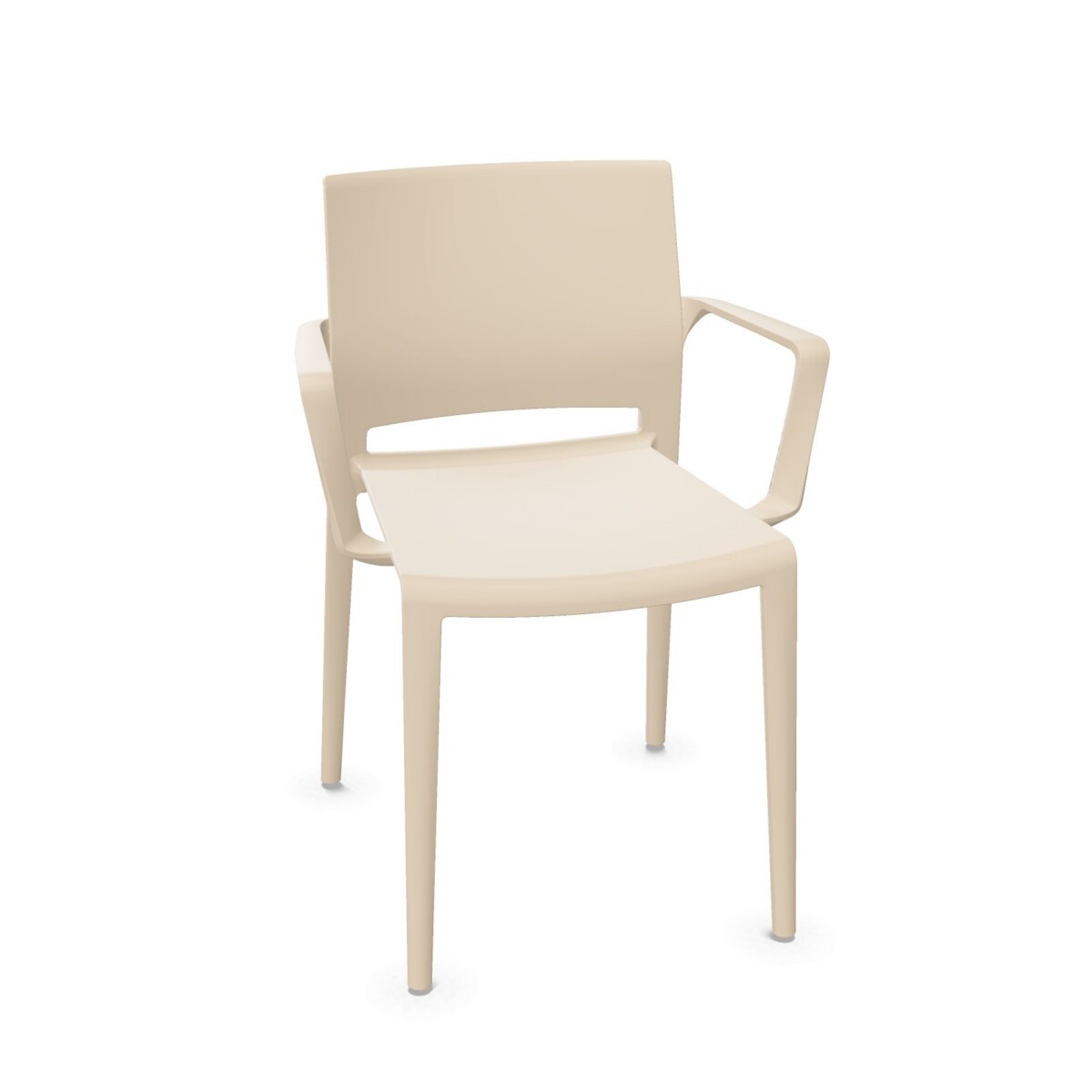
The Gaber Bakhita 4-Leg With Armrests Chair adds armrests while retaining the same four-leg, non-upholstered format. Consider it when the room is primarily used for seated conversations, reception, or longer meetings and the extra support is more valuable than the additional clearance required around each chair.
Specification points to check before leasing
- Space planning: Both versions have a listed minimum and maximum width of 59 cm, so allow for the chair footprint when planning table spacing, circulation, and storage.
- Material preference: The chairs use a sand technopolymer shell, a steel base, and no upholstery. Confirm that this finish and maintenance approach suit the intended interior.
- Load requirement: The listed maximum ballast is 135 kg. Check this against your workplace usage policy and the needs of the people using the space.
- Support features: Neither configuration offers adjustable height, depth, or back height, lumbar support, a headrest, or a mechanism. Choose them for straightforward shared seating rather than individual workstation ergonomics.
- Documentation: Review the available user manual and Colors and Materials documentation when confirming installation, care, and finish details. Origin information is available on request.
Plan the collection for your workplace
Start by mapping where chairs will be used, how often layouts change, and whether armrests could improve comfort in the main seating areas. Then compare the open clearance of the armless version with the added support of the armrest version. Myntwork offers the Gaber Bakhita products on a monthly lease, allowing teams to assess the collection as part of a flexible furniture plan.
Frequently asked questions about Gaber Chair Bakhita
What is the difference between the two Gaber Bakhita chairs?
The collection includes an armless four-leg chair and a four-leg chair with armrests. Both have a sand technopolymer shell, steel frame, no upholstery, and no adjustment mechanism.
Which Bakhita chair is better for meeting rooms?
The armless model is useful when chairs need to fit closely around tables or be rearranged often. The armrest model may suit meeting rooms where users value additional support during longer discussions.
Are Gaber Bakhita chairs suitable for ergonomic desk work?
They are visitor and multipurpose chairs rather than adjustable task chairs. Neither model has adjustable height, seat depth, back height, lumbar support, or a headrest.
What materials and finish are used in this collection?
Both models feature a sand technopolymer shell and steel frame. They are supplied without upholstery, giving the collection a simple, consistent material specification.
What should I check before selecting a Bakhita configuration?
Review the available width of 59 cm, the 135 kg maximum ballast, the need for armrests, the available room clearance, and whether the non-upholstered sand finish fits the intended space.