


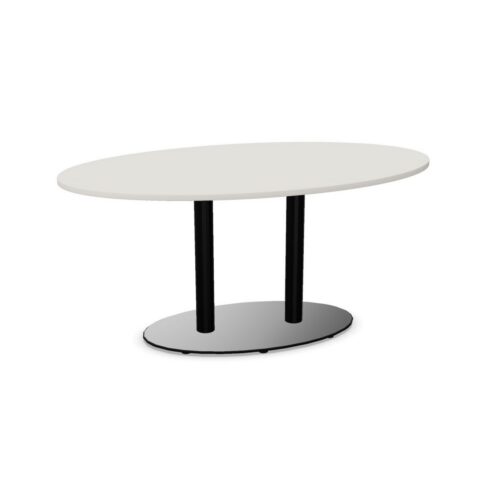

Planning Conference Tables With Semi-Oval Leaf Tops
Set the table's orientation according to the meeting activity before organizing its cables. The semi-oval outline needs to support the intended chair positions, views between participants and access to shared work. If a wall display is used regularly, check how people seated around the curve will turn toward it. Consider the other parts of the boundary at the same time. A cable tray can be useful within the arrangement, but its presence should not become the sole reason for choosing an orientation that leaves discussion or presentation views awkward.
Connect Device Positions to the Tray
Identify where connected equipment will normally sit, then assess its relationship to the tray beneath the surface. For semi-oval leaf tables with cable trays, this means looking beyond the tabletop plan to the route cables take as they leave the working area. Confirm the actual access arrangement rather than assuming an opening or connection point is present. Keep cables from interfering with participants' working positions and chair movement. The tray provides a place for cable organization, while the practical route into it remains something to assess for the intended equipment.
Include the Room Power Connection
A tray beneath the table addresses only part of the cable route. The connection between the table and the room's power provision still needs to be planned. Locate the relevant power points and consider whether the route crosses a doorway, walking path or area used by a presenter. Semi-oval conference tables with cable trays should be positioned with that complete route in mind. If the room arrangement changes for different meeting formats, review the connection each time. Do not assume that gathering cables beneath the surface resolves their journey through the rest of the room.
