


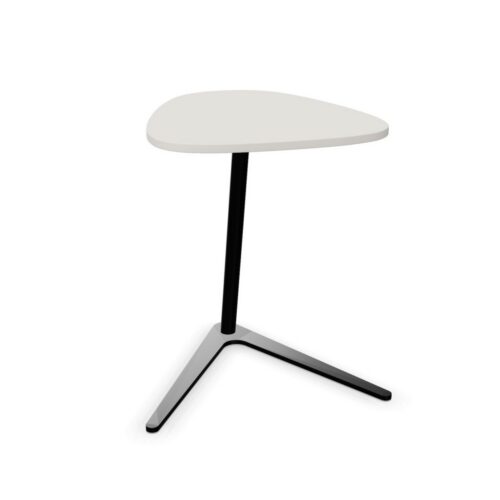
Planning height-adjustable trigoon conference tables
Begin the comparison with the reason a room needs height adjustment. A change of working position can be relevant to shared use, but the required setting must be supported by the actual table. Avoid assuming that an adjustable table accommodates every activity or posture. Consider how often changes will occur and who will prepare the room. The trigoon shape remains part of the decision at every setting, so judge its relationship to participants and surrounding furniture alongside the adjustment feature. A clear use case makes the room plan more specific and easier to maintain.
Build Seating Around Conversation and Shared Material
Arrange chairs to support the exchange taking place. Check whether participants can look toward one another, refer to their own notes and see any shared material without repeatedly changing position. Assess the trigoon outline at each proposed place instead of borrowing a seating pattern from a differently shaped table. When a display is involved, include it in the same review. Changing table height does not change where the presentation wall stands or how the tabletop is oriented. Resolve those relationships through chair placement and table orientation before making the working height part of the final arrangement.
