



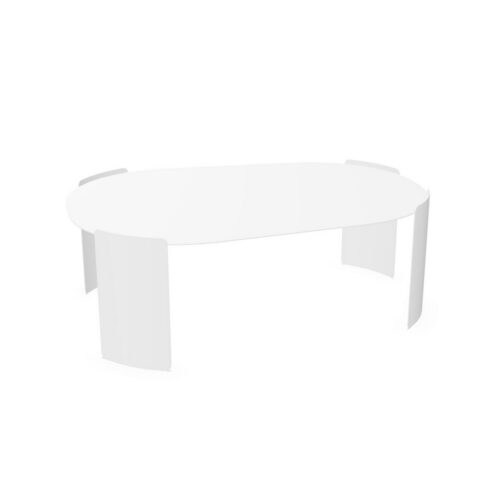
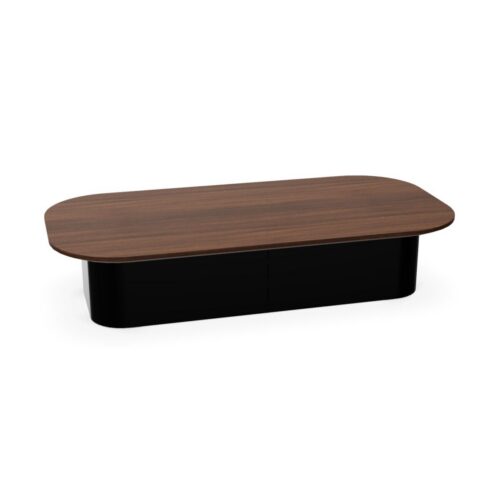
Composing Lounge Furniture With Oval Tops and Steel Bases
Start with the mix of seating rather than the table’s position. Identify the main sofa, any facing chairs, and seats that approach at an angle. Decide which of these the table is intended to serve directly. Then compare orientations of the oval within that group. Following the sofa creates one relationship; turning toward the facing seats creates another. Neither should be chosen solely for symmetry. Review how the table connects the intended users while preserving a clear entrance into the group. The final position should be understandable from the room approach and from the seats.
Review the Curved Ends in Context
Look at what happens around both ends of the oval. One may face an open approach while the other sits near an additional seat or the boundary of the lounge area. Those different conditions may justify an offset position rather than a centered one. Check the entire perimeter against the surrounding furniture, including places where the edge changes direction. Do not assume every oval has the same outline. Assess the actual form and its relationship to neighboring seats so the table’s orientation follows the room’s needs rather than an imagined standard shape.
