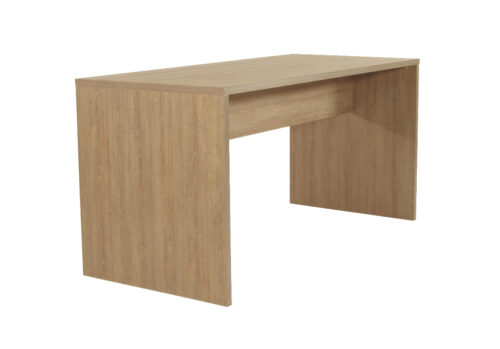
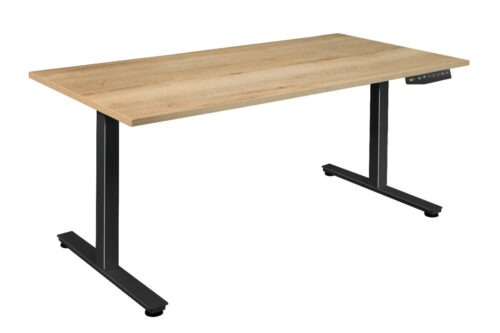
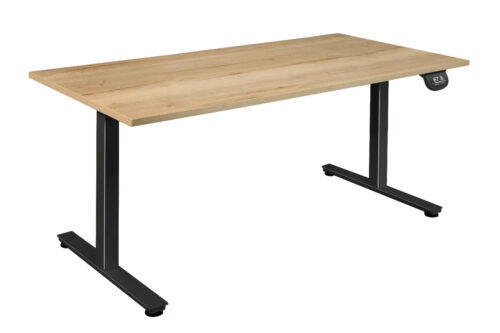
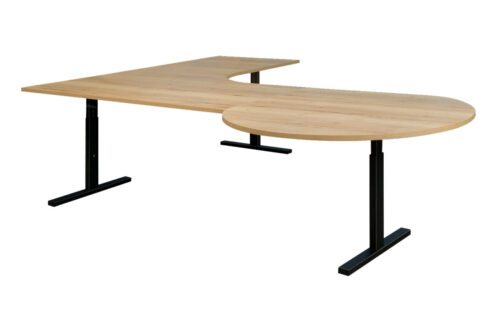
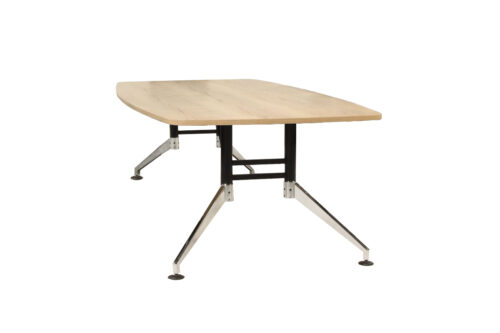
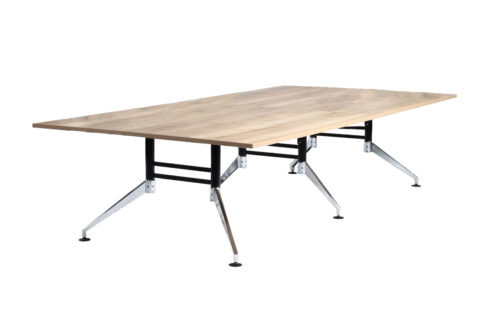
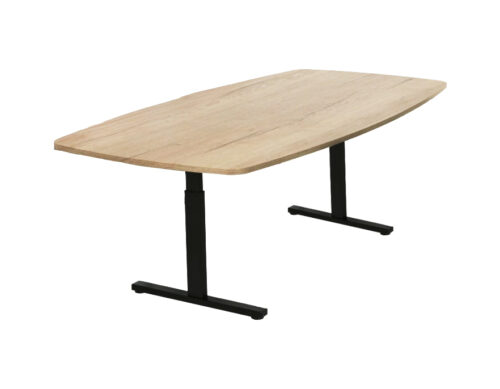
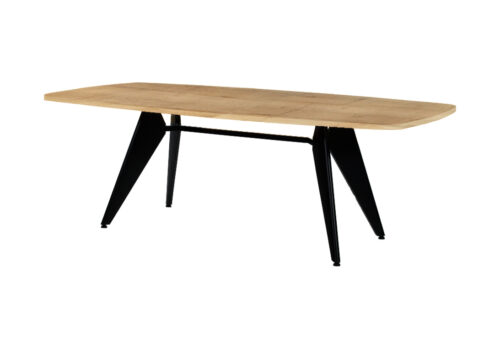
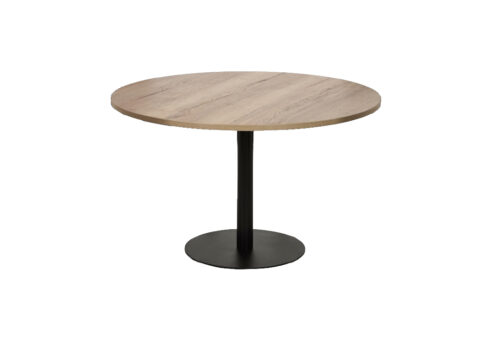
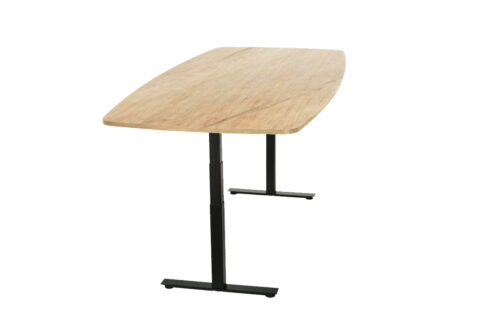
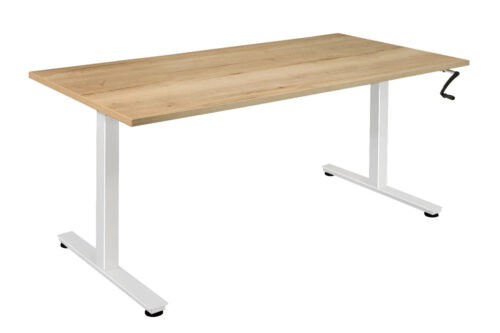
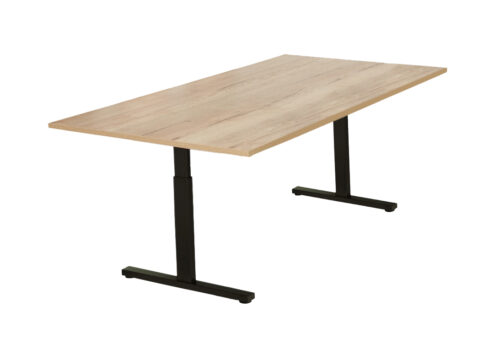
Oak desk and table surfaces appear on sit-stand desks, shared workstations and meeting tables. The oak tone can bring warmth to a room, whether the selected top is veneer, laminate or another construction. Check its material and edge details before making care decisions. The same visual tone can connect work areas, but an individual desk and a conference table still need different shapes, power arrangements and space around them.
Plan the individual workstation
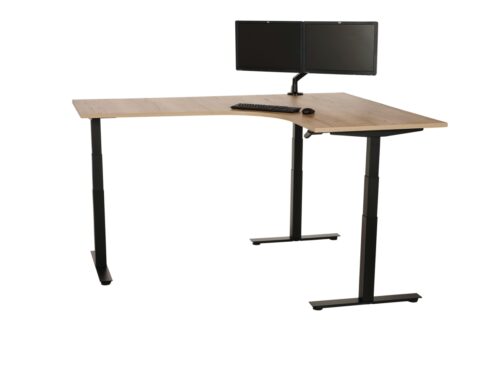
A sit-stand desk needs a practical layout for screen, keyboard and documents. Map those items on the top and identify where cables travel as the surface changes height. Oak desk and table surfaces can bring a warm tone to the station, but that visual quality should follow the ergonomic and equipment decisions. Confirm the selected model’s adjustment and frame independently of its finish.
Manually and electrically adjusted desk types appear in the range. Their daily use and service requirements differ. Check how the user controls the desk and whether storage or a screen will interfere with movement. A desk near a window should also be positioned to manage display glare, regardless of top color.
Consider a shared desk group
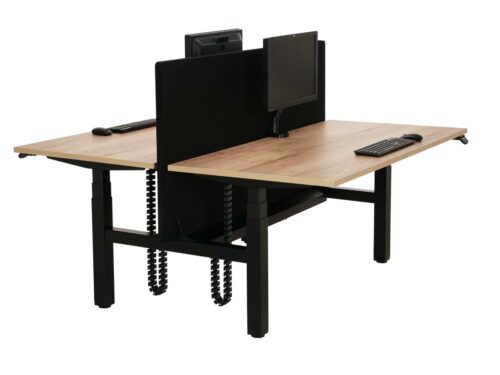
A duo sit-stand desk places two working positions in one shared footprint. Each user needs access to equipment and a sensible cable path. Draw both screens and chairs, then check how the desk moves and whether one user’s position affects the other. Oak desk and table surfaces may repeat across the group, making the finish prominent in the room.
Choose nearby storage according to who uses it. A drawer unit can sit beside a shared desk, but it should not block either user’s chair. If a matching top shelf is selected for storage, confirm compatibility and its intended loading. The small matching surface should support the workstation rather than become an improvised second desk.
Make meeting tables fit the group
Round and other meeting table formats appear in this finish. A round table can support a group facing a shared center, while a longer table may suit documents or a presentation direction. Choose the shape around the normal meeting, not the finish. Place chairs in occupied positions and leave room to circulate behind them.
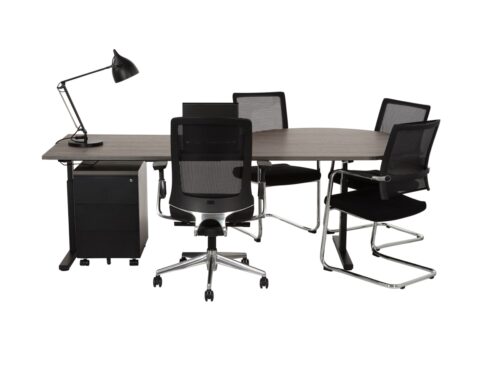
Oak desk and table surfaces can also appear on an adjustable conference table. A changing meeting surface needs power and equipment planned across its movement. Check whether people are expected to sit, stand or alternate, and verify any selected table’s actual adjustment details. The room should remain usable in each intended setting.
Check material and care
An oak color or oak-look finish may be applied through different constructions. A melamine or laminate top and a wood veneer can look related while needing different care. Read the product specification and maintenance guidance. Do not choose a cleaning routine from the color name. This matters particularly for shared tables that receive drinks and frequent handling.
Oak desk and table surfaces should be compared with existing flooring and storage in real light. Warm and cool lighting can change the apparent tone. Grain scale and sheen may also vary between products. If multiple tops sit side by side, view physical samples together rather than assuming they will match from photographs.
Review the complete setting
Place the selected top with its frame, chair, cable accessories and storage. Check legroom, chair movement and access to neighboring furniture. For meeting tables, include all users and equipment on the plan. A finish can bring visual continuity, but only a workable layout makes the space useful.
Oak desk and table surfaces can link individual and group settings through a familiar warm tone. Confirm the actual material, choose each top for its activity and test the finish in the intended room. This produces a coherent scheme without assuming every oak-labeled surface has the same construction. A finish schedule for desks and meeting tables can help future teams maintain the right surfaces and extend the palette without relying on a broad color name.
- Reset all
- Oak