

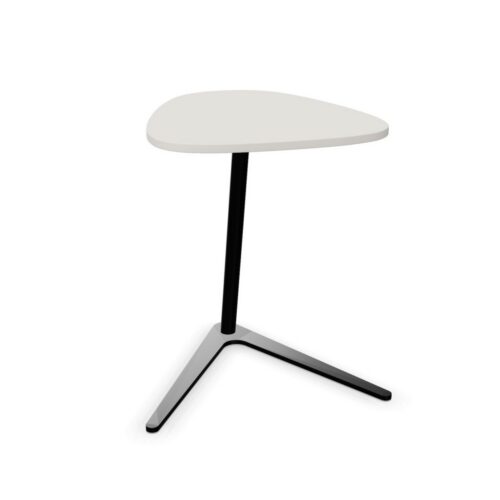
Height-Adjustable Conference Tables With Trigoon Tops

Review the actual adjustment instructions before planning changes to the table’s working level, and check the surrounding furniture at each intended position. The trigoon tabletop remains the defining shape, while height adjustment adds a way to change the working position. That feature should be matched to the room’s actual activities. Confirm the available settings and operating method before planning how people will use the table during different sessions.

Start by separating the decisions about tabletop orientation and working height. The outline affects where participants sit, face and place their meeting materials. The selected height affects their relationship to the work surface and chairs. Both need attention, especially in a room shared by different teams. Establish arrangements for the intended uses rather than expecting adjustment alone to create a comfortable meeting setting. A useful plan also leaves room for people to approach their seats and for the table to operate as instructed.

2 models
From $9.33 p/m

Planning height-adjustable trigoon conference tables

Begin the comparison with the reason a room needs height adjustment. A change of working position can be relevant to shared use, but the required setting must be supported by the actual table. Avoid assuming that an adjustable table accommodates every activity or posture. Consider how often changes will occur and who will prepare the room. The trigoon shape remains part of the decision at every setting, so judge its relationship to participants and surrounding furniture alongside the adjustment feature. A clear use case makes the room plan more specific and easier to maintain.

Build Seating Around Conversation and Shared Material

Arrange chairs to support the exchange taking place. Check whether participants can look toward one another, refer to their own notes and see any shared material without repeatedly changing position. Assess the trigoon outline at each proposed place instead of borrowing a seating pattern from a differently shaped table. When a display is involved, include it in the same review. Changing table height does not change where the presentation wall stands or how the tabletop is oriented. Resolve those relationships through chair placement and table orientation before making the working height part of the final arrangement.

Review Nearby Furniture Throughout Adjustment

Items beneath or beside the top need attention wherever movement is intended. Check chairs, storage and meeting equipment against the table's operating instructions and supported settings. Where equipment uses cables, plan their route without assuming the table includes a particular management system. A clear adjustment routine for height-adjustable trigoon conference tables should identify who prepares the table and the arrangement expected after each session. Keep the area needed for operation accessible and make sure a convenient storage spot does not obstruct it. Assess the arrangement again if nearby furniture changes, since the table's intended movement remains part of the room's everyday use.

Agree a Clear Preparation Routine for Shared Users

A shared room needs a practical way to establish the working position before a meeting starts. Decide who checks the setting and how chairs should be arranged for the session. Confirm the adjustment method before assigning responsibility, because height adjustment alone does not establish how the table operates. Make any expected reset routine easy to understand. If users regularly choose different settings, include the chair relationship in the preparation check rather than treating the tabletop height as a complete solution. The goal is a room that can be prepared consistently for its intended activities.

Frequently Asked Questions

Does this combination include height adjustment?

Yes. These trigoon conference tables allow the working height to change. Assess height-adjustable trigoon conference tables with the chairs and equipment that participants will use, considering the complete working arrangement at each intended position.

Can standing meetings be assumed?

No particular working range is established here. If an activity requires a specific posture, confirm that the table supports the needed setting and assess the complete arrangement before planning that use in the room.

What should be reviewed when different teams share the table?

Review their intended activities, compatible chair settings and the preparation routine. Also check access for operation and circulation, so changing the working position does not leave furniture or equipment in an awkward place.

Explore related selections