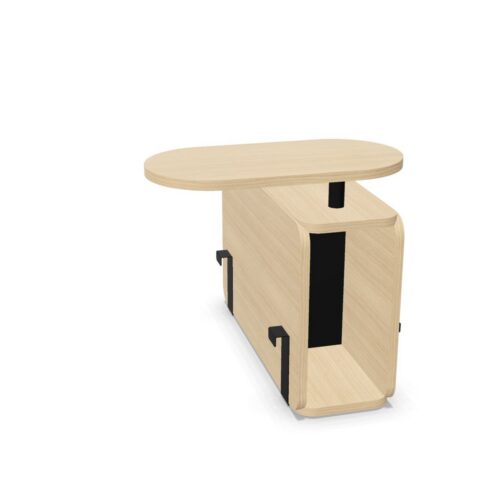
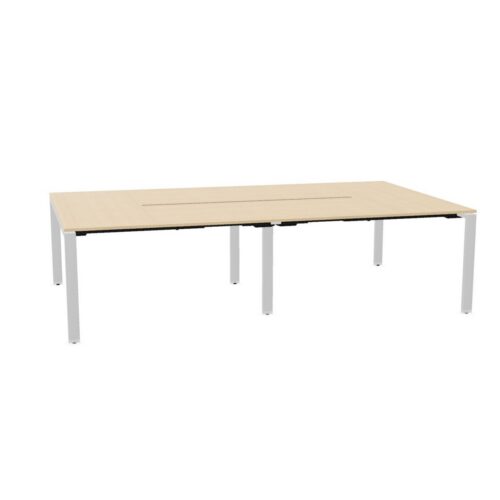
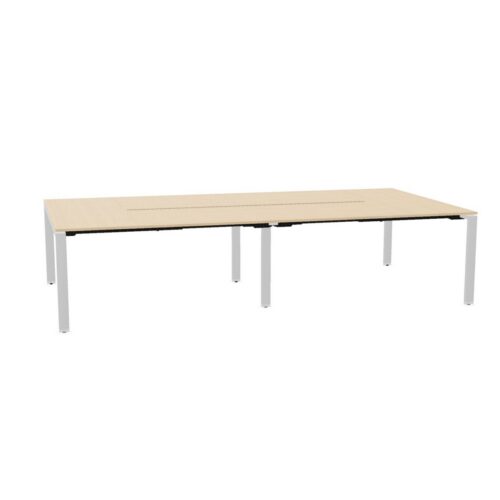
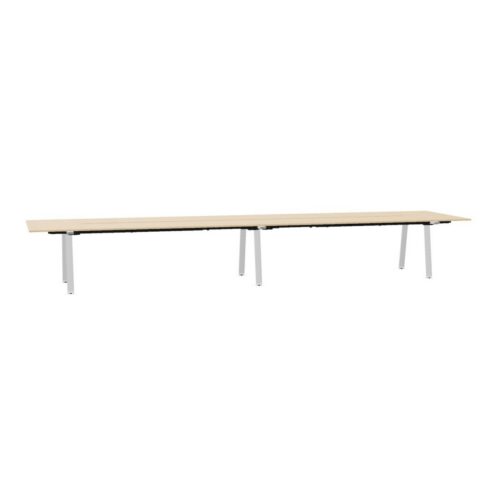
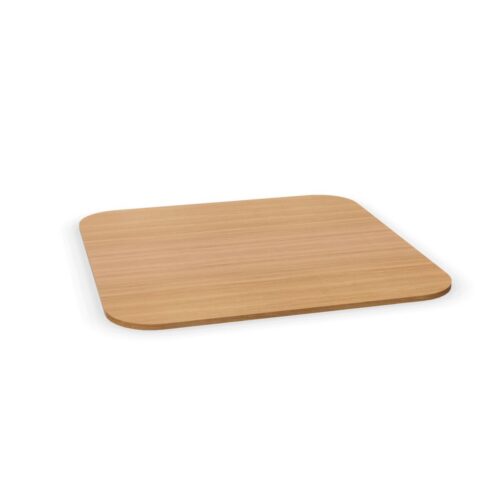
Beige desk and table surfaces appear across individual desks, bench workstations, conference tables and collaborative settings. This attribute concerns the surface color, not the upholstery of nearby seating or the frame beneath the top. Start by deciding what the surface must support: a screen and keyboard, a meeting group with laptops, or a shared table used briefly throughout the day. Then compare the beige finish in the room where it will be installed.
Set the individual working surface
A desk top has to hold everyday equipment without feeling crowded. Map the screen, keyboard, documents and frequently handled tools before choosing its shape. Beige desk and table surfaces can visually recede in a light workspace, but the desk still needs a useful depth and clear cable route. Check where the user sits and whether accessories take up the best working area.
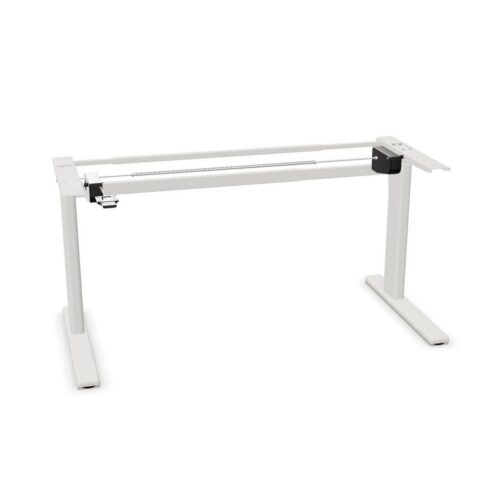
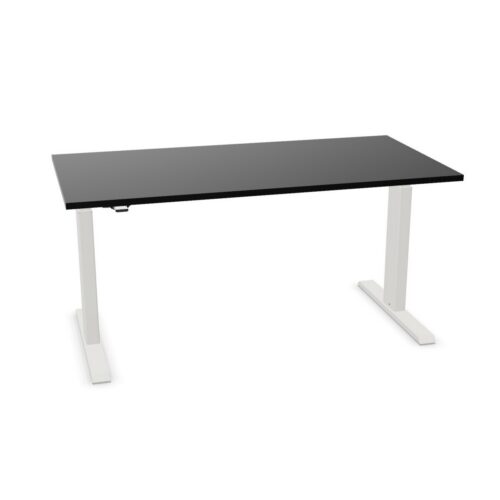
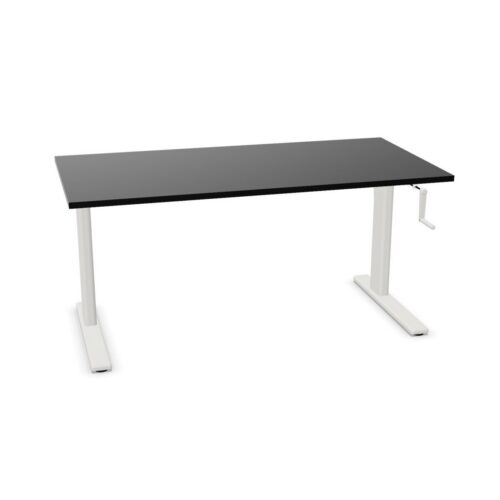
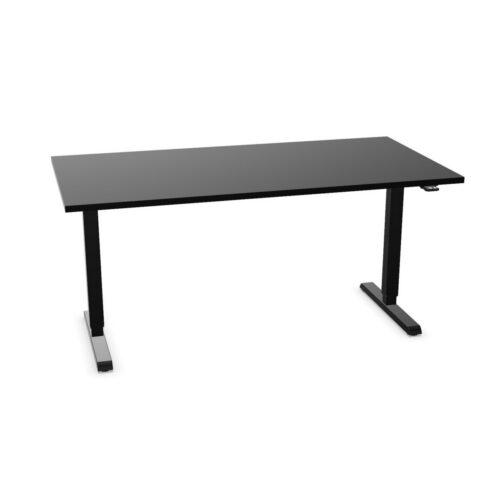
Height-adjustable desks and conventional fixed desks both appear among the relevant products. The surface color does not say how a desk moves or what frame it uses. Review the selected configuration’s adjustment, support and edge details separately. For a moving desk, trace cables through its full range so the pale top does not hide an awkward equipment arrangement.
Plan bench desks as a group
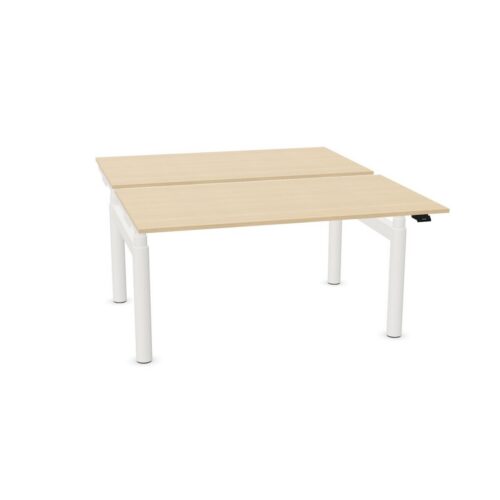
A bench workstation repeats the same top color across several positions, making it more visually prominent than one desk. Beige desk and table surfaces on a bench can create a continuous field, but each user still needs their own working area and power access. Draw monitors, chairs and personal items for every position. Check sight lines and the space between opposing or adjacent users.
Some bench arrangements use screens or cable flaps. Decide whether those components should blend with the beige top or provide a clear contrast. The top color should not be mistaken for the finish of every accessory. Confirm the actual colors and materials of frames, panels and cable parts in the chosen product.
Give meeting tables the right scale
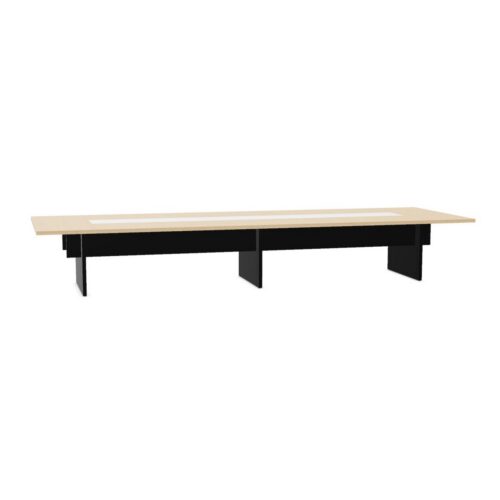
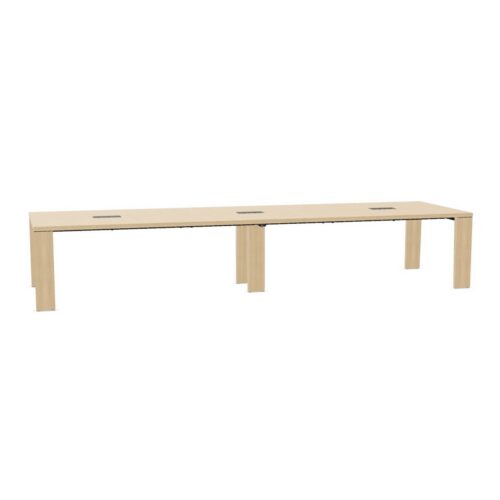
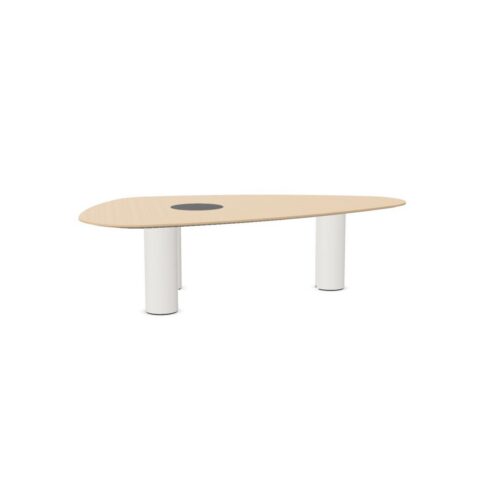
A beige conference table can support a different atmosphere from a dark top, but its geometry matters more to the meeting. Round, oval and rectangular formats create different seating relationships. Consider whether participants need to see one another, a display or a shared document. Place the table with occupied chairs and a clear route to the room entrance.
Beige desk and table surfaces on meeting tables may be offered in melamine, laminate or other finishes depending on the product. Read the selected specification rather than inferring material from color. Check where cables enter if devices are part of the normal session. A pale surface can make clutter more visible, so plan equipment positions deliberately.
Compare finish and light
Beige can shift from warm to cool under different lighting. View a physical finish sample beside flooring, wall color and the selected frame. A horizontal top receives light differently from a vertical cabinet or screen, so a shared color name does not guarantee a match. Check texture and sheen as well as hue.
Beige desk and table surfaces may show marks differently depending on the material and finish. Review care guidance for the chosen product, especially in shared meeting or dining settings. A surface used for quick conversations may face different handling from one dedicated to a single computer. Maintenance should be part of the decision.
Coordinate the complete workstation
Do not evaluate the beige top alone. Place it with the chair, frame, monitor, storage and cable accessories. Confirm that there is room to work and move. For a meeting table, include the chairs and any display or power modules. The surface is the point of contact for many tasks, but the surrounding furniture determines whether those tasks feel easy.
Beige desk and table surfaces can bring a quiet visual continuity from individual desks to shared rooms. Select the top for the activity, verify material and care, and compare the actual finish in the intended light. The result should be a surface that supports work first and contributes to the palette second.
- Reset all
- Beige






Bralco


Bralco