


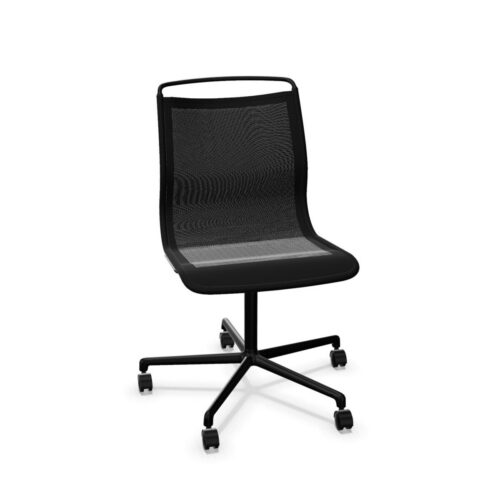
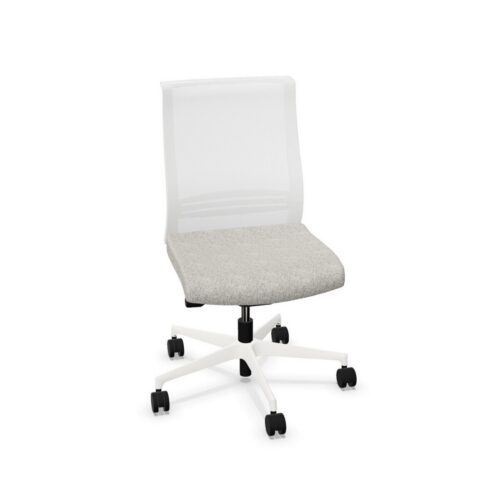

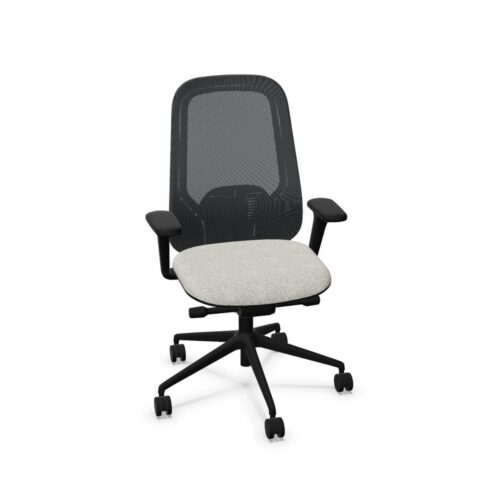
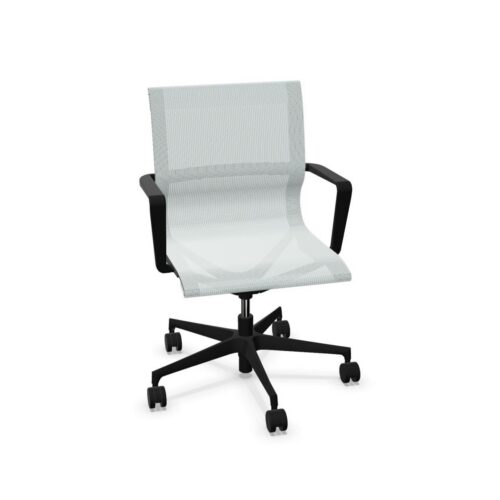
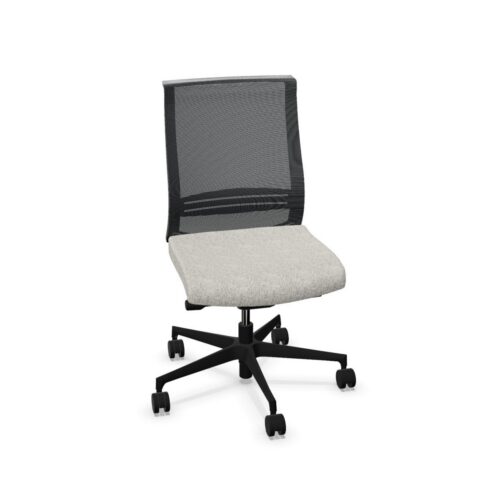

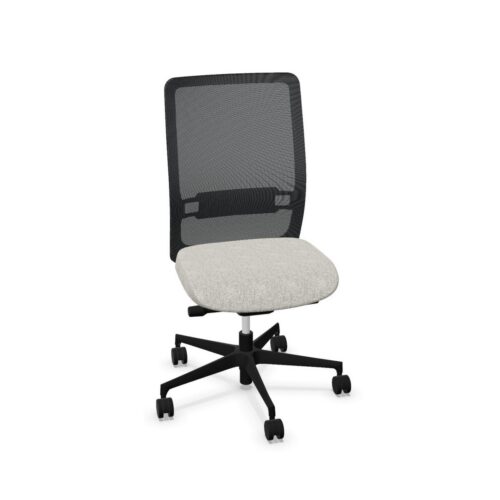
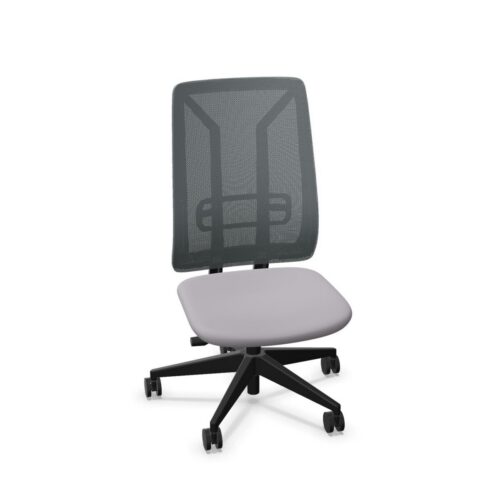
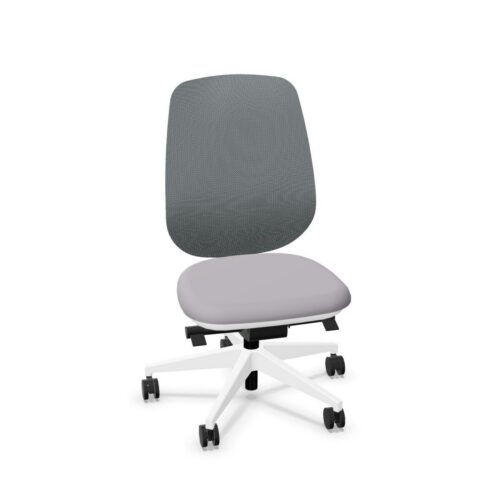
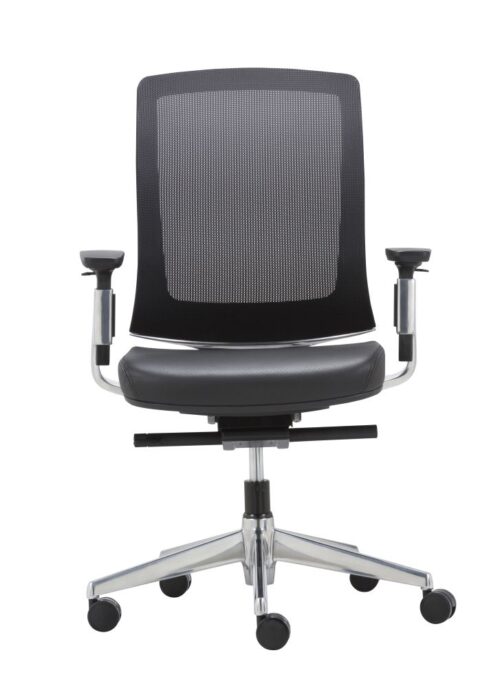
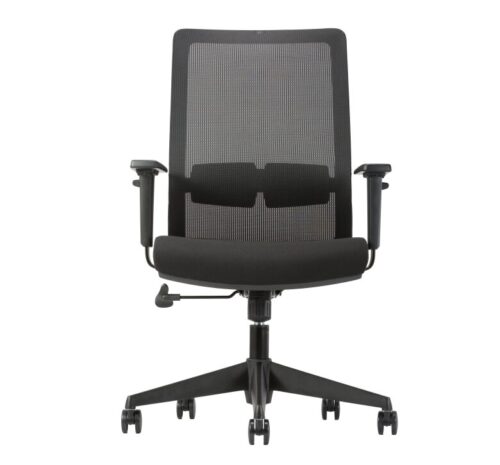
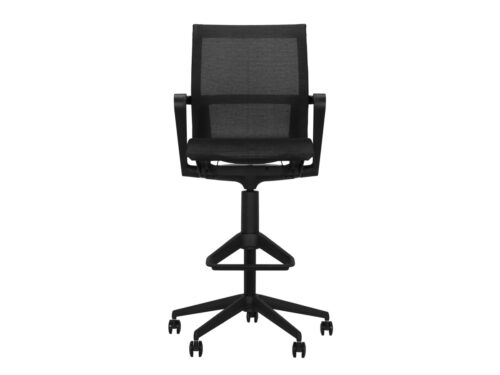
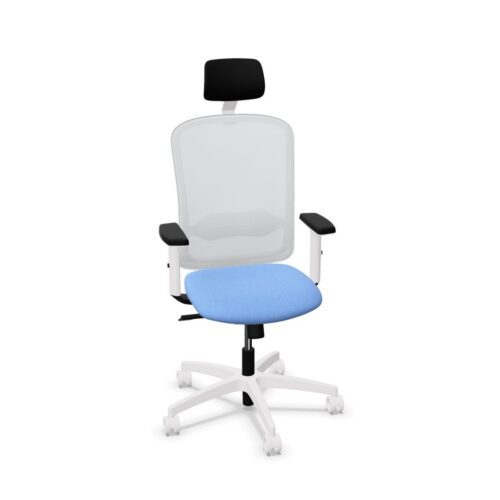

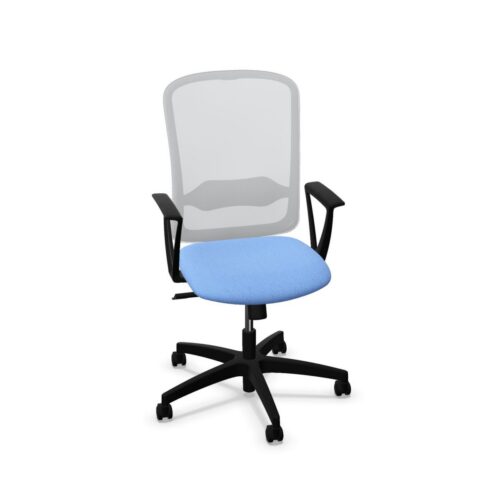
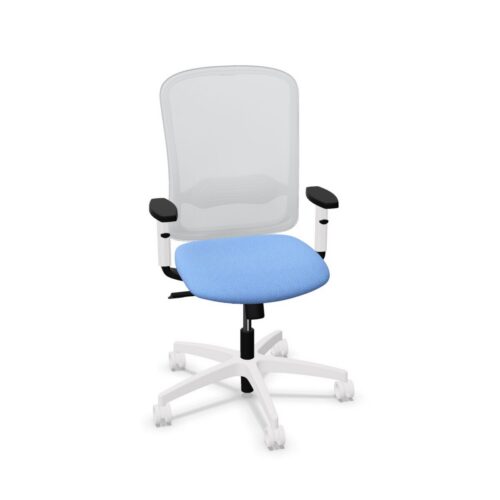
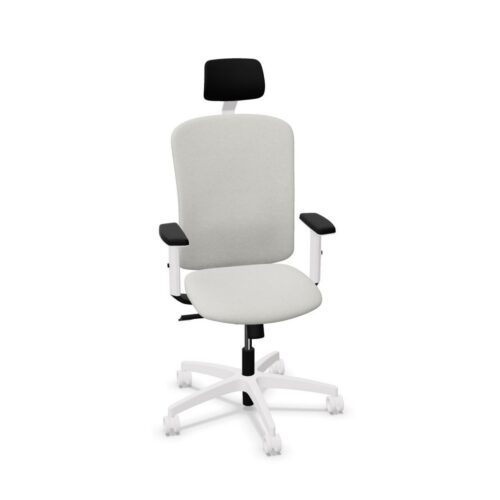
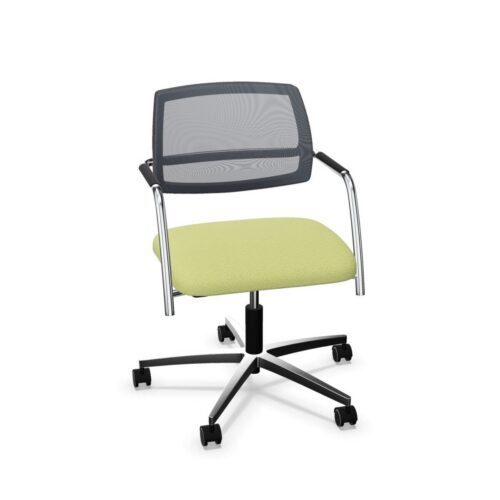
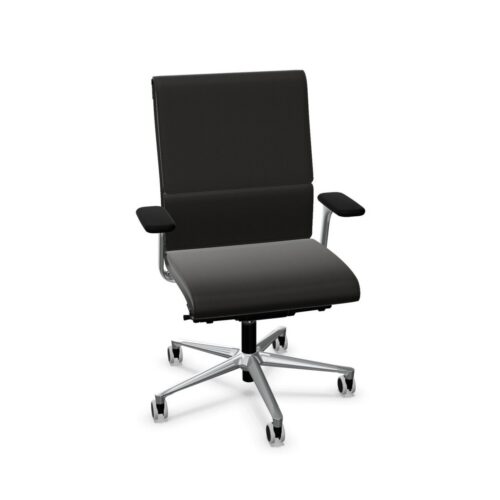
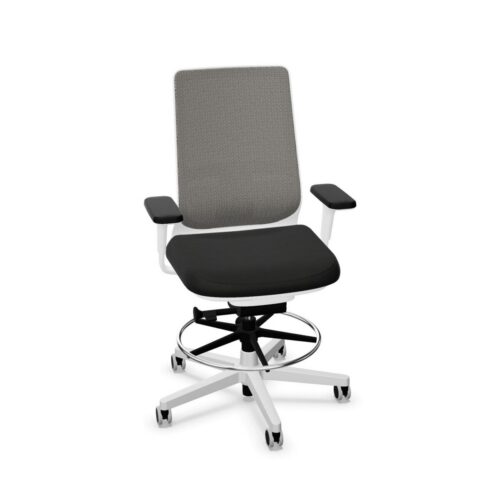


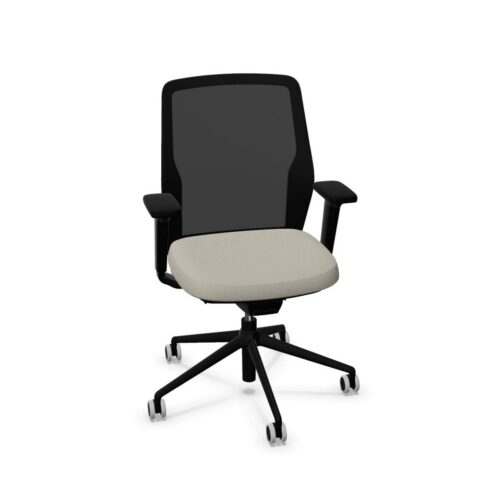

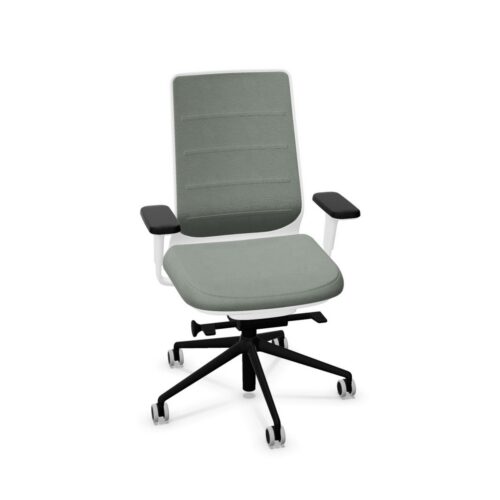


Map The Mesh Across The Chair
Identify whether mesh covers the seat, back or both before comparing configurations. If different materials are used elsewhere, include them in the specification so that the description reflects the whole chair. Request the relevant material information and assess the surfaces on the actual configuration. A mesh designation does not, by itself, establish how the seat or back is constructed or what the user will experience. Where those details matter to the brief, ask direct questions and use a practical trial rather than extending assumptions from the appearance of one chair to another.
Assess The Back In Relation To The Seat
Have the user establish a position at the intended work surface, then assess how the seat and backrest relate to their body dimensions. Dedicated lumbar support and adjustable back height are present on some configurations and absent on others. Seat depth adjustment also varies. Those differences remain important regardless of where mesh is used. Ask users to carry out representative activities and describe the support they experience. Keep the findings tied to the actual chair and person, rather than treating the material description as proof of a particular level of fit or comfort.
