


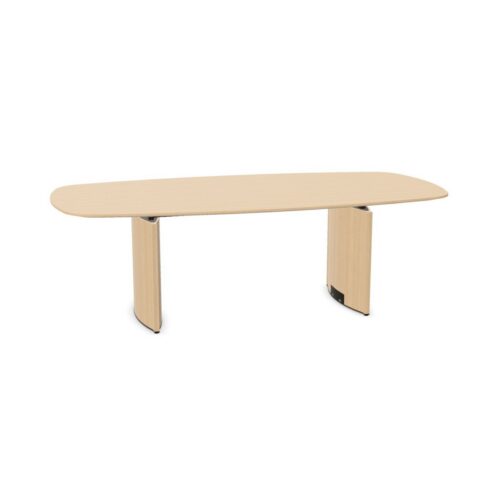


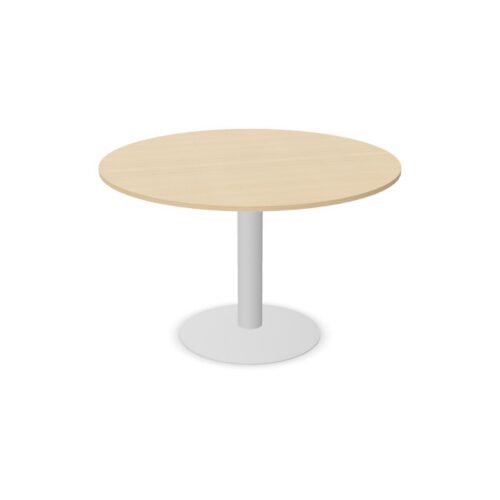


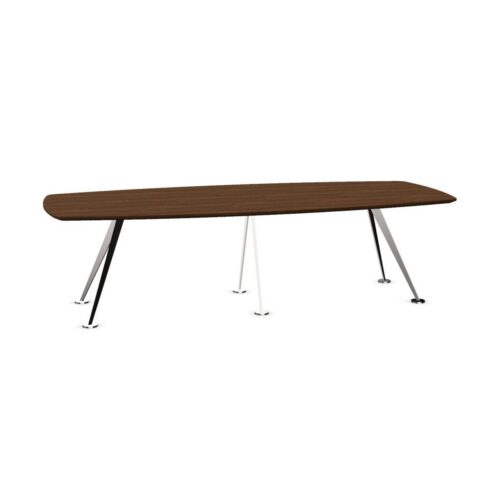



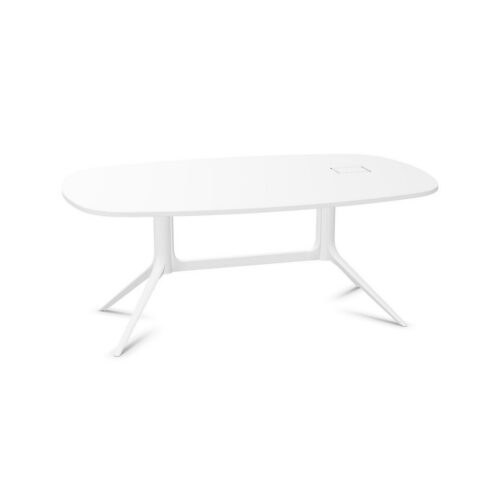


Coordinating Conference Tables With Round Tops and Oak Tops
Use the room's existing furniture as the starting point for the oak decision. Identify which visible finishes will remain and which belong to the same area as the meeting table. Review the actual tabletop appearance in that context, preferably with the room's normal lighting in mind. Oak does not provide a complete description of color, finish or construction, so avoid building the scheme around an imagined appearance. The round outline is a separate but related choice: it determines how the table sits among those surrounding elements. Assess the material relationship and the furniture arrangement together before resolving decorative details.
Give Every Seating Position a Clear Purpose
A circular tabletop has no obvious head, but a room can still create a preferred position through the location of a doorway, screen or board. Decide whether that preference supports your meetings. For discussion, arrange chairs so participants can comfortably address one another across the surface. For a session led from a wall display, check the turn required from each position. Avoid assuming that an evenly spaced chair arrangement produces equivalent views. The relationship between each chair, the tabletop and the room's focal point matters more than visual symmetry when people need to switch between conversation, note-taking and presentation content.
