


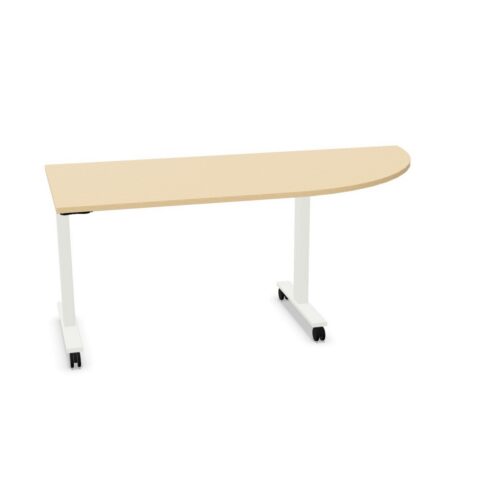

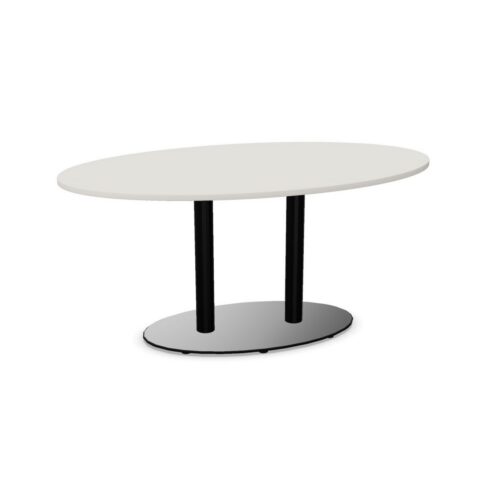


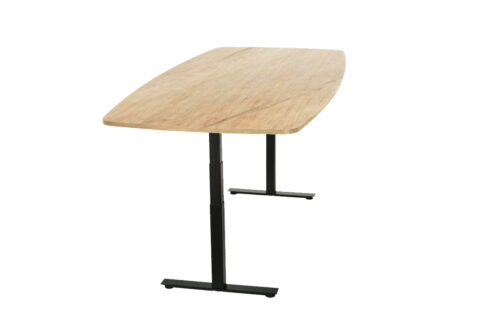
Compare the Curved and Straight Edges
Begin by identifying how the curved and straight parts of the actual outline meet the surrounding space. Each edge can have a different relationship with seating, circulation and adjacent furniture. Avoid assigning a purpose to an edge solely because it is curved or straight; the room and meeting routine should establish that role.
Try the outline in alternative orientations on a room plan. Consider which edge faces the entrance and which faces any shared display. Look at how the arrangement connects occupied seats to the rest of the room, including routes to storage, presentation positions and the doorway.
Arrange Conference Tables With Semi-Oval Leaf Tops
Place chairs according to the discussion pattern you want to support. Around a curved edge, review how neighboring participants turn toward each other and where their documents will rest. Along the straight edge, consider how seating relates to people across the table and to the room beyond it.
Conference tables with semi-oval leaf tops still require a separate review of supports and chairs. The top shape does not establish the structure beneath it. Assess proposed positions with the intended seating and look at the arrangement during use, including chairs drawn back and colleagues moving between their seats and the surrounding space.
