


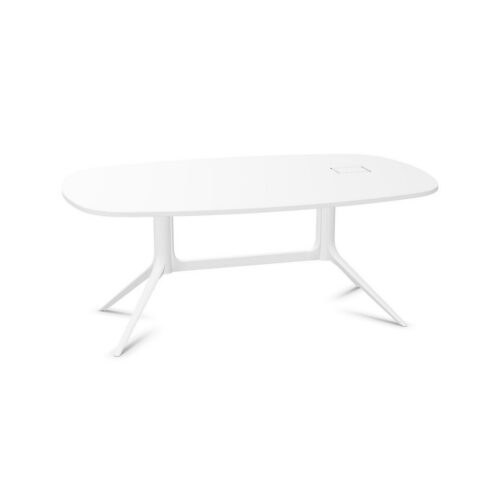
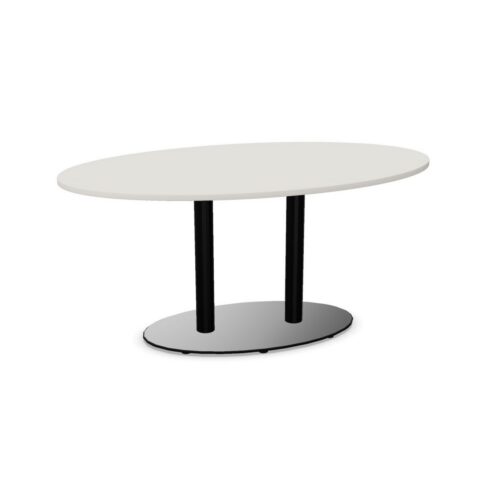
Planning Around Conference Tables With Elliptical Tops
Begin with the route people take from the door to their seats. An elliptical outline has no tabletop corners, but the chairs and their occupants still define the working boundary of the meeting area. Keep the main approach away from places where someone needs to stand, turn or reach for a bag. Consider the table and occupied seating together when deciding its position. A clear route should remain usable during discussion, rather than only when chairs are tucked away. This is particularly relevant near the curved ends, where chair angles may differ from those along the sides.
Give Each Seat a Useful View
The curve changes the direction people naturally face as they move around the perimeter. For discussion, arrange chairs so participants can look toward one another without continually turning away from their work. If a screen is part of the room, assess the view from the ends as carefully as from the sides. A table aligned neatly with the room may still leave an awkward viewing position. Start with the meeting's main activity, then decide whether the table should follow the presentation wall or another room feature. Keep shared reference material where it can be discussed without constant passing.
