

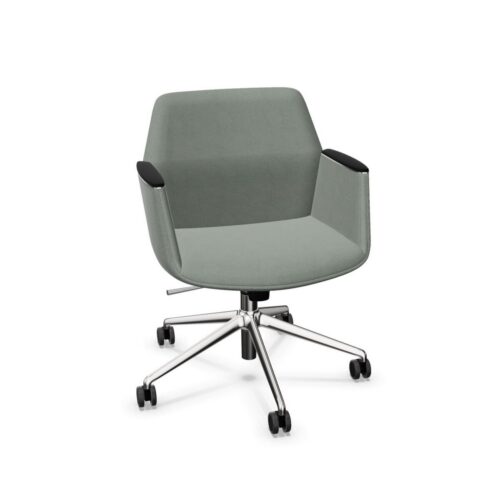
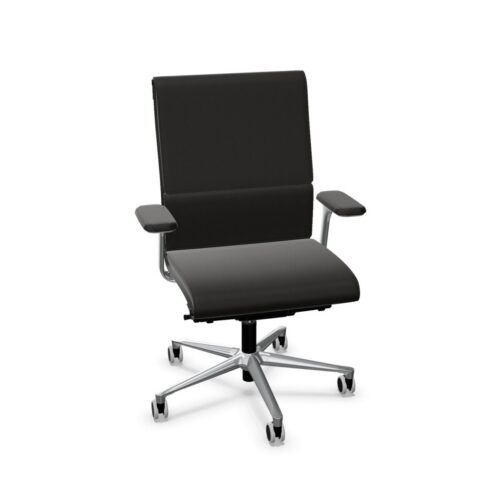
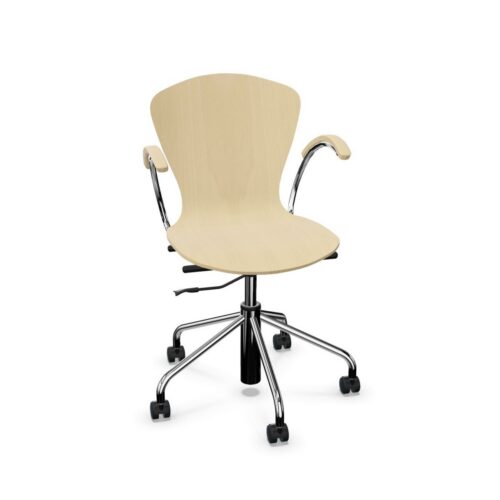
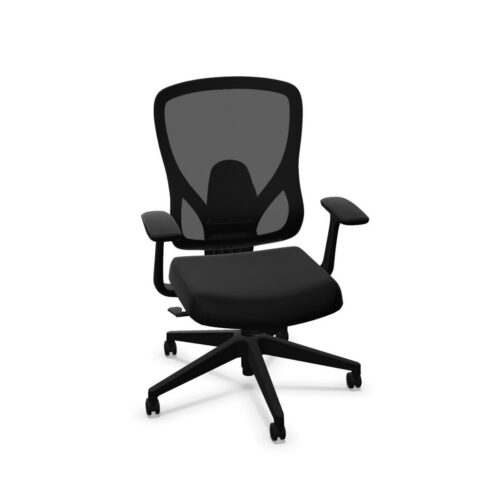
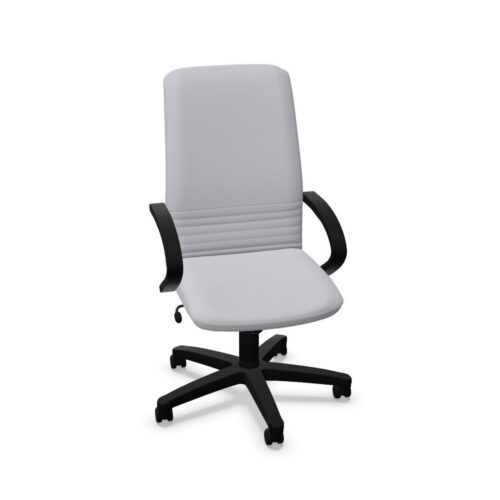
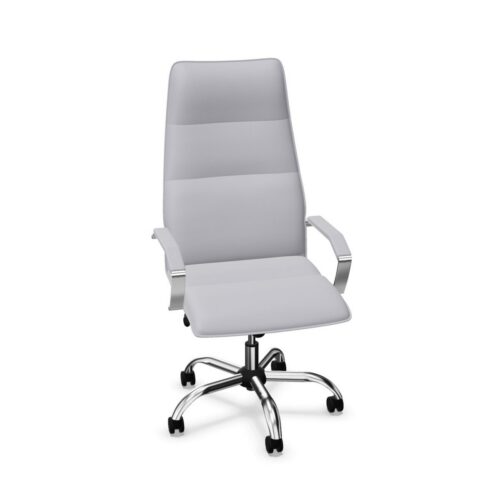
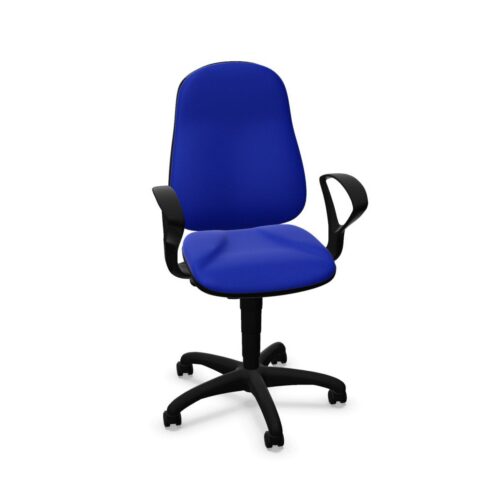
Fixed-Depth Office Chairs With Fixed Armrests

Fixed-depth office chairs with fixed armrests place particular emphasis on matching the existing seating geometry to the employee and workstation. Neither seat-depth adjustment nor armrest adjustment is available to change those relationships. For an office manager, the comparison therefore begins with practical compatibility: the seat must suit the person’s seated proportions, and the arms must work with their forearm position and approach to the desk. These checks need to be made together, because a suitable result in one area does not establish the other.

Use the actual work setting to guide the assessment. A chair can seem acceptable away from the desk, then meet a different constraint when its arms approach the work surface. Comparing office chairs through ordinary tasks reveals these interactions. Have the employee use the backrest, reach their normal equipment and move between activities. Record the seat and armrest dimensions alongside their experience, so the reasoning remains useful when workstations change or seating is reassigned to somebody else.

10 models
From $11.64 p/m
$10.09 p/m
2 models
From $51.37 p/m
3 models
From $25.67 p/m
18 models
From $17.75 p/m
4 models
From $2.21 p/m
4 models
From $15.31 p/m
4 models
From $6.58 p/m
4 models
From $4.51 p/m
2 models
From $6.11 p/m
2 models
From $12.48 p/m
2 models
From $5.17 p/m
3 models
From $6.23 p/m
2 models
From $11.46 p/m
3 models
From $4.94 p/m
2 models
From $8.59 p/m
3 models
From $12.55 p/m
8 models
From $14.49 p/m
6 models
From $8.28 p/m

Measure The Relationships That Cannot Change

The first comparison should identify the dimensions that the user cannot alter through these two features. With fixed-depth office chairs with fixed armrests, record the usable seat depth and the arms' position relative to the seat. Check their spacing and their relationship to the desk opening. Measurements help explain differences between seating arrangements, but they need a seated trial to establish practical fit. Do not assume that similar overall dimensions produce the same experience. The user needs to test the backrest, seat edge and arm supports as a connected arrangement during their ordinary work activities.

Examine Seat Fit Without Repositioning The User

Ask the employee to sit with their back against the backrest and their hands in their normal working positions. Observe where the seat ends beneath the thighs and ask about contact near the backs of the knees. If the user slides forwards, establish why before treating that position as acceptable. Office chairs without seat-depth adjustment cannot be shortened through a depth control. The trial should establish whether the existing seat dimension works while the person uses the backrest, rather than relying on a posture adopted to avoid the front edge or reach around an obstruction.

Check Fixed Arms Against The Work Surface

The arms need to be assessed both as supports and as objects occupying space beside the user. Fixed-depth office chairs with fixed armrests should be brought to the actual desk and tried through normal approach and withdrawal. Watch for contact with the desk edge or underside and ask whether the forearms can rest where the task requires. Because armrest adjustment is unavailable, a position that causes difficulty cannot be addressed by moving an armrest control. Keep any proposed workstation change specific and test it directly. An apparent solution still needs to preserve acceptable seated fit overall.

Keep Reassignment Decisions Person Specific

Fixed seat depth and fixed arms make an individual assessment especially valuable when desks change hands. Retain the measurements and observations, but repeat the seated trial for the next employee. Their proportions and tasks may create a different relationship with exactly the same chair. Office chairs should also be checked again after changes to desk equipment or the work surface. Record other functions separately rather than assuming they are fixed or adjustable because these two features are fixed. A clear assessment distinguishes confirmed characteristics from questions that still require inspection before the workstation arrangement is settled.

Questions About Fixed Seating Geometry

Does this mean every adjustment is absent?

No. Fixed-depth office chairs with fixed armrests establish that seat depth and armrest position are not adjustable. Other functions are not specified by this combination and need separate checking. Avoid extending the description to the whole chair.

Why test the chair at its intended desk?

The desk introduces clearance and reach requirements that an open-floor trial cannot show. Fixed arms may interact with the work surface, while the user's position affects access to equipment. Assess those relationships alongside the unchanged seat depth.

Can the same assessment cover another employee?

Measurements can be reused as reference information, but the seated result needs checking again. Another employee may experience the same seat depth or arm spacing differently. Have them complete ordinary work tasks before relying on the previous arrangement.

Explore related selections