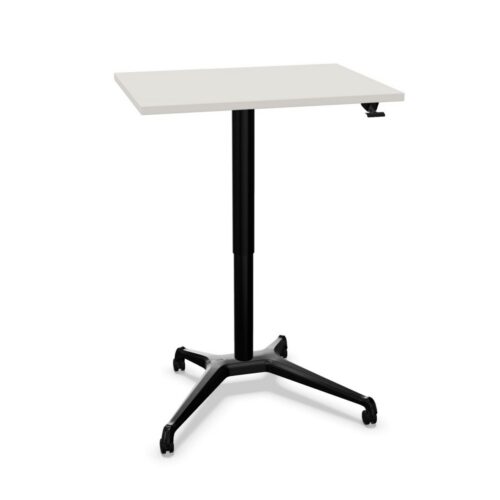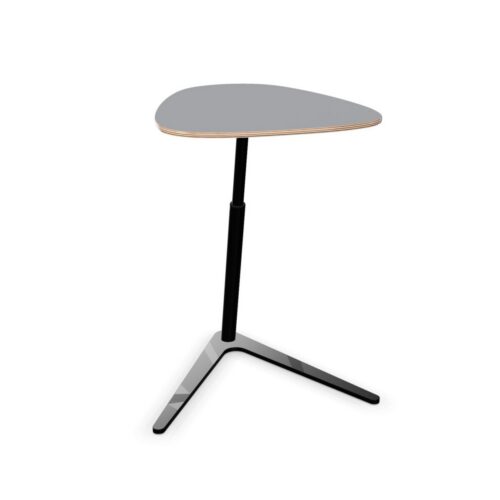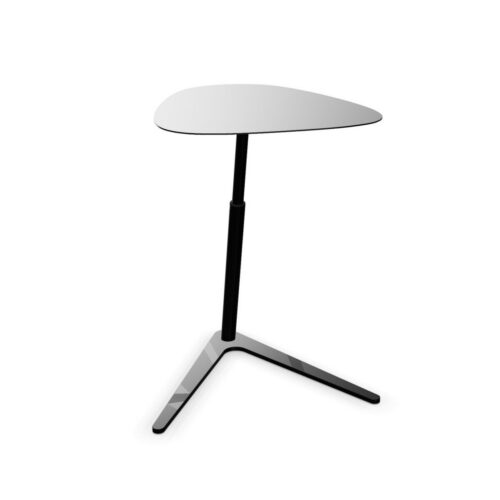


Pneumatic height-adjustable tables use a gas-assisted or pneumatic mechanism to raise and lower the tabletop without an electric motor. They are designed for workplaces where users need adjustable working height but where access to power, cabling or electrical components is undesirable.
Depending on the model, a pneumatic adjustable table may be suitable for individual workstations, flexible offices, meeting areas, training spaces or mobile workplace settings. The adjustment range, lifting capacity, mechanism and ease of use vary between products.
What is a pneumatic height-adjustable table?
A pneumatic height-adjustable table uses stored gas pressure or a similar assisted lifting mechanism to help the user move the tabletop up or down. The height is typically controlled through a lever, handle or release mechanism.
Unlike an electric height-adjustable table, a pneumatic table does not require a motor or electrical connection to change height. This can make it useful in locations where power is limited or where a simple, cable-free adjustment system is preferred.
Benefits of pneumatic adjustable tables
Pneumatic height adjustment can offer several practical advantages in professional environments:
- No electrical connection required for height adjustment
- Quick manual height changes
- Suitable for flexible and reconfigurable workplaces
- Fewer electrical components to integrate into the workstation
- Can be useful in mobile or temporary workplace settings
- Supports different working heights where the adjustment range allows it
- Can provide a simple alternative to motorised sit-stand tables
Pneumatic adjustment and sit-stand working
Some pneumatic tables provide sufficient adjustment range for both seated and standing work. In these cases, the user can alternate between different working positions without relying on an electric motor.
The exact minimum and maximum height should always be checked before assuming that a table is suitable for full sit-stand use. A limited adjustment range may be intended primarily for adapting the table to different users or activities rather than switching between sitting and standing.
For more information about varying working positions, read our guide to sitting, standing and movement at work.
Where are pneumatic adjustable tables used?
Pneumatic height-adjustable tables can be suitable for a variety of workplace environments, including:
- Individual office workstations
- Shared and hybrid workplaces
- Meeting and collaboration areas
- Training and education spaces
- Flexible project rooms
- Mobile workstations
- Locations where convenient access to power is limited
The right application depends on the adjustment range, tabletop size, load capacity and how frequently the table needs to be repositioned.
What should you consider when choosing a pneumatic adjustable table?
Height adjustment range
Check the lowest and highest available table positions. The range should be suitable for the intended users and activities, particularly when the table will be shared by multiple people.
Lifting capacity
Pneumatic mechanisms are designed for a specific load range. The tabletop, monitors, equipment and accessories all contribute to the total weight.
A table that is loaded beyond its intended capacity may become more difficult to adjust or may not operate as designed. Always follow the manufacturer’s specified load limits.
Ease of adjustment
The mechanism should allow users to change the height without excessive effort. This is particularly important in shared workplaces where the table may be adjusted several times during the day.
Table stability
Stability should be considered at both low and high positions. Frame design, tabletop dimensions, floor conditions and the amount of equipment placed on the table can all influence how stable the workstation feels.
Frequency of adjustment
A pneumatic mechanism can be a practical solution when adjustment is required regularly but an electric system is unnecessary or impractical. For very frequent height changes or heavily equipped workstations, an electric system may sometimes provide greater convenience.
Pneumatic vs electric height-adjustable tables
Both pneumatic and electric tables can provide adjustable working height, but the systems operate differently.
An electric height-adjustable table uses powered motors and may include features such as digital displays, memory positions and anti-collision systems. Pneumatic adjustment relies on a mechanically assisted lifting system and does not require electricity for the height change itself.
The most suitable option depends on the intended use, adjustment frequency, equipment load, available power, desired features and workplace layout.
Pneumatic vs manually adjustable tables
Pneumatic adjustment is also different from a purely manual system. Traditional manually adjustable tables may require a crank, mechanical locking system or more physical effort to change height.
A pneumatic mechanism provides lifting assistance, which can make adjustment faster and easier while retaining the advantages of a non-electric system.
Cable management still matters
Although the adjustment mechanism itself does not require electricity, equipment placed on the table may still need power and data connections. Monitors, laptops, docking stations and chargers must be able to move safely throughout the full adjustment range.
Use sufficiently long cables and suitable cable-management solutions, and test the workstation at both its lowest and highest positions before regular use.
Pneumatic tables in shared workplaces
Pneumatic adjustment can work well in shared and hybrid offices because different users can adapt the table height without needing to understand a complex control system.
The table should be combined with adjustable seating, appropriate monitor equipment and clear workstation setup instructions. The complete workstation should accommodate the intended range of users rather than relying on table height adjustment alone.
Read our guide to ergonomics for shared workstations for more information.
Questions to consider
- What minimum and maximum table height is required?
- Is the table intended for seated work, standing work or both?
- How much equipment will be placed on the tabletop?
- What is the maximum permitted load?
- How frequently will users adjust the table?
- Will the table be shared by multiple users?
- Is electricity available at the installation location?
- How will equipment cables move when the table height changes?
- Does the mechanism remain easy to operate under the expected load?
Explore pneumatic adjustable tables at Myntwork
Pneumatic height-adjustable tables offer a flexible alternative to electric and traditional manually adjustable furniture. They can be particularly useful where easy height adjustment is required without adding a powered lifting system.
Compare the adjustment range, dimensions, load capacity, frame construction and intended use of each product before making a selection.
Explore our desks and adjustable workstations or browse the complete Myntwork office furniture collection.