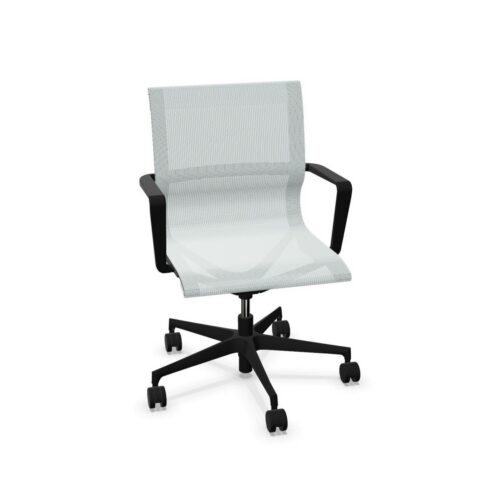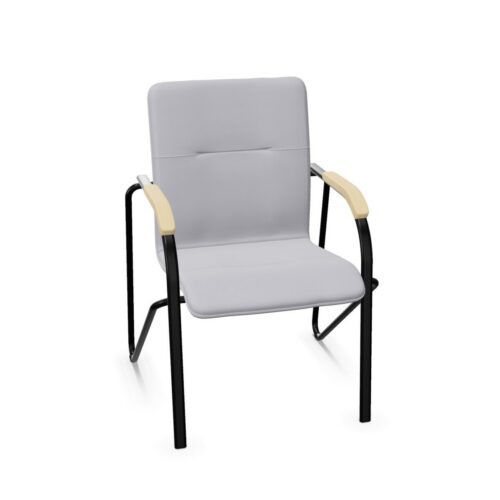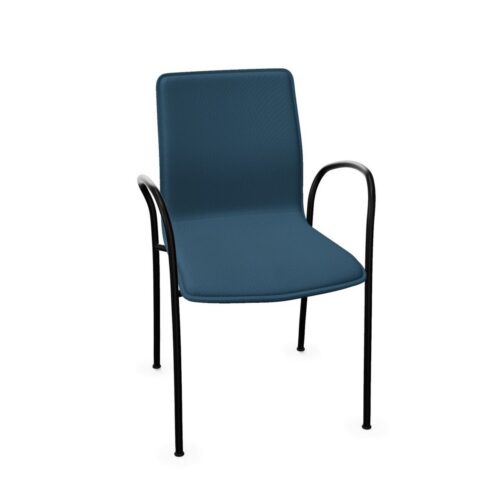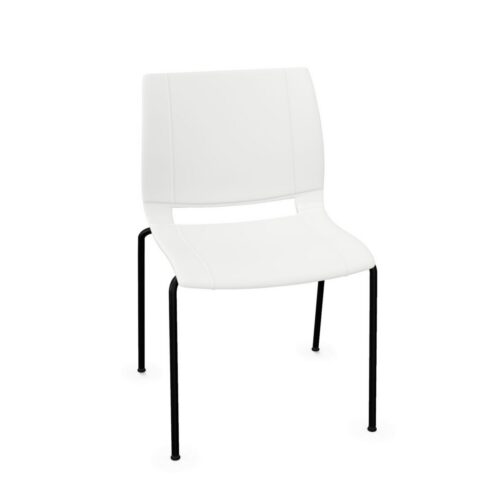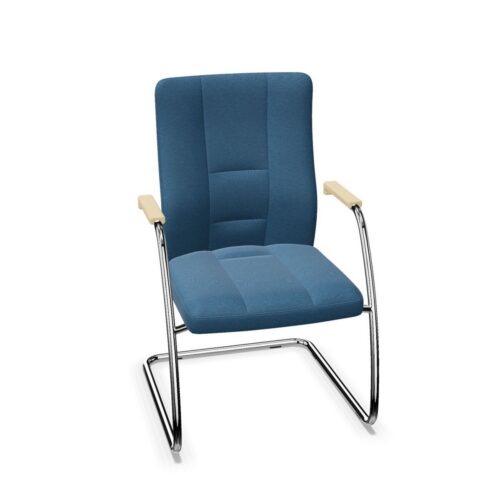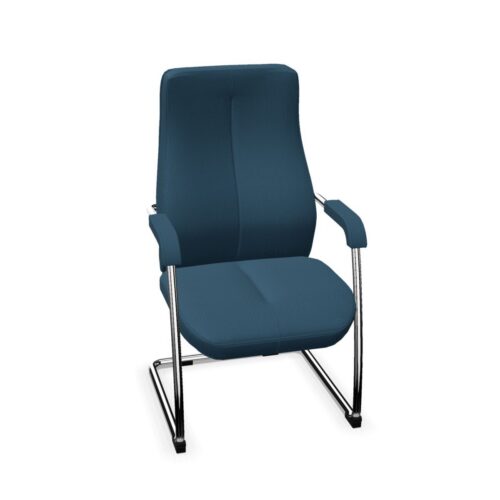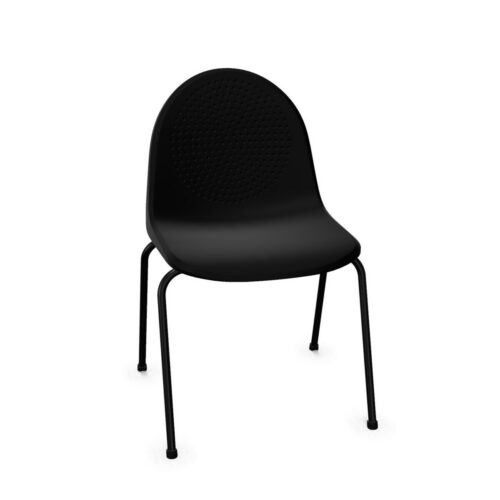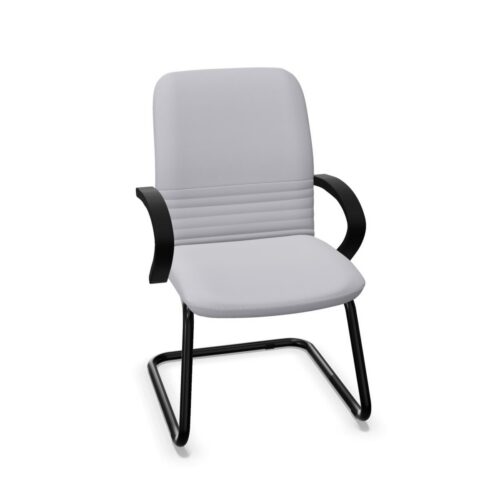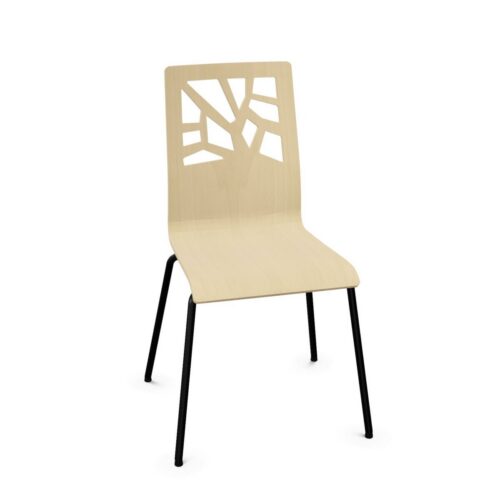


Office chairs with fixed armrests have arm supports that remain in a predetermined position and cannot normally be adjusted in height, width, depth or angle. Fixed armrests are commonly used on meeting chairs, visitor seating, executive chairs and office chairs where a simple and consistent seating configuration is preferred.
A fixed armrest is not automatically less comfortable than an adjustable one. Its suitability depends on the dimensions of the chair, the intended users, the desk or table height and how long the chair will typically be used.
What are fixed armrests?
Fixed armrests are permanently positioned as part of the chair design. Unlike adjustable armrests, they cannot be raised, lowered or repositioned by the user.
They may be integrated directly into the chair frame or attached as separate components. Designs range from slim plastic arm supports to upholstered or padded armrests used on executive and conference seating.
Benefits of fixed armrests
Fixed armrests can offer several practical advantages in professional environments:
- Simple and intuitive chair use
- No armrest controls that need to be adjusted
- Consistent armrest position and appearance
- Fewer moving components
- Suitable for meeting and visitor seating
- Can provide stable support when appropriately positioned
- Useful where extensive individual adjustment is unnecessary
When are fixed armrests a good choice?
Fixed armrests are particularly suitable where chairs are used for relatively predictable activities and shorter periods of sitting.
Typical applications include:
- Meeting and conference rooms
- Visitor chairs
- Reception and waiting areas
- Training rooms
- Boardrooms
- Executive offices
- Assigned workstations where the chair dimensions suit the regular user
In these environments, simplicity, appearance and general comfort may be more important than a large number of individual adjustment options.
Fixed armrests and office ergonomics
Armrests are intended to provide support for the arms and forearms while allowing the shoulders to remain relaxed.
With fixed armrests, their predetermined position should work with both the user and the desk. If the armrests are too high, they may push the shoulders upward. If they are too low, they may provide little useful support.
The armrests should also allow the user to sit sufficiently close to the desk or table. Fixed armrests that are too high or extend too far forward can contact the tabletop and prevent the chair from moving into an appropriate working position.
Fixed armrests for computer work
Fixed armrests can be used for computer work when their height and position suit the user and workstation. However, they provide less flexibility than adjustable armrests when desk height, user dimensions or working positions vary.
For prolonged computer work, evaluate how the armrests interact with:
- Seat height
- Desk height
- Keyboard position
- Mouse position
- Seat depth
- Backrest support
The user should be able to keep the keyboard and mouse comfortably within reach without raising the shoulders or sitting unnecessarily far away from the desk.
Read our ergonomic workstation setup guide for more information about coordinating these different components.
Fixed armrests for meeting chairs
Meeting and conference chairs commonly use fixed armrests because users generally do not need to personalise the seating position extensively for shorter meetings.
In these environments, the dimensions of the complete chair become especially important. Check whether the chair fits comfortably around the meeting table and whether the armrests provide sufficient clearance.
The overall width of a chair with armrests may also affect how many seats can be positioned comfortably around a conference table.
For more information about planning meeting spaces, read our meeting room planning guide.
Fixed armrests in shared workplaces
A fixed armrest position has to accommodate every person who uses the chair. This can become more challenging in shared and hybrid workplaces because employees may differ considerably in shoulder width, arm length and body height.
A well-designed chair with fixed armrests may still suit a broad range of users, but adjustable armrests provide more opportunity to personalise the seating position.
For highly shared task chairs, adjustability becomes more relevant when combined with features such as adjustable seat height, seat depth, lumbar support and backrest movement.
See our guide to ergonomics for shared workstations for more information.
Fixed armrests vs adjustable armrests
The main difference is the amount of control given to the user. Fixed armrests remain in one position, while adjustable armrests can be repositioned to accommodate different users or activities.
Fixed armrests can be suitable when:
- The chair is primarily used for meetings or visitors
- Typical sitting periods are relatively short
- The chair is assigned to a consistent user
- The fixed armrest position already works well with the table
- A simple chair configuration is preferred
Adjustable armrests may be preferable when:
- The chair is used for prolonged computer work
- Multiple employees regularly share the chair
- Users have significantly different body dimensions
- The chair is used with different desk heights
- Individual workstation adjustment is an important requirement
Fixed armrests vs 4D armrests
At the other end of the adjustment spectrum are 4D armrests. These typically allow adjustment in four directions, such as height, width, depth and angle.
4D armrests can be useful on highly adjustable task chairs and in shared workplaces, while fixed armrests offer a simpler solution for environments where this level of personalisation is unnecessary.
Neither configuration is automatically better. The right choice depends on how the chair will actually be used.
Armrest shape and materials
Even when armrests are fixed, their design can vary substantially. Important characteristics include:
- Armrest height
- Distance between the armrests
- Length of the arm supports
- Width of the contact surface
- Hard or soft-touch materials
- Padding or upholstery
- Shape of the armrest
A comfortable armrest should provide useful support without creating an excessive pressure point or restricting normal movement.
Can fixed armrests help when sitting down or standing up?
Armrests can provide a useful support point when some users sit down or stand up from the chair. The usefulness depends on the height, construction and stability of the armrests and the individual user.
Where accessibility requirements are important, consider the complete chair dimensions and user needs rather than assuming that any chair with armrests will be suitable.
What else should you consider when choosing an office chair?
Armrest type is only one part of an office-chair specification. Depending on the application, other relevant characteristics can include:
- Seat-height adjustment
- Seat-depth adjustment
- Backrest height and shape
- Lumbar support
- Chair mechanism
- User weight range
- Seat and backrest materials
- Base and castor configuration
- Applicable office-chair standards
- Warranty and replacement-part availability
Read our guide to choosing an office chair for a broader overview of office-chair features.
Questions to consider
- Will the chair mainly be used for desk work, meetings or visitors?
- How many hours will users typically remain seated?
- Does the fixed armrest height suit the intended users?
- Can the user’s shoulders remain relaxed?
- Can the chair move sufficiently close to the desk or table?
- Does the width between the armrests suit the expected user group?
- Are the arm pads comfortable for the intended duration of use?
- Will the chair be assigned or shared?
- Would adjustable armrests provide meaningful additional flexibility?
Explore office chairs with fixed armrests at Myntwork
Office chairs with fixed armrests provide a simple and consistent seating configuration for meeting rooms, visitor spaces and selected workplace applications. When the armrest dimensions suit the intended users and furniture, they can provide comfortable support without requiring additional controls.
Explore our office chairs or browse the complete Myntwork office furniture collection.

Bralco