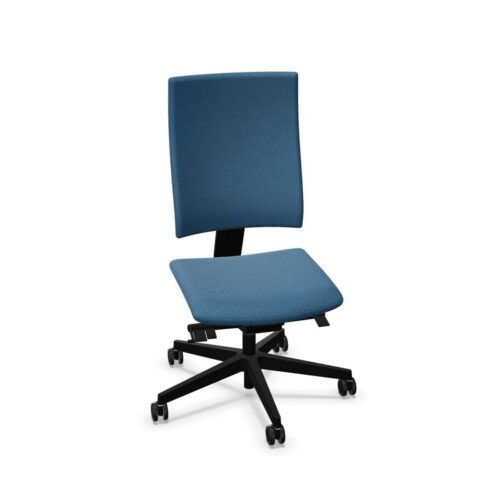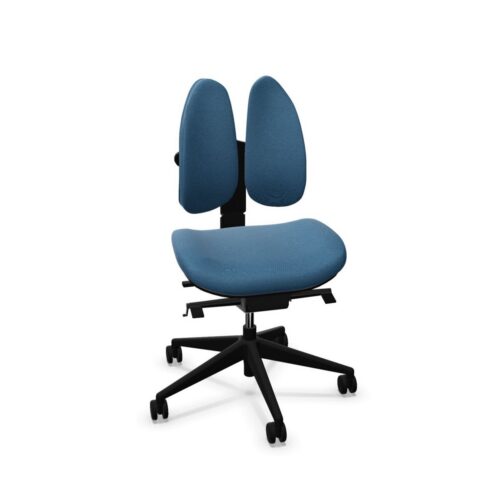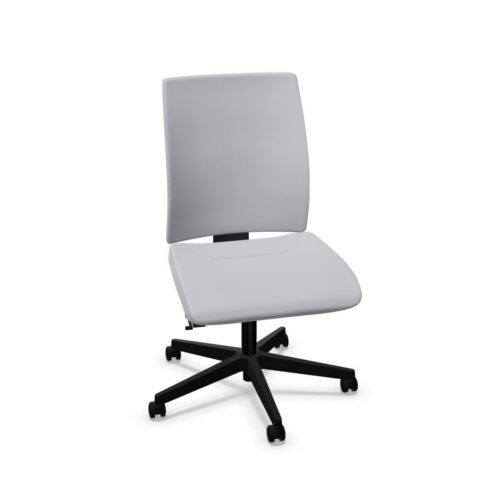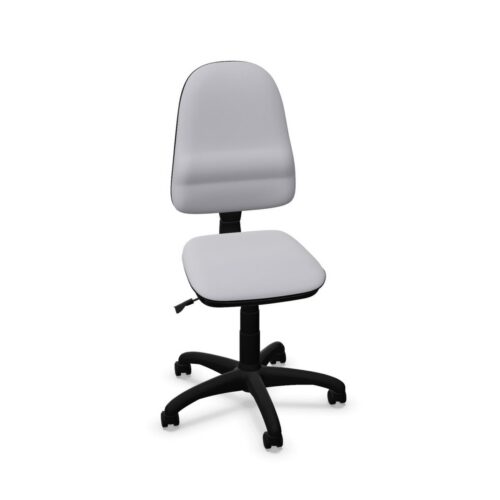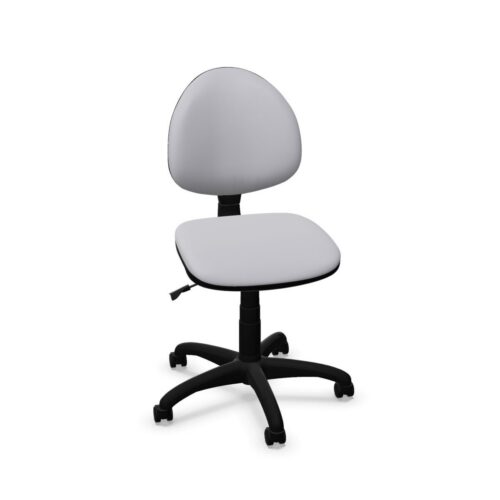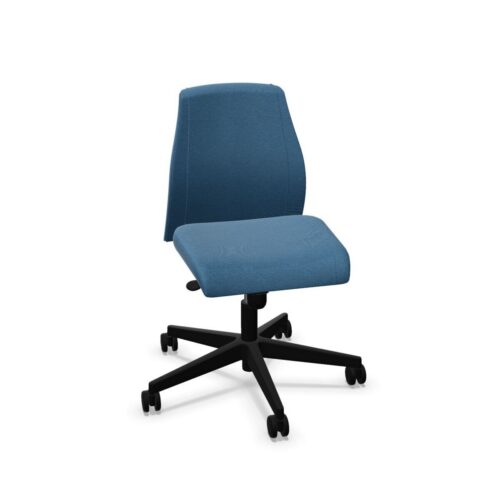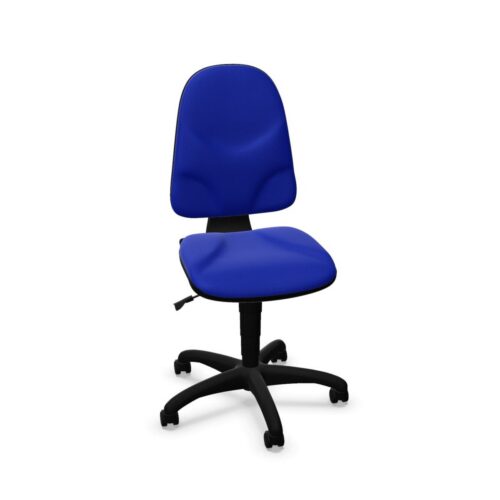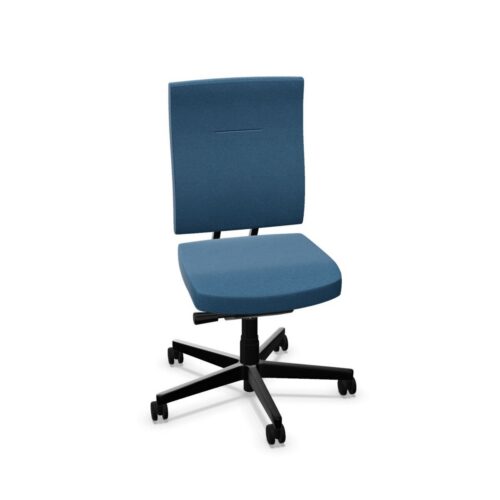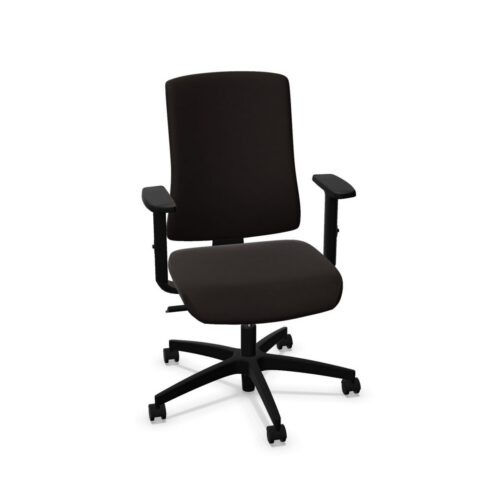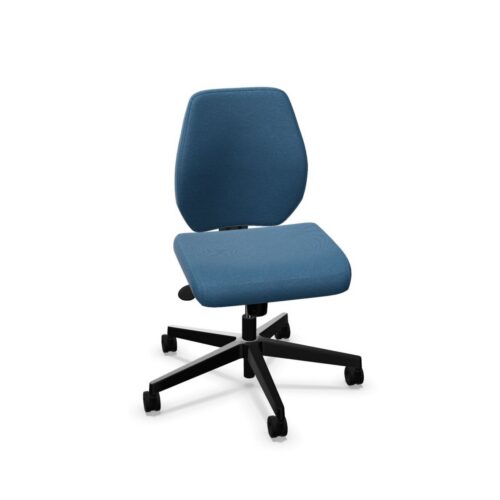


Office chairs with adjustable backrest height allow the position of the backrest to be raised or lowered to better match the user’s body dimensions. This adjustment can help position the backrest and lumbar support more accurately against the back, making the chair easier to adapt to different users.
Adjustable backrest height is particularly useful for task chairs used throughout the working day and for shared workstations where employees of different heights regularly use the same chair.
What is adjustable backrest height?
Adjustable backrest height means that the backrest can move vertically relative to the seat. Depending on the chair, this may be controlled through a lever, button, ratchet mechanism or another adjustment system.
The purpose is to allow the supportive areas of the backrest to be positioned more appropriately for the individual user. This is especially relevant when the backrest includes shaped lumbar support.
Backrest height adjustment should not be confused with reclining or backrest-angle adjustment. Height adjustment changes the vertical position of the backrest, while reclining mechanisms control how the backrest moves backwards during use.
Benefits of an adjustable-height backrest
An adjustable backrest can increase the range of users that an office chair can accommodate. Potential benefits include:
Better positioning of the backrest for different user heights
More accurate positioning of lumbar support
Greater flexibility in shared and hybrid workplaces
Improved adaptability compared with a completely fixed backrest
Ability to fine-tune the chair to the individual user
Useful additional adjustment for chairs used for prolonged desk work
How should the backrest height be adjusted?
The backrest should generally be positioned so that its shape supports the user’s back comfortably without creating excessive pressure in one area.
If the chair has a pronounced lumbar section, the backrest height can be adjusted so that this supportive area aligns comfortably with the lower back. Because body proportions differ, there is no single backrest position that is correct for every user.
The user should be able to sit fully back in the chair while maintaining a relaxed and supported position.
Adjust the chair as a complete system
Backrest height should be adjusted together with other chair settings. A practical sequence is to first establish a suitable seat height and seat depth, then position the backrest and lumbar support before fine-tuning the armrests and chair mechanism.
Our ergonomic workstation setup guide explains how the chair, desk and computer equipment should work together.
Adjustable backrest height and lumbar support
Backrest height and lumbar support are closely related, but they are not necessarily the same adjustment.
On some office chairs, moving the complete backrest also changes the vertical position of the lumbar support. Other chairs have a fixed-height backrest with a separately adjustable lumbar component. More advanced models may provide both adjustments.
When comparing office chairs, check the individual specification to understand exactly which part of the chair can be adjusted.
Why is backrest adjustment useful for shared workstations?
Shared and hot-desking environments require chairs to accommodate a wider range of body dimensions than an individually assigned workstation.
A backrest position that works well for a taller user may not provide the same support for someone with a shorter torso. Vertical adjustment allows each employee to reposition the chair when starting work.
For shared workplaces, adjustable backrest height is particularly useful when combined with:
Adjustable seat height
Seat-depth adjustment
Adjustable armrests
Adjustable lumbar support
A suitable reclining or synchronous mechanism
Clear and simple adjustment controls
Read our guide to ergonomics for shared workstations for more information about selecting chairs and desks for hybrid offices.
Adjustable vs fixed backrest height
An adjustable-height backrest provides more opportunity to adapt the chair to different users. A fixed-height backrest can still be suitable when its dimensions and shape already provide appropriate support for the intended user population.
Adjustable backrest height may be preferable when:
The chair is used for prolonged desk work
Multiple employees regularly use the same chair
The workplace needs to accommodate a broad range of body dimensions
Precise positioning of the backrest or lumbar area is desirable
Individual ergonomic adjustment is an important requirement
A fixed-height backrest may be sufficient when:
The backrest is designed to fit a broad user range without adjustment
The chair is mainly used for meetings or visitors
Typical sitting periods are relatively short
The chair provides separate lumbar adjustment
A simpler chair configuration is preferred
Office chairs without this feature can be viewed under office chairs without adjustable backrest height.
Backrest height is only one office-chair adjustment
An adjustable backrest does not by itself determine whether an office chair is suitable. Task chairs should be evaluated as a complete system, taking the intended users and duration of use into account.
Other relevant features can include:
Seat-height adjustment
Seat-depth adjustment
Lumbar support
Backrest-angle adjustment
Chair mechanism
Adjustable armrests
Weight or tension adjustment
Headrest options
Upholstery and backrest material
Applicable office-chair standards
Warranty and replacement-part availability
For a broader overview, read our guide to choosing an office chair.
What should you consider when choosing a chair with adjustable backrest height?
Adjustment range
Check how far the backrest can move vertically. A very small adjustment range may offer less flexibility than a chair designed to accommodate a broad range of users.
Ease of adjustment
In shared workplaces, users should be able to understand and operate the adjustment easily. If an adjustment is difficult to find or use, employees may leave the chair in the position selected by the previous user.
Backrest shape
The shape and dimensions of the backrest remain important. Height adjustment works best when the underlying backrest design is suitable for the intended type and duration of use.
Lumbar support
Check whether the lumbar area moves with the complete backrest or can be adjusted independently. These configurations provide different levels of individual control.
Questions to consider
Will the chair be assigned to one employee or shared?
How many hours per day will it typically be used?
How much vertical adjustment does the backrest provide?
Can the user adjust the backrest easily while seated?
Does moving the backrest also reposition the lumbar support?
Is separate lumbar adjustment available?
Which seat and armrest adjustments are included?
Does the chair accommodate the intended range of users?
Can adjustment instructions be provided for shared workstations?
Explore office chairs with adjustable backrests at Myntwork
Office chairs with adjustable backrest height provide additional flexibility for individual and shared workstations. They can help users position the backrest more appropriately, especially when combined with adjustable seat height, seat depth, armrests and lumbar support.
Explore our office chairs or browse the complete Myntwork office furniture collection.

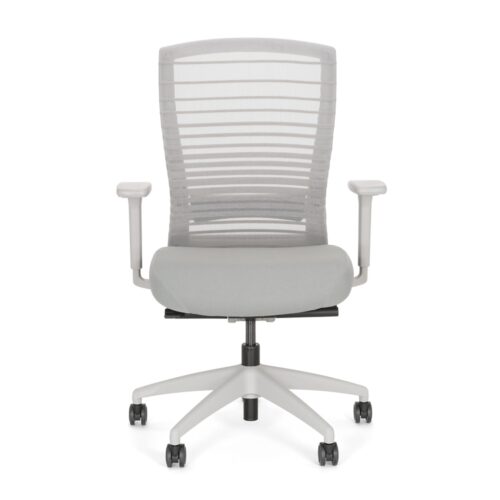
Myntwork
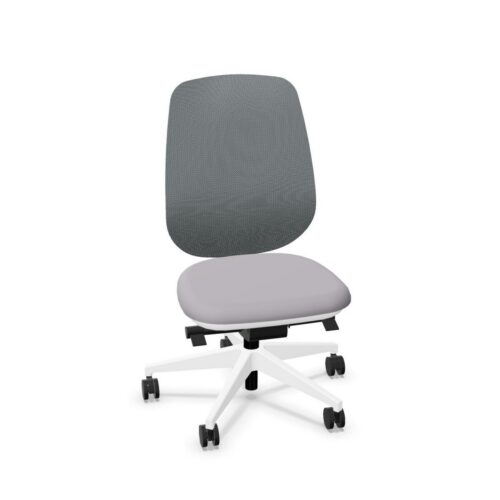
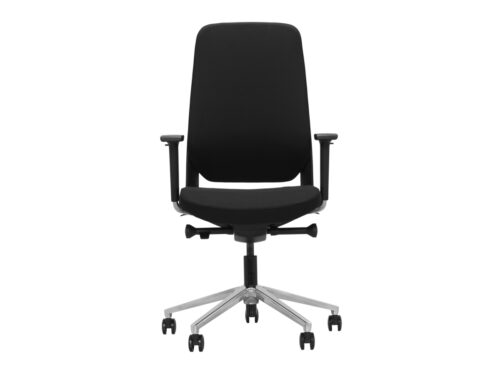
Myntwork

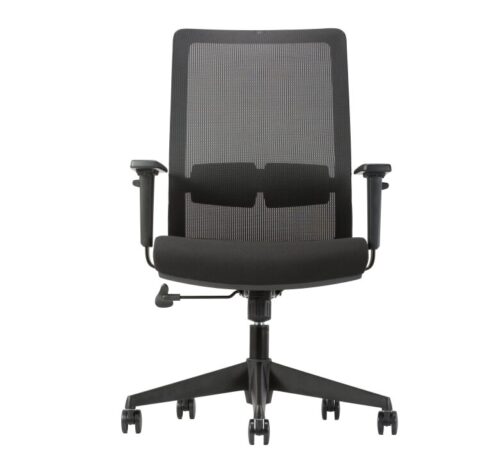
Myntwork


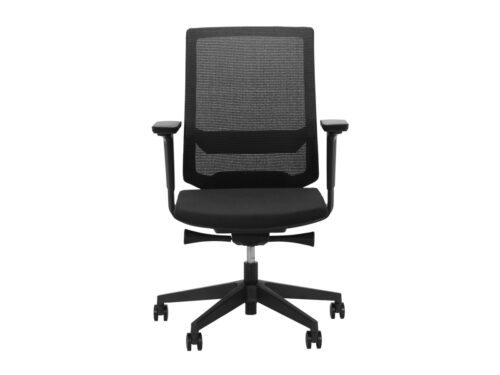
Myntwork
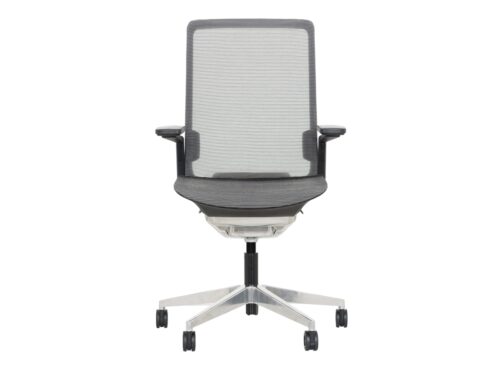
Myntwork