


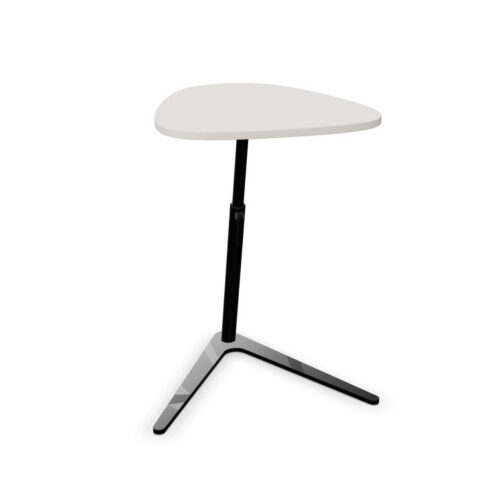
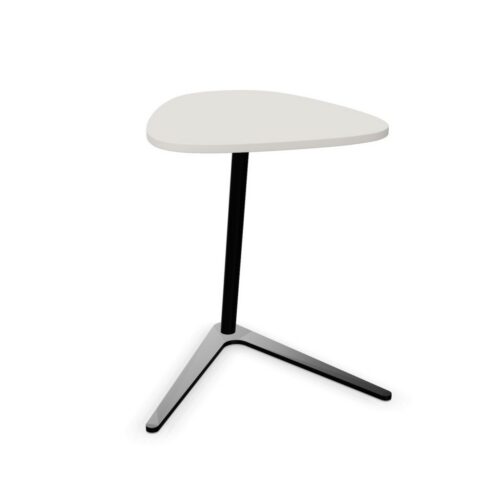
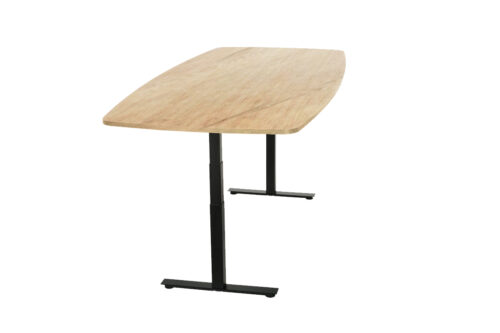
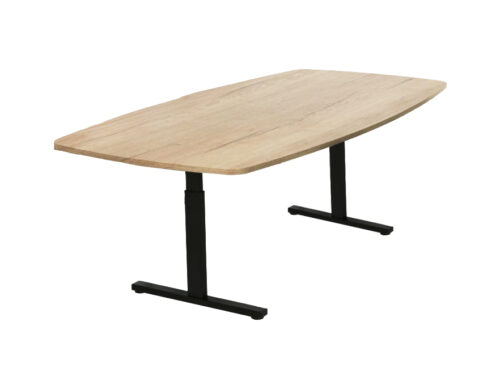
Manual height-adjustable tables allow the tabletop height to be changed without an electric motor or pneumatic lifting system. Adjustment is typically made using a hand crank, mechanical handle, locking mechanism or manually repositioned frame.
These tables can be a practical choice for workplaces where height flexibility is useful but frequent powered adjustment is not required. Depending on the model, they may be used for individual workstations, shared desks, project spaces, meeting areas or other flexible office environments.
What is a manual height-adjustable table?
A manual height-adjustable table uses a mechanical system to raise, lower or reposition the tabletop. Unlike electric models, the adjustment process does not rely on a motor or power connection.
The exact mechanism varies by product. Some tables use a hand crank to move the frame gradually, while others require the user to release a locking mechanism and reposition the table manually.
Benefits of manual adjustable tables
Manual height adjustment can offer several practical advantages in professional environments:
- No electrical connection required for height adjustment
- Simple mechanical construction
- Suitable for locations where access to power is limited
- Can be useful where the table height changes only occasionally
- May require less electrical maintenance than motorised systems
- Suitable for flexible and reconfigurable workplace layouts
- Available in different sizes and adjustment ranges
When is a manually adjustable table a good choice?
Manual adjustment can be particularly suitable where a table needs to accommodate different users or activities but does not need to move continuously throughout the working day.
For example, a workplace may adjust a table when a new employee starts using the workstation, when a room is reconfigured or when the table is moved to a different application.
For settings where users regularly alternate between sitting and standing throughout the day, an electric or pneumatic adjustment system may provide greater convenience.
Can manual adjustable tables be used for sit-stand working?
Some manually adjustable tables provide a sufficiently large height range for both seated and standing work. Others are designed only to fine-tune the working height within a smaller range.
Always check the minimum and maximum height of the specific model before assuming that it is suitable as a sit-stand table.
If regular sitting and standing are part of the workplace strategy, also consider how quickly and easily the table can be adjusted. A system that requires considerable effort may discourage users from changing position frequently.
Read our guide to sitting, standing and movement at work for more information about varying working positions.
Types of manual height adjustment
Crank-adjustable tables
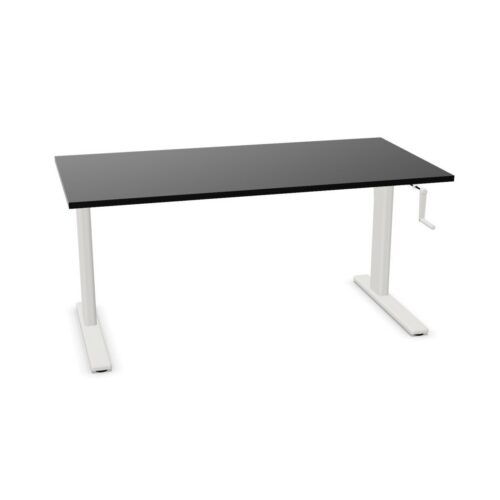
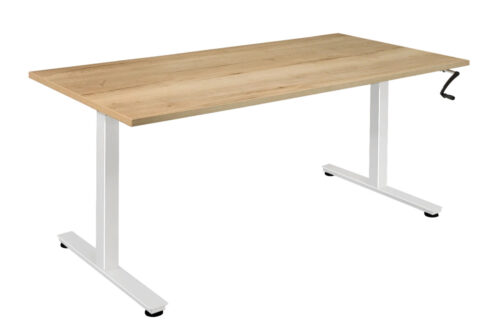
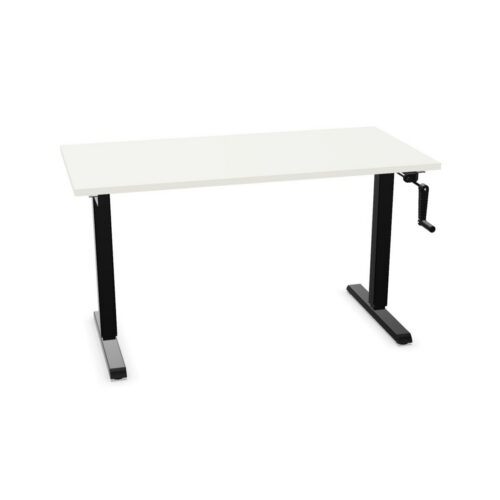
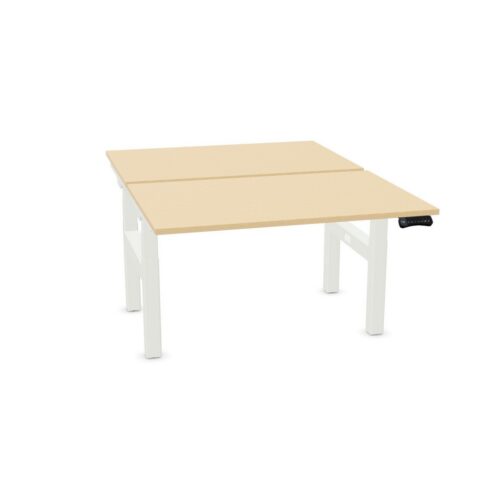
A crank-adjustable table uses a mechanical handle to raise or lower the tabletop. Turning the crank operates the lifting mechanism gradually, allowing the user to select the required height.
This type of system can provide precise adjustment without requiring electricity, although changing between very different heights may take longer than with an electric table.
Mechanically adjustable tables
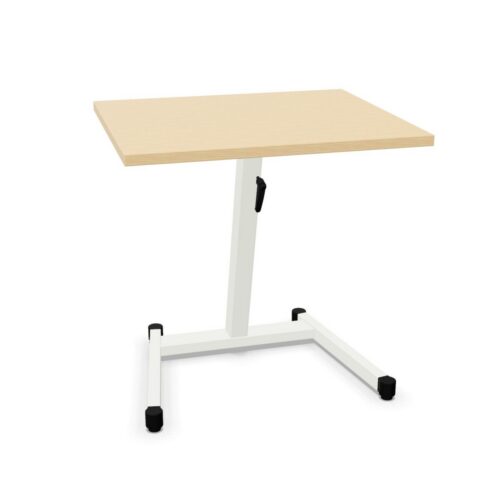
Some tables use a mechanical locking system rather than a crank. The user releases the frame, moves it to the required position and secures it again.
These systems are generally most suitable where adjustment happens occasionally rather than several times per day.
What should you consider when choosing a manual adjustable table?
Height adjustment range
Check both the minimum and maximum height. The available range determines whether the table is suitable for different seated users, standing work or both.
Ease of adjustment
The amount of effort required to change the height is an important consideration. In a shared workplace, the mechanism should be simple enough for different users to operate correctly.
Adjustment speed
Manual systems may take longer to reposition than electric or pneumatic alternatives. This is less important where the height changes occasionally but can become relevant when several users share the same table during the day.
Load capacity
Check how much weight the table can support and whether the adjustment mechanism can be operated safely under the expected load.
Monitors, computers, power modules and other accessories all contribute to the total weight placed on the frame.
Stability
The table should remain stable throughout its intended adjustment range. Tabletop dimensions, frame construction, equipment load and floor conditions can all affect stability.
Manual vs electric height-adjustable tables
Electric height-adjustable tables use powered motors to change height and are generally more convenient when users switch positions frequently. They may also offer additional features such as memory settings, digital displays and anti-collision systems.
Manual tables require more physical input but do not need electricity for adjustment. They can therefore be a practical option for simpler installations or workplaces where height changes are less frequent.
Manual vs pneumatic adjustable tables
Pneumatic height-adjustable tables also operate without electricity, but they use a gas-assisted mechanism to make the tabletop easier and faster to move.
A manual system usually relies more directly on mechanical movement, such as a crank or locking frame. The best option depends on adjustment frequency, expected load, budget and the way the table will be used.
Cable management for adjustable tables
Even when the adjustment mechanism is completely manual, equipment on the tabletop may still require electrical and data connections.
Make sure monitor cables, chargers, power leads and other connections have enough movement for the full height range. Suitable cable trays, flexible cable routes and sufficient cable length can help prevent cables from becoming stretched or trapped.
Manual adjustable tables in shared workplaces
Manual height adjustment can be used in shared workspaces when users only need occasional changes. However, the adjustment process should remain straightforward enough that employees actually adapt the workstation to their needs.
For highly flexible hot-desking environments, ease and speed of adjustment become more important because multiple people may use the same desk during a typical week.
Read our guide to ergonomics for shared workstations for more information about selecting furniture for shared and hybrid offices.
Questions to consider
- What minimum and maximum table height is required?
- Will the table be used for seated work, standing work or both?
- How frequently will the table height need to change?
- How much physical effort is required to operate the mechanism?
- Will multiple users share the table?
- What equipment and total load will be placed on the tabletop?
- How stable is the table at its highest position?
- How will equipment cables move when the height changes?
- Would an electric or pneumatic mechanism be more suitable for frequent adjustment?
Explore manual adjustable tables at Myntwork
Manual height-adjustable tables offer a straightforward way to create flexible working heights without using a powered lifting system. They can be especially suitable where adjustment is occasional, electrical access is limited or a simpler mechanical solution is preferred.
Compare the adjustment mechanism, height range, tabletop dimensions, load capacity and intended use before choosing a model.
Explore our desks and adjustable workstations or browse the complete Myntwork office furniture collection.




Myntwork
Myntwork