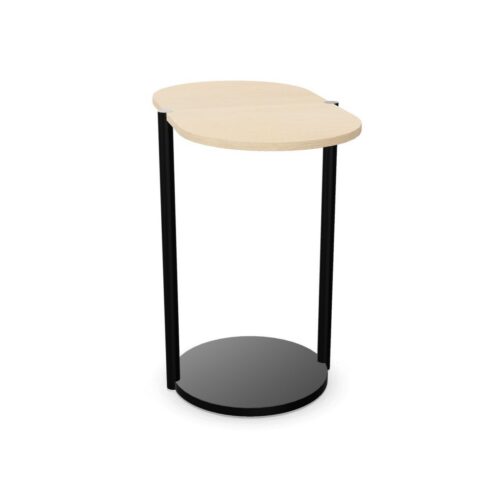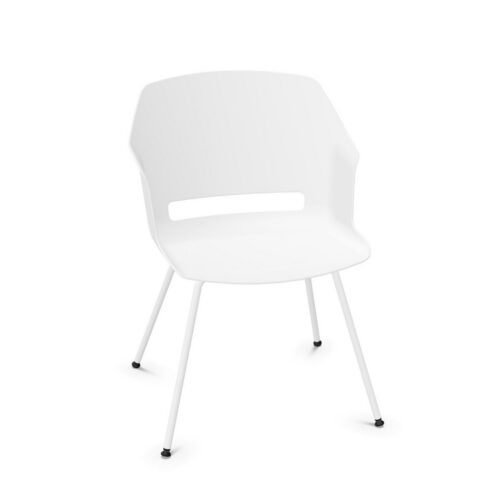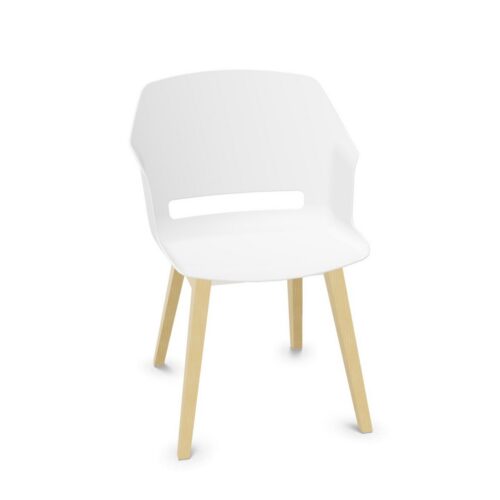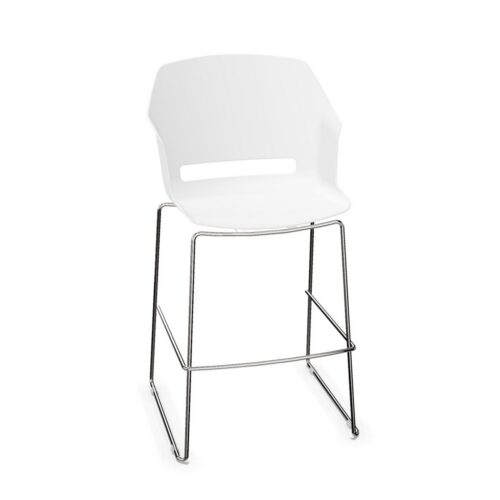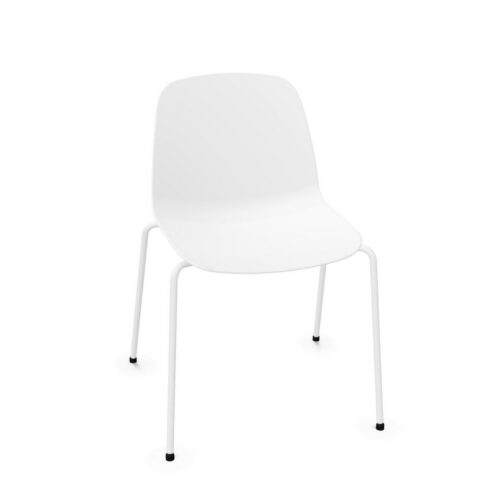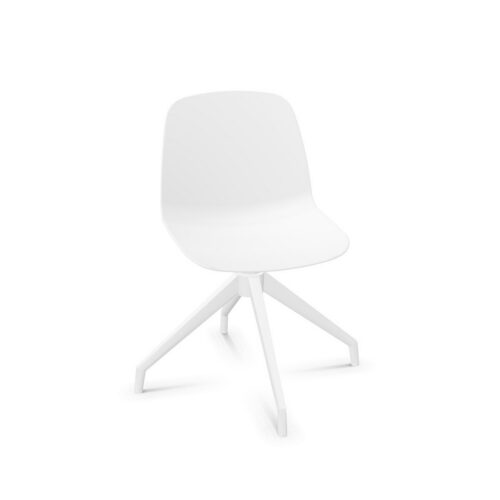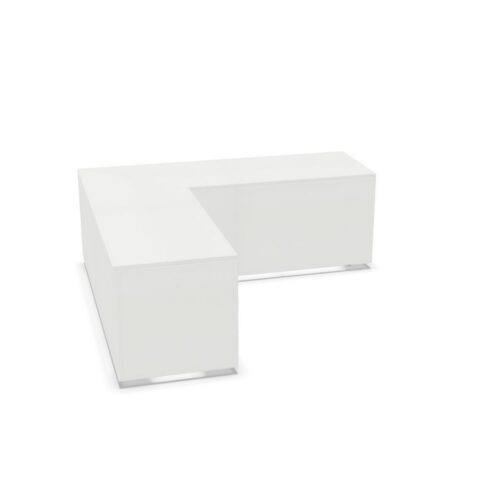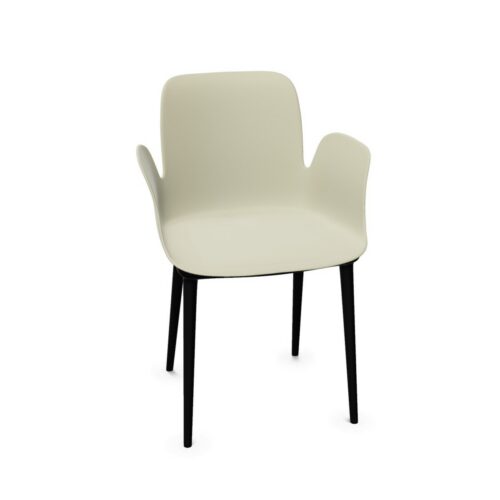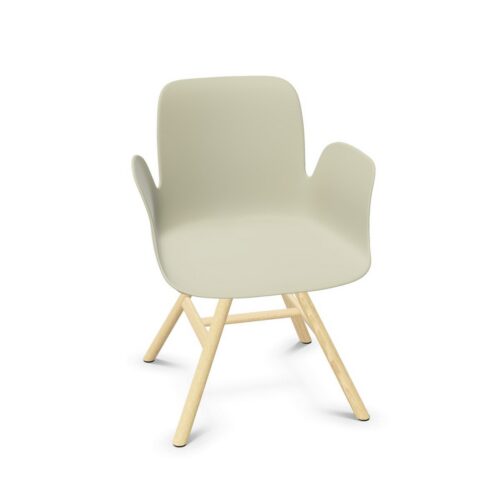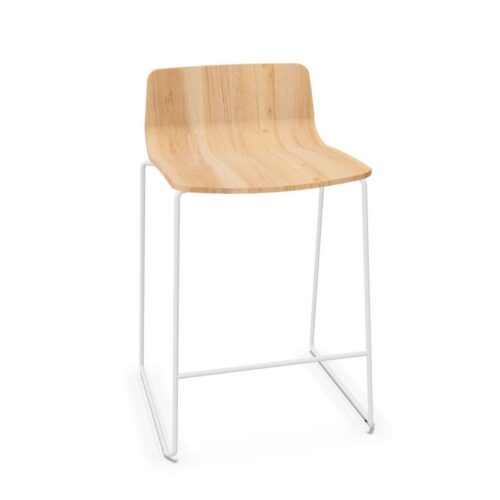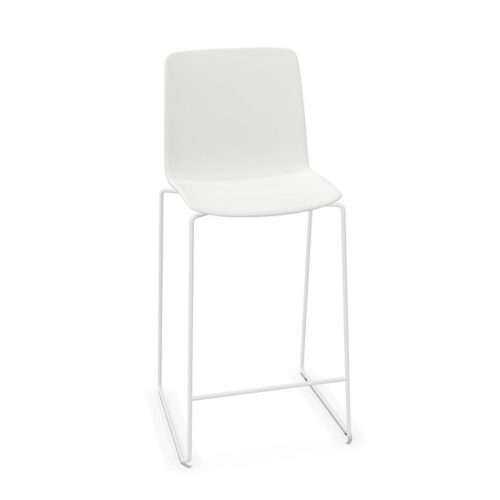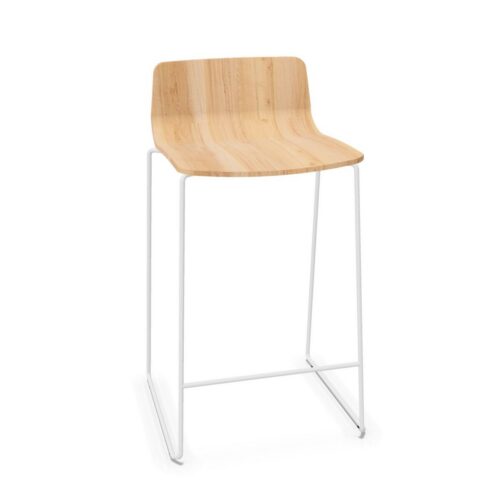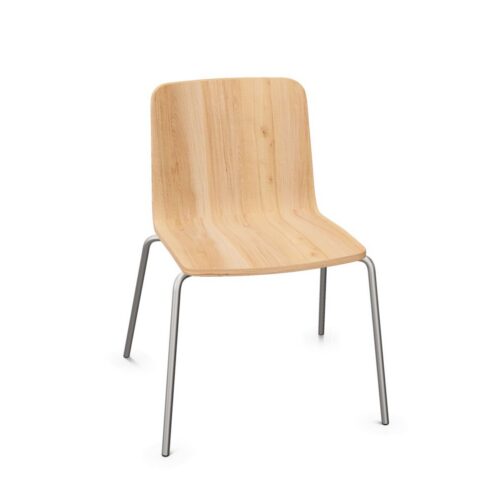


No-upholstery office furniture covers products whose seat, back or main contact surface is not finished with a padded fabric, leather or similar upholstered covering. Depending on the design, this may mean a moulded plastic shell, timber surface, metal frame, laminate top or another exposed, wipeable material.
For workplace procurement, this filter is useful when a scheme calls for a simpler finish, straightforward cleaning or furniture intended for occasional rather than prolonged seated use. It does not describe the whole construction, comfort level or suitability of every item; review the individual product specification, dimensions and intended application before selecting a piece.
What does no upholstery mean?
Upholstery normally refers to the cushioned and covered finish applied to seating, often on a seat, backrest or both. Products listed with no upholstery do not have that type of surface in the relevant area. A chair may instead use a contoured polypropylene shell, a wooden seat and back, or a metal structure. Tables, storage and other furniture may also appear where there is no upholstered surface to specify.
The absence of upholstery should not be confused with an absence of comfort features. Shape, flex, edge profile, back support, armrests and the way a product is used all affect the experience. Equally, a non-upholstered chair is not automatically appropriate for every workstation or all-day task.
Why choose furniture without upholstery?
A no-upholstery finish can support practical decisions across shared and changeable workplace settings. Exposed hard surfaces may make it easier to see the condition of furniture and to follow an agreed cleaning routine. They can also create a visually consistent result where the brief favours clean lines, visible materials or a lighter-looking interior.
- Suitable for areas where surfaces are cleaned regularly between different users.
- Useful when the furniture needs to coordinate with timber, metal, laminate or moulded finishes elsewhere in a scheme.
- Often considered for breakout, café, training and visitor spaces with varied patterns of use.
- May reduce the need to specify an upholstery colour or textile for the item concerned.
Material choice still matters. Plastic, wood, metal and laminate each have different appearance, care and feel, while construction details such as joins, feet and edges can affect day-to-day use. Check the product page rather than assuming that all non-upholstered items share the same finish or maintenance requirements.
Where is non-upholstered furniture used?
Furniture with no upholstery is common in spaces that need adaptable seating and a clear, functional look. Meeting and collaboration rooms may use shell chairs around tables; canteens and informal dining areas may combine hard-surface seating with tables; reception, waiting and event areas may use it where a particular visual language is required.
It can also be relevant in education-style training rooms, project spaces and touchdown zones, especially where furniture is moved, stacked or rearranged as part of normal operation. Whether a particular chair can be stacked, linked, used outdoors or moved frequently depends on its individual design, so these qualities should be confirmed product by product.
Furniture types to consider
The no-upholstery filter can include more than one furniture category. Looking at the intended activity first helps narrow a broad selection and avoids choosing solely by surface finish.
- Visitor and meeting chairs: for short meetings, interviews, waiting areas and shared tables.
- Breakout and café seating: for informal work, refreshments and social spaces.
- Task and work chairs: where the product’s adjustments and support should be assessed against the user’s working pattern.
- Tables and ancillary furniture: for projects where exposed timber, metal or laminate surfaces form part of a coordinated palette.
- Stools and occasional seating: for high tables, collaborative areas and flexible-use rooms.
How to choose the right material and form
Start with the setting, the expected duration of use and the people using the furniture. For a reception chair used briefly by visitors, profile and ease of cleaning may take priority. For a chair used for concentrated desk work, dimensions, adjustability and support are likely to be more important than the fact that it has no upholstery.
Then consider how the exposed surface will sit alongside the rest of the workplace. A moulded shell may introduce a smooth, contemporary contrast to soft finishes; timber can bring warmth; metal can suit an industrial or utilitarian scheme. Bear in mind that the colour of a frame, base or shell is a separate attribute from upholstery material. A no-upholstery product may still have a specified base colour or surface finish.
Questions to consider
- How long will people typically sit or use the item at one time?
- Is the furniture for focused work, meetings, dining, waiting or informal collaboration?
- Which surface material is appropriate for the cleaning approach in the space?
- Do dimensions, seat height, arms and back shape suit the planned table or room layout?
- Will the finish coordinate with existing desks, flooring and storage?
- Is flexibility, such as stacking or moving, needed for the proposed layout?
Care and longer-term planning
Routine care should follow the instructions supplied for the specific material and construction. Avoid treating all hard surfaces in the same way: a timber finish may need different attention from a polypropylene shell or powder-coated metal. Regular checks of feet, fixings and surface condition can help workplace teams identify wear before it affects use or presentation.
When planning a fit-out, it is also helpful to consider whether a durable, easily maintained finish suits the anticipated lifecycle of the space. Guidance on how to extend the lifespan of office furniture can support decisions around care, reuse and ongoing maintenance alongside the original specification.
Coordinating a workplace furniture scheme
No-upholstery pieces can be used as a consistent base layer within a wider scheme, balanced with upholstered lounge seating, acoustic products or other specialist furniture where those functions are needed. Keeping material, colour, scale and use in view together helps create rooms that work for their intended activities rather than relying on one attribute alone.
Browse the wider office furniture collection to compare categories and finishes, or consult Myntwork’s guidance on choosing office furniture when assessing furniture for different workplace zones.