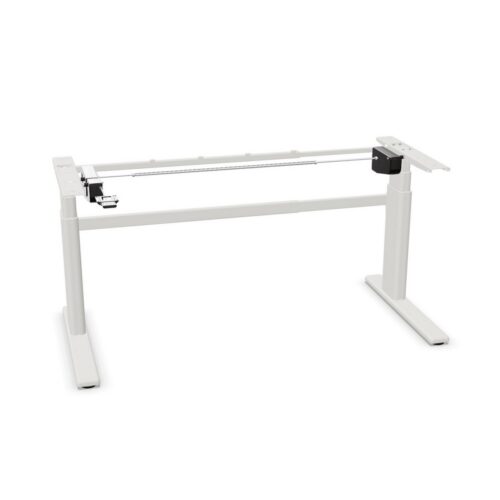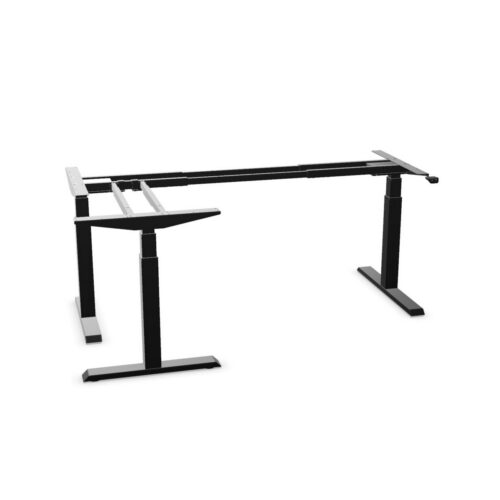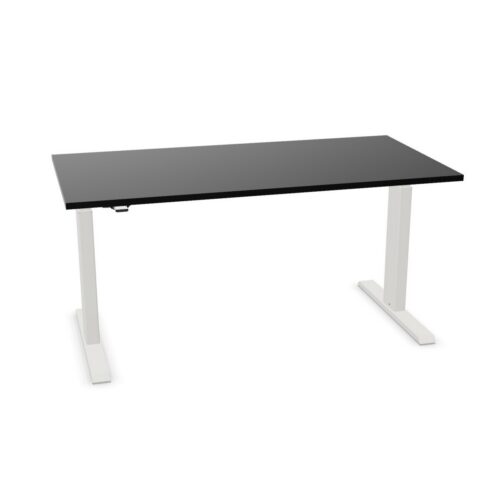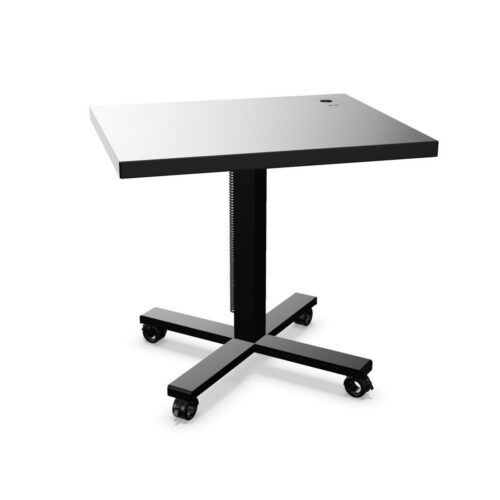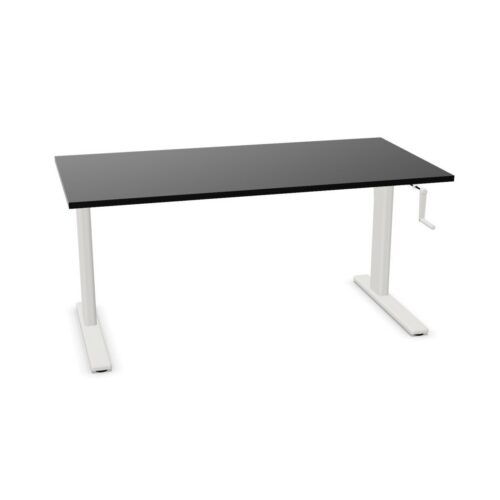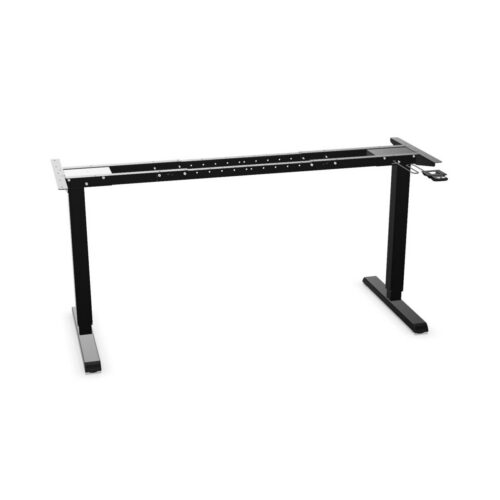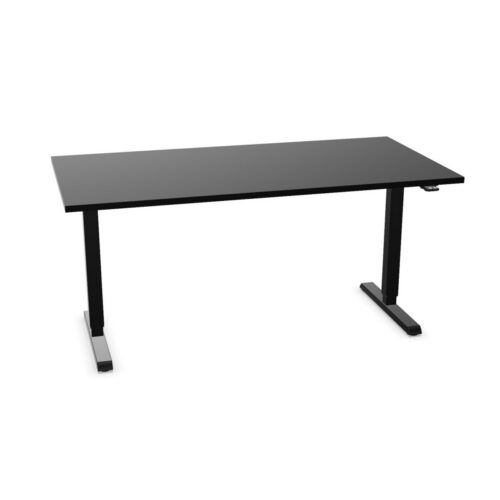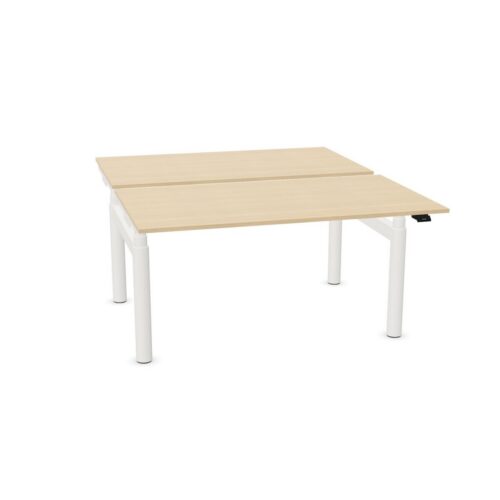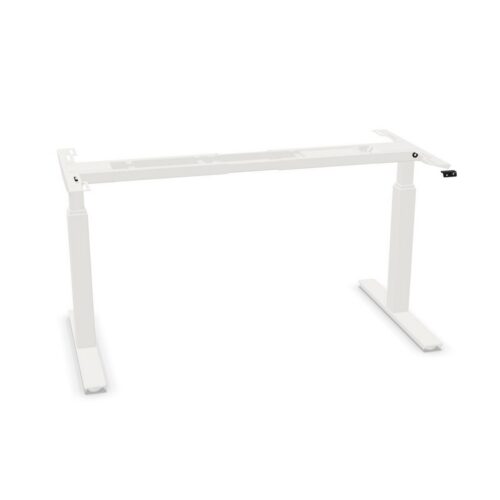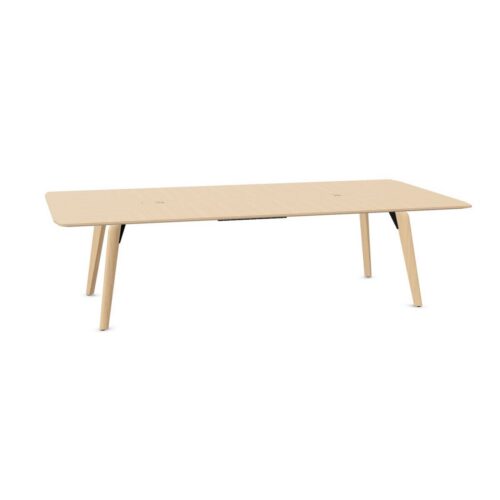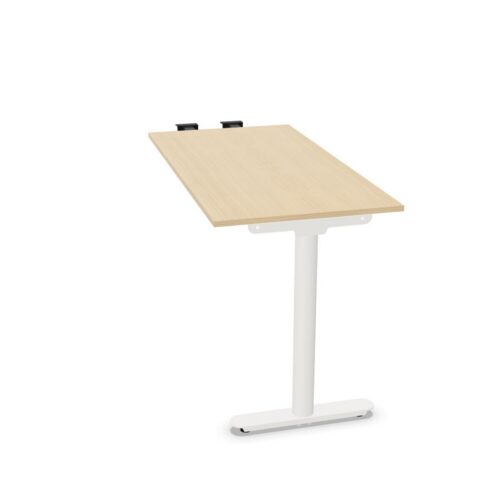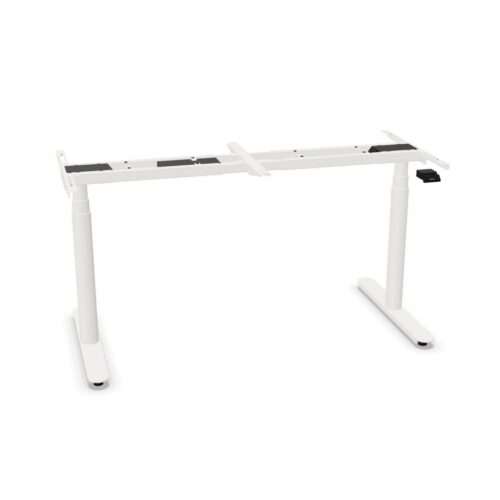


Height-adjustable tables allow the working height of the tabletop to be changed to suit different users, tasks or working positions. Depending on the product, adjustment may be electric, pneumatic or manual.
Adjustable tables are commonly used in offices, shared workspaces, meeting rooms and flexible environments where one fixed table height is not suitable for every user or activity.
What is a height-adjustable table?
A height-adjustable table has a frame or mechanism that allows the tabletop to move vertically. The available adjustment range and operating method depend on the specific product.
Some tables are designed primarily to fine-tune the working height for different seated users, while others offer a larger range that supports both seated and standing work.
Why choose an adjustable table?
Adjustable tables can make a workplace more flexible and easier to adapt over time. They are particularly useful where furniture is shared or where employees have different ergonomic requirements.
Potential benefits include:
- Adjustment for users of different heights
- More flexibility in shared and hybrid workplaces
- Support for different activities and working positions
- Easier adaptation when teams or workplace layouts change
- Potential support for seated and standing work
- Greater flexibility than a fixed-height table
- Suitable for individual and multi-user work environments
Types of height-adjustable tables
Not every adjustable table uses the same mechanism. The three most common types are electric, pneumatic and manual adjustment.
Electric height-adjustable tables
Electric height-adjustable tables use one or more powered motors to raise and lower the tabletop. They are especially practical when users change height frequently and may include features such as memory settings, digital displays or anti-collision systems.
Pneumatic height-adjustable tables
Pneumatic height-adjustable tables use a gas-assisted mechanism to make height changes easier without requiring electricity for the adjustment itself.
Manual height-adjustable tables
Manual height-adjustable tables use a mechanical system such as a hand crank, handle or locking frame. They can be a practical solution where adjustment is required only occasionally.
Height-adjustable tables for sit-stand working
Many adjustable tables are designed to support both seated and standing work, although this should not be assumed for every product. The minimum and maximum height must provide a suitable range for the intended users.
When the table supports sit-stand use, employees can change working position during the day instead of remaining in one static posture for long periods.
A sit-stand table should be considered as part of the complete workstation. Chair adjustment, monitor position, keyboard and mouse placement, accessories and working habits remain important.
Read our guide to sitting, standing and movement at work for more information.
Adjustable tables in shared and hybrid workplaces
Height adjustment is particularly valuable in hot-desking and hybrid environments because the same table may be used by people with very different body dimensions.
A fixed-height table may be comfortable for one user but unsuitable for another. An adjustable table makes it easier to create a workstation that can be adapted each time a new person uses it.
For shared workplaces, it is also important that the adjustment mechanism is easy to understand and quick to operate. Clear setup instructions can help users correctly adjust the complete workstation.
For more guidance, see our ergonomics guide for shared workstations.
What should you consider when choosing a height-adjustable table?
Minimum and maximum height
The adjustment range is one of the most important specifications. Check whether the lowest and highest positions are suitable for the users and activities expected at the table.
If the table will be used for both sitting and standing, make sure the range genuinely supports both positions rather than providing only limited height correction.
Adjustment mechanism
Consider how often the table will be adjusted. Electric adjustment is usually convenient for frequent position changes, while pneumatic or manual systems may be appropriate where adjustment is less frequent or electrical power is undesirable.
Load capacity
The table frame must support the tabletop and all equipment placed on it. Monitors, monitor arms, computers, power modules and accessories can add considerable weight.
Always compare the expected equipment load with the manufacturer’s stated capacity.
Stability
An adjustable table should remain stable throughout its intended height range. Stability can be influenced by frame construction, tabletop dimensions, equipment weight and floor conditions.
Tabletop dimensions
The working surface should provide enough space for the intended equipment and activities without creating an unnecessarily large footprint.
For individual computer workstations, consider the space required for screens, keyboard, mouse, documents and any accessories.
Cable management for height-adjustable tables
Cable management deserves particular attention because the tabletop moves while power and data connections often remain fixed elsewhere in the room.
Cables should have sufficient length to move through the full adjustment range without becoming stretched, trapped or disconnected. Depending on the installation, useful solutions can include:
- Cable trays mounted beneath the tabletop
- Flexible cable spines
- Power modules attached to the moving tabletop
- Sufficiently long power and data leads
- Carefully positioned floor or wall connections
The complete cable arrangement should be tested at both the lowest and highest table positions before regular use.
Adjustable tables and workplace ergonomics
Adjustability can help accommodate a wider range of users, but adjustment alone does not make a workstation ergonomic.
The desk height should work together with the office chair, screen position and input devices. Users should also understand how to adjust the furniture and be encouraged to vary their working position rather than trying to maintain one supposedly perfect posture throughout the day.
Our ergonomic workstation setup guide explains how the different parts of a workstation should work together.
Height-adjustable tables for different workplace applications
Adjustable tables are not limited to traditional individual desks. Depending on the design and dimensions, they may also be suitable for:
- Individual office workstations
- Shared desks and hot-desking
- Project and collaboration spaces
- Meeting rooms
- Training environments
- Flexible multi-purpose rooms
- Accessible workplace configurations
The required adjustment range, load capacity and operating mechanism may differ significantly between these applications.
Adjustable vs fixed-height tables
A fixed-height table can be perfectly suitable where the users, activities and furniture arrangement remain relatively consistent. It also has fewer moving components and generally requires no adjustment instructions.
An adjustable table provides greater flexibility where furniture is shared, employee requirements vary or the organisation wants the option to change working positions.
The best choice therefore depends on how the table will actually be used rather than on adjustability being automatically better for every workplace.
Questions to consider
- Who will use the table?
- Will the table be assigned or shared?
- Is adjustment required only for seated users or also for standing work?
- What minimum and maximum height is required?
- How frequently will the height be changed?
- Would electric, pneumatic or manual adjustment be most practical?
- What equipment will be placed on the tabletop?
- What load capacity is required?
- How will power and data cables be managed?
- Does the table remain stable throughout the adjustment range?
Explore height-adjustable tables at Myntwork
Height-adjustable tables can provide a flexible foundation for individual, shared and hybrid workplaces. Compare the adjustment mechanism, height range, dimensions, stability, load capacity and accessories to find the most suitable option for your office.
Explore our desks and adjustable workstations or browse the complete Myntwork office furniture collection.