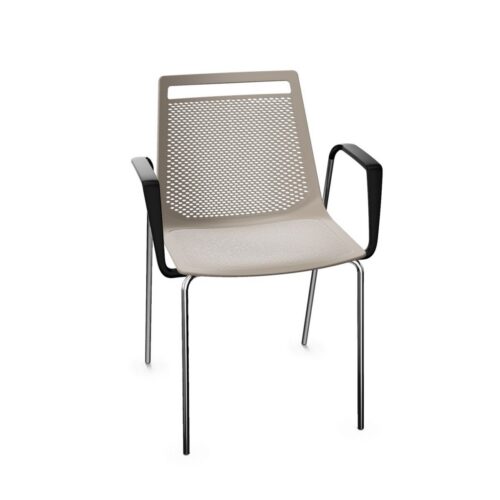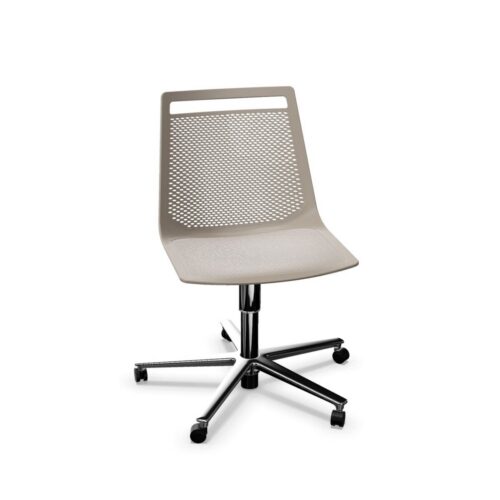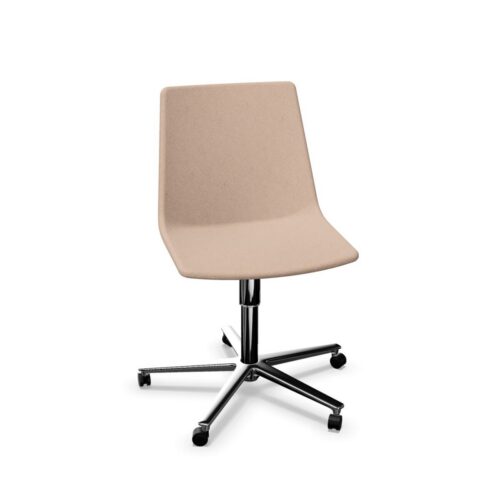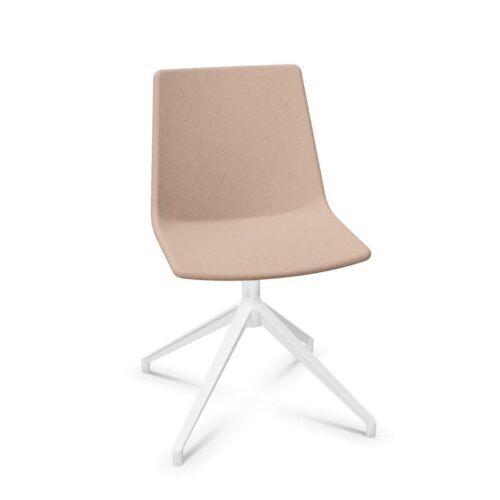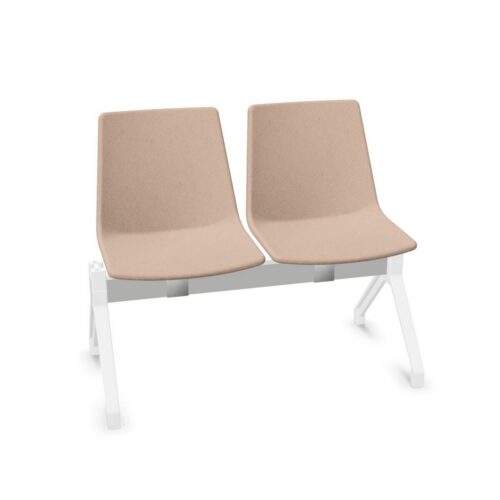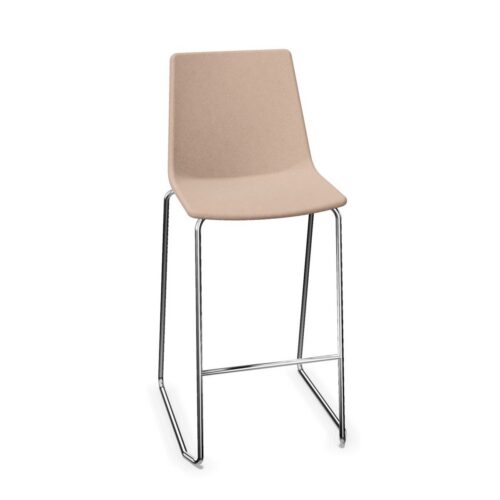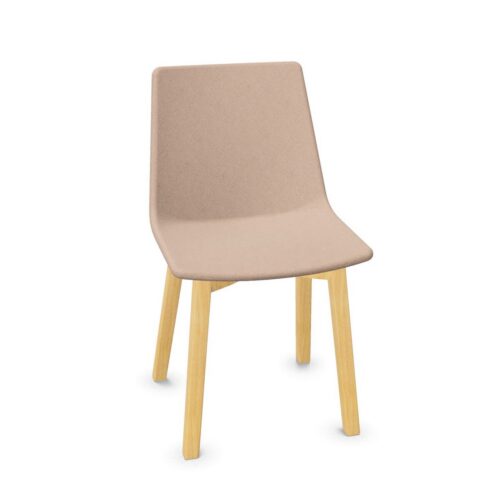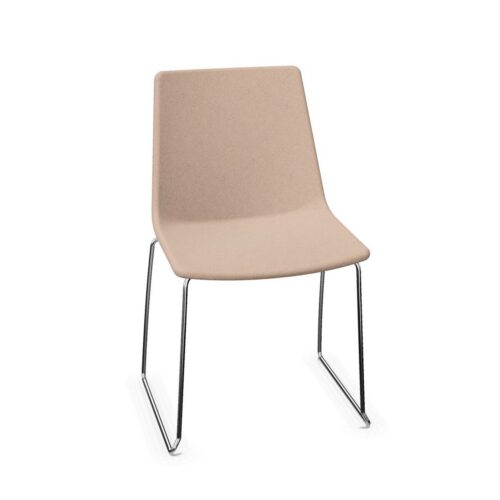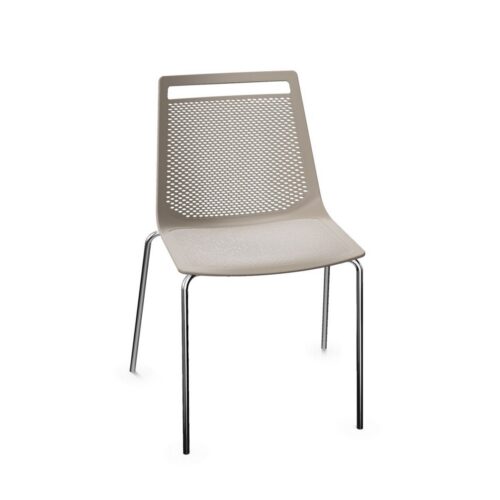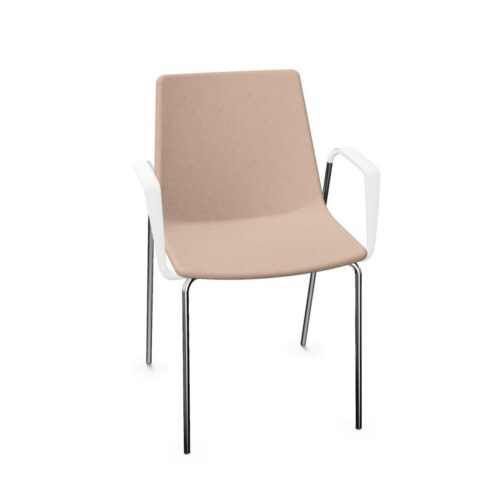


Office chairs without adjustable backrest height have a backrest that remains at a fixed vertical position during normal use. The user may still be able to adjust other parts of the chair, such as the seat height, seat depth, armrests or reclining mechanism, but the backrest itself cannot be raised or lowered.
A fixed-height backrest can be perfectly suitable for many office chairs, especially when the backrest has been designed to accommodate a broad range of users without requiring vertical adjustment.
What does “fixed backrest height” mean?
A fixed backrest height means that the vertical position of the backrest is predetermined by the chair design. The user cannot move the complete backrest upward or downward in relation to the seat.
This should not be confused with a fixed backrest angle. Many office chairs without adjustable backrest height still include a reclining, synchronous or tilting mechanism that allows the backrest to move during use.
When is a fixed-height backrest suitable?
Office chairs without adjustable backrest height can be suitable in a wide range of professional environments, including:
- Meeting and conference rooms
- Visitor and reception areas
- Executive offices
- Training and presentation spaces
- Assigned workstations
- Task chairs designed around a broad fixed backrest shape
The suitability of the chair depends on the overall design, the intended users and how long the chair will typically be used.
Benefits of a fixed-height backrest
A fixed-height backrest can offer several practical advantages:
- Simple chair operation
- No separate backrest-height control to adjust
- Consistent backrest position
- Fewer moving components
- Suitable for chairs designed to support a broad user range
- Can be practical in meeting and visitor environments
- May reduce the number of settings users need to understand
Fixed backrest height and lumbar support
A chair without adjustable backrest height can still provide effective lumbar support. Some chairs use a shaped backrest that supports the lower back without requiring vertical adjustment, while others include a separately adjustable lumbar support.
It is therefore important to check the full chair specification rather than assuming that a fixed-height backrest means that the lumbar area cannot be adjusted.
When the chair includes separate lumbar adjustment, the user may still be able to change the position or depth of the lower-back support even though the complete backrest remains fixed.
Fixed-height backrests for task chairs
For task seating used throughout the working day, the complete chair should be evaluated for user fit and adjustment range.
A fixed-height backrest can work well when its dimensions and shape suit the intended users. However, users with very different torso lengths may have less opportunity to reposition the supportive areas of the chair than they would with an adjustable-height backrest.
Seat height, seat depth, lumbar support, armrests and the chair mechanism can all influence the overall fit and should be considered together.
Fixed backrest height in shared workstations
Shared and hot-desking environments place greater demands on chair adjustability because multiple employees may use the same chair.
A well-designed fixed-height backrest may still accommodate a broad range of users, particularly when the chair provides other adjustments. However, an adjustable-height backrest can offer additional flexibility where users have significantly different body dimensions.
For shared workstations, consider whether the chair also provides:
- Adjustable seat height
- Seat-depth adjustment
- Adjustable armrests
- Adjustable lumbar support
- A suitable reclining or synchronous mechanism
- Simple and intuitive controls
Read our guide to ergonomics for shared workstations for more information about selecting chairs for hybrid offices.
Fixed vs adjustable backrest height
The main difference is whether the user can reposition the complete backrest vertically.
An office chair with adjustable backrest height gives users additional control over where the backrest and its supportive areas sit against the body.
A fixed-height backrest uses a predetermined position and may be entirely suitable when the chair has been designed to fit the intended user group without further adjustment.
A fixed-height backrest can be suitable when:
- The chair’s backrest shape already supports a broad range of users
- The chair is mainly used for meetings or visitors
- The chair is assigned to a consistent user
- Separate lumbar adjustment is available
- A simpler adjustment system is preferred
Adjustable backrest height may be preferable when:
- Different employees regularly share the chair
- The chair is used for prolonged desk work
- The workplace needs to accommodate a broad range of body dimensions
- More precise positioning of the backrest is required
- Individual ergonomic adjustment is a priority
Backrest height is only one part of the chair
Whether the backrest height is fixed or adjustable should not be considered in isolation. Other chair characteristics can have an equal or greater influence on how well the chair suits the user.
Relevant features can include:
- Seat-height adjustment
- Seat-depth adjustment
- Lumbar support
- Backrest shape and material
- Reclining or synchronous mechanism
- Adjustable armrests
- Weight or tension adjustment
- Headrest options
- Applicable office-chair standards
- Warranty and replacement-part availability
Read our guide to choosing an office chair for a broader overview of office-chair features.
How should a fixed-height backrest fit?
The user should be able to sit fully back in the chair while feeling comfortable support across the back. The backrest should not create excessive pressure in one area or force the user into an unnatural position.
If lumbar support is integrated into the fixed backrest, check whether its position works for the intended user. If it does not, a chair with separate lumbar adjustment or adjustable backrest height may provide a better fit.
The chair should also work together with the desk and computer equipment. Even a well-designed backrest cannot compensate for an unsuitable seat height, desk height or screen position.
Our ergonomic workstation setup guide explains how to adjust the complete workstation.
Questions to consider
- How many hours per day will the chair typically be used?
- Will the chair be assigned or shared?
- Does the fixed backrest shape suit the intended users?
- Is separate lumbar adjustment available?
- Can users sit fully back against the backrest comfortably?
- Which other chair adjustments are included?
- Does the chair need to accommodate a broad range of body dimensions?
- Would adjustable backrest height provide meaningful additional flexibility?
- Is the chair intended for task work, meetings or visitor use?
Explore office chairs at Myntwork
Office chairs without adjustable backrest height can provide a comfortable and practical seating solution when the fixed backrest design suits the intended users and application. The complete chair should always be evaluated for fit, adjustment range and expected duration of use.
Explore our office chairs or browse the complete Myntwork office furniture collection.
Gaber