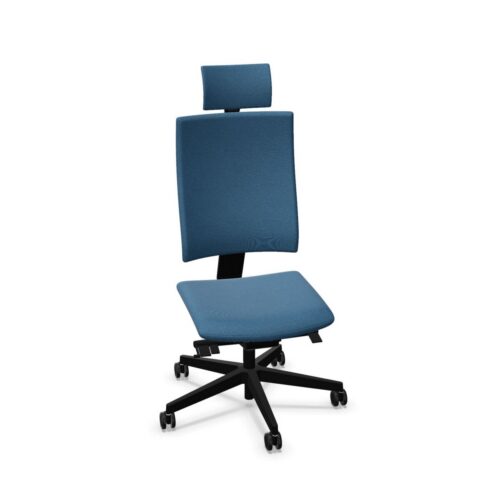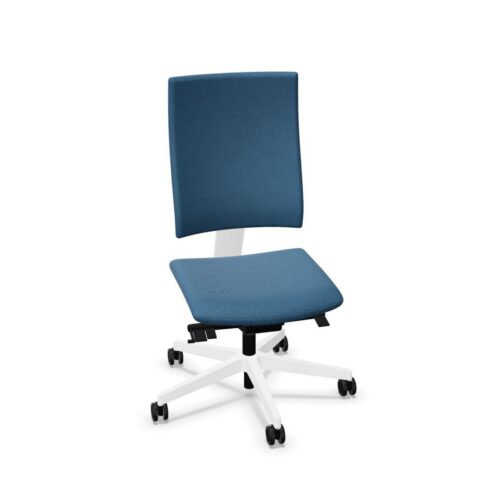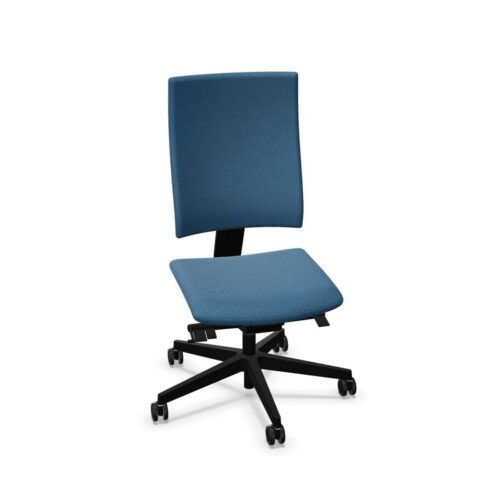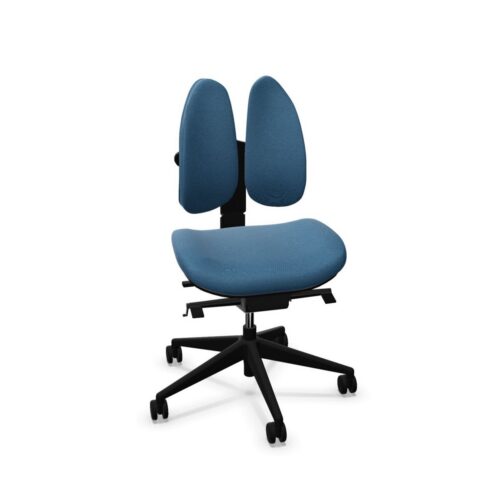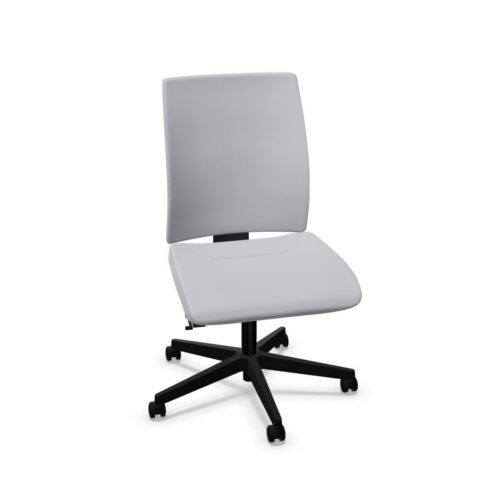


Office chairs with adjustable seat depth allow the seat pan to move forward or backward so the chair can better match the user’s leg length and body proportions. This adjustment is particularly useful for task chairs used throughout the working day and for shared workstations where several people may use the same chair.
By changing the seat depth, users can increase or reduce the amount of thigh support while maintaining a comfortable position against the backrest.
What is adjustable seat depth?
Seat depth is the distance between the backrest and the front edge of the seat. On an office chair with adjustable seat depth, the seat pan can usually slide horizontally to increase or decrease this distance.
The feature is sometimes referred to as a sliding seat or seat-slide adjustment. The exact adjustment range and operating mechanism vary between chair models.
Adjustable seat depth should not be confused with seat-height adjustment. Seat height changes the vertical position of the complete seat, while seat-depth adjustment changes the horizontal distance between the backrest and the front edge.
Why is seat-depth adjustment useful?
People of the same overall height can still have different leg and torso proportions. A fixed seat depth that works comfortably for one person may feel too long or too short for another.
Adjustable seat depth makes it easier to adapt the chair to these differences and can provide several practical benefits:
- Better accommodation of different leg lengths
- More appropriate support beneath the thighs
- Greater flexibility for shared and hybrid workstations
- Improved adaptability for users of different heights
- More opportunity to sit fully against the backrest
- Additional individual adjustment for prolonged desk work
- Broader user compatibility than a completely fixed seat depth
How should adjustable seat depth be set?
The seat should provide comfortable support beneath the thighs while allowing the user to sit fully against the backrest.
There should normally be some clearance between the front edge of the seat and the area behind the knees. The seat should not press firmly into the back of the legs or prevent the user from using the backrest properly.
If the seat is positioned too far forward, it may feel excessively deep for the user. If it is moved too far backward, a larger part of the thighs may remain unsupported.
The most comfortable position varies between users, so seat depth should be adjusted according to individual body proportions rather than one fixed measurement.
Adjust seat depth together with seat height
Seat depth is only one part of correctly setting up an office chair. The seat height should normally be adjusted first so the user’s feet are appropriately supported and the legs can remain comfortable.
After that, the seat depth can be fine-tuned before adjusting the backrest, lumbar support and armrests.
Our ergonomic workstation setup guide explains how the chair, desk, monitor and input devices should be coordinated as a complete workstation.
Adjustable seat depth for taller and shorter users
Seat-depth adjustment can be especially useful when one chair needs to accommodate users with different leg lengths.
Taller users may benefit from additional seat depth because it can provide more support beneath the thighs. Shorter users can reduce the seat depth so they can sit against the backrest without the front edge of the seat pressing into the area behind the knees.
The total adjustment range matters. A chair described as having adjustable seat depth may still provide only a limited amount of movement, so always check the individual product specification.
Adjustable seat depth in shared workstations
Shared, hot-desking and hybrid workplaces require office chairs to accommodate a broader range of users. Adjustable seat depth can therefore be an important feature when the same chair is regularly used by different employees.
For shared workstations, seat-depth adjustment is most useful when combined with other easily accessible chair controls, such as:
- Adjustable seat height
- Adjustable armrests
- Adjustable lumbar support
- Adjustable backrest height
- A suitable reclining or synchronous mechanism
- Simple tension or weight adjustment
The controls should also be intuitive enough that users can reset the chair when they begin working.
Read our guide to ergonomics for shared workstations for more information about choosing furniture for flexible offices.
Adjustable vs fixed seat depth
An office chair without adjustable seat depth has a seat pan with a predetermined depth. This can be entirely suitable when the seat dimensions already match the intended users.
An adjustable seat provides additional flexibility and can make it easier for one chair model to accommodate a wider user population.
Adjustable seat depth may be preferable when:
- The chair is used for prolonged computer work
- Several employees regularly use the same chair
- The workplace needs to accommodate a broad range of body dimensions
- Users have significantly different leg lengths
- Individual ergonomic adjustment is an important requirement
Fixed seat depth may be sufficient when:
- The chair dimensions already suit the intended users
- The chair is mainly used for meetings or visitors
- Typical sitting periods are relatively short
- The chair is assigned to a consistent user
- A simpler adjustment system is preferred
Seat depth and backrest support
Correct seat depth helps the user remain in contact with the backrest. If a seat is too deep, a shorter user may move forward on the seat to avoid pressure behind the knees, reducing the benefit of the backrest and lumbar support.
A suitable seat-depth setting allows the user to sit further back while still maintaining comfortable leg clearance.
For chairs with adjustable lumbar support or adjustable backrest height, these settings can then be fine-tuned after the seat position has been established.
Seat depth is only one office-chair feature
Seat-depth adjustment can improve adaptability, but it should not be used as the only measure of whether a chair is suitable for professional use.
Other relevant specifications can include:
- Minimum and maximum seat height
- Seat width
- Backrest dimensions
- Lumbar support
- Backrest-height adjustment
- Adjustable armrests
- Chair mechanism
- Weight or tension adjustment
- Upholstery and seat construction
- Applicable office-chair standards
- Warranty and availability of replacement parts
Read our guide to choosing an office chair for a broader overview of chair features and workplace applications.
What should you consider when choosing an office chair with adjustable seat depth?
Adjustment range
Check how far the seat can move forward and backward. A wider adjustment range can help accommodate a broader range of users.
Ease of adjustment
The seat-depth control should be easy to locate and operate, especially in shared workstations where users may need to change the setting frequently.
Seat shape
Adjustment range is only part of the equation. The shape, width, padding and front edge of the seat also influence overall comfort and support.
Compatibility with other adjustments
Check whether the chair also provides the seat-height, backrest, lumbar and armrest adjustments required for the intended use.
Questions to consider
- How many hours per day will the chair typically be used?
- Will the chair be assigned or shared?
- How large is the seat-depth adjustment range?
- Can shorter users reduce the seat depth sufficiently?
- Can taller users obtain adequate thigh support?
- Is the adjustment easy to operate while seated?
- Can the user remain comfortably against the backrest?
- Which other chair adjustments are included?
- Does the chair need to accommodate a broad range of body dimensions?
Explore office chairs with adjustable seat depth at Myntwork
Office chairs with adjustable seat depth provide additional flexibility for individual, shared and hybrid workplaces. They can help one chair accommodate users with different leg lengths while allowing the seat and backrest to work together more effectively.
The most suitable chair should always be selected based on its complete dimensions, adjustment range, intended users and expected duration of use.
Explore our office chairs or browse the complete Myntwork office furniture collection.

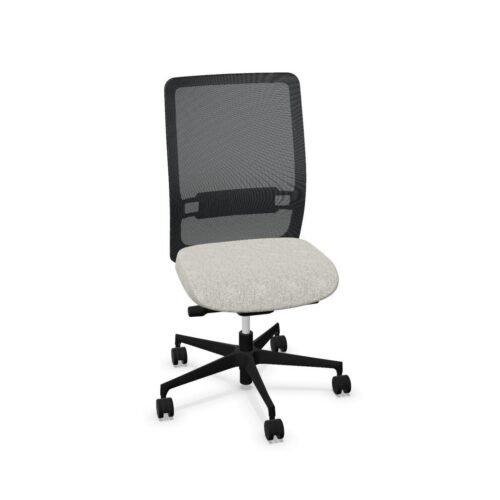
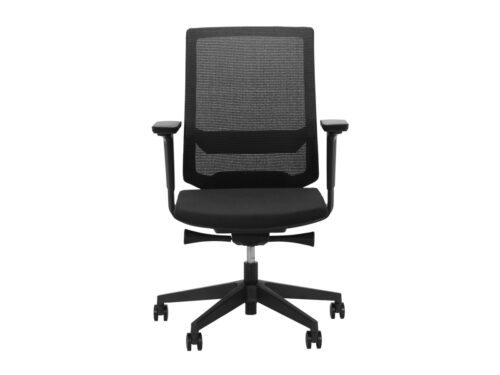
Myntwork
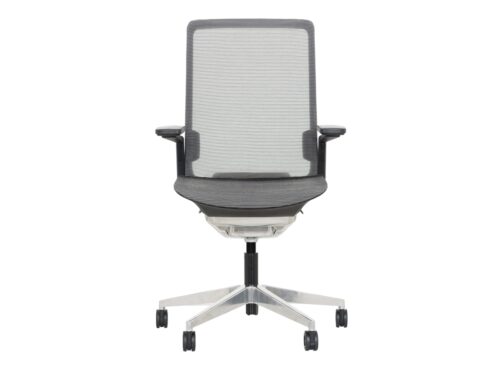
Myntwork
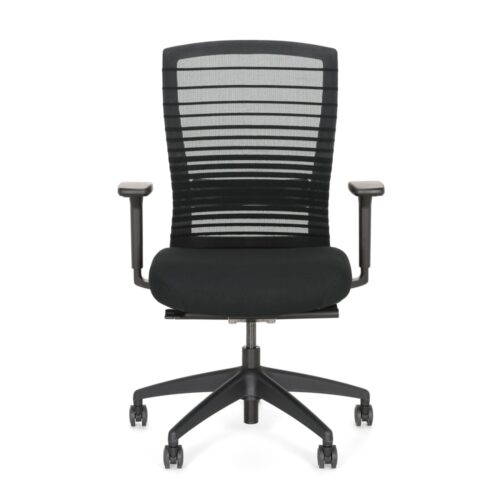
Myntwork
Myntwork
Myntwork

Myntwork
Myntwork