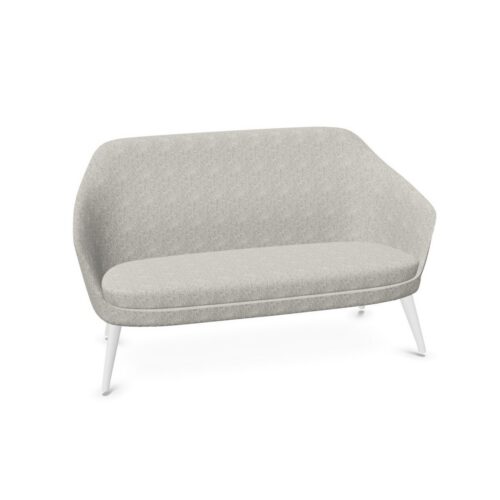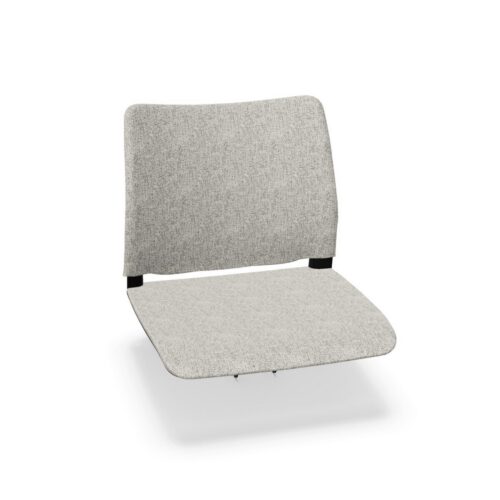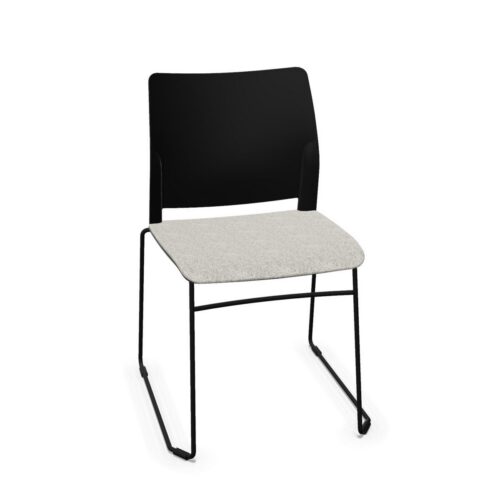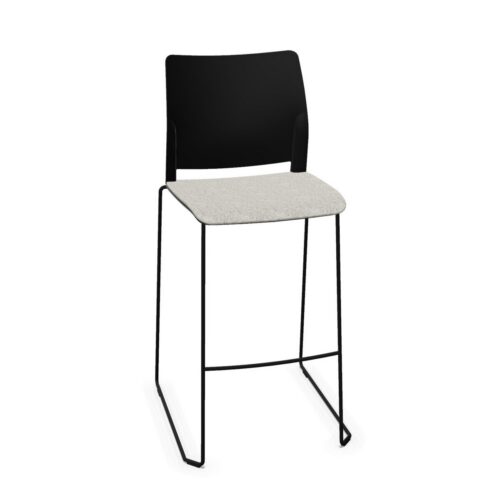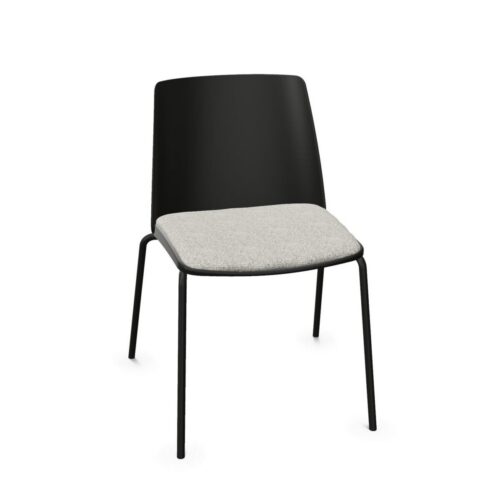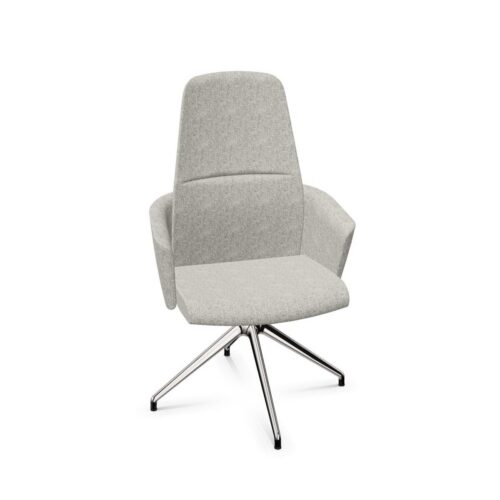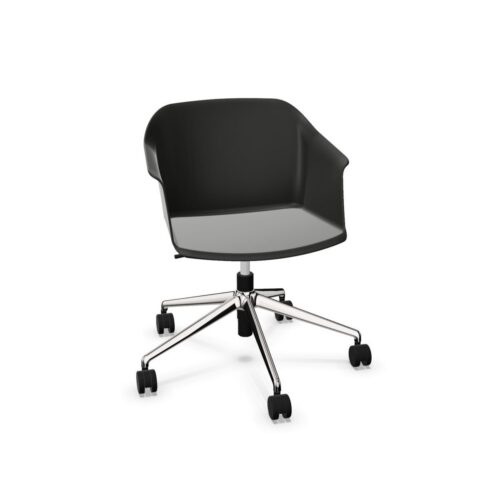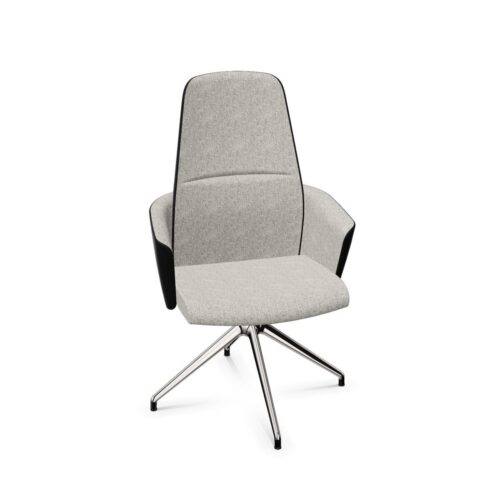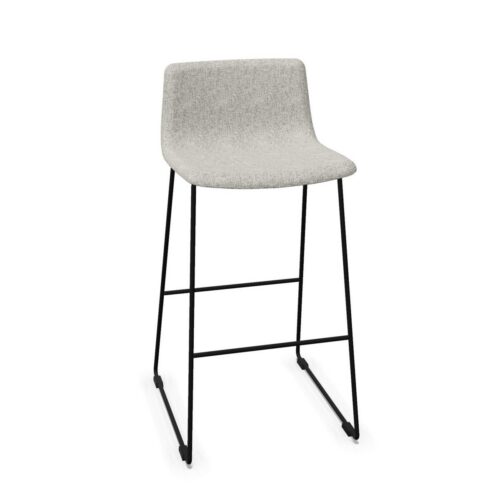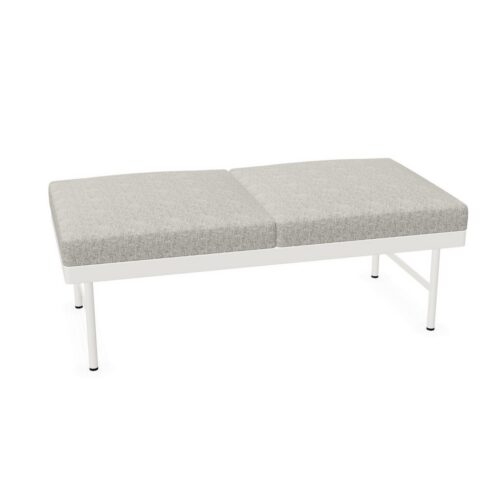


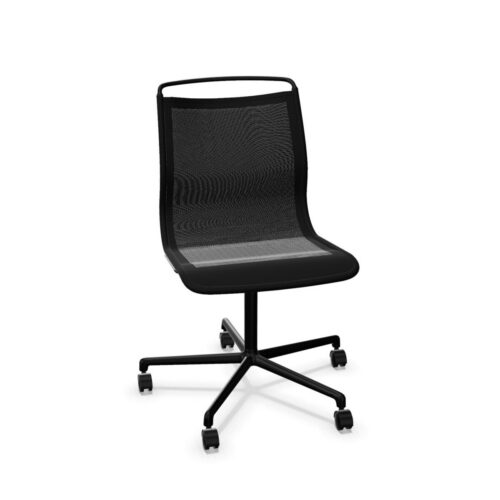
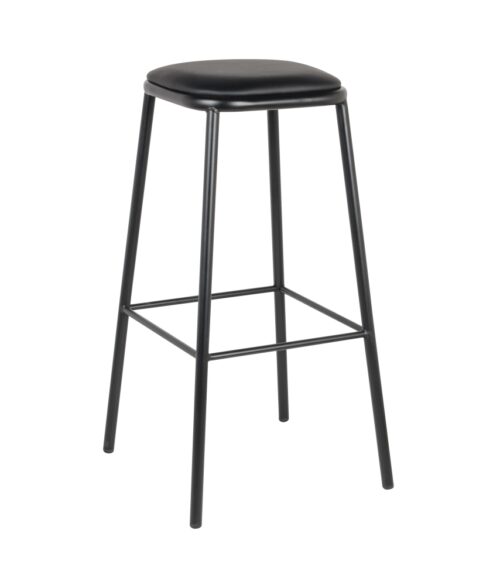
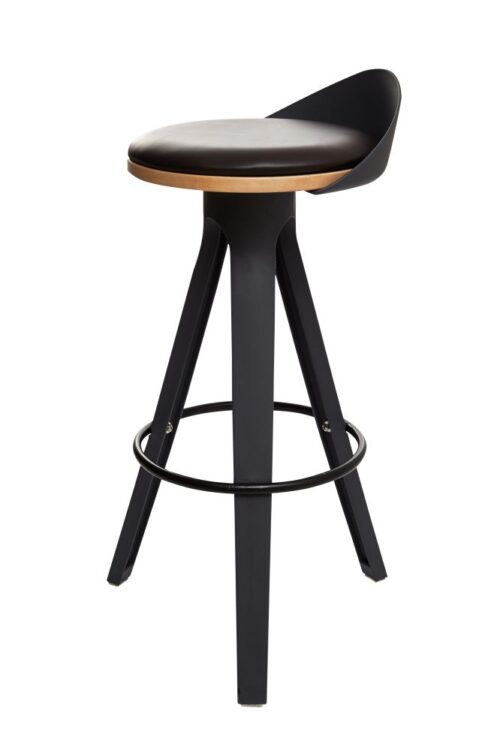
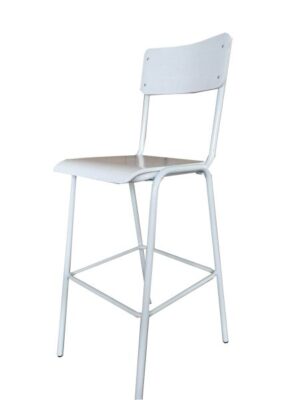
Office chairs without adjustable seat height have a fixed seating height that cannot be raised or lowered by the user. The chair may still include other features such as armrests, lumbar support or a reclining mechanism, but the vertical position of the seat remains unchanged.
A fixed seat height can be suitable for meeting rooms, visitor areas, reception spaces and other environments where individual workstation adjustment is less important. For prolonged desk work, however, it is especially important that the seat height works well with the intended users and the table or desk.
What does “no adjustable seat height” mean?
When an office chair does not have adjustable seat height, the distance between the floor and the seat is determined by the chair design. The user cannot change this position using a gas lift or another height-adjustment mechanism.
This is different from an office chair with adjustable seat height, where the user can raise or lower the seat to better match their body dimensions and workstation.
When is a fixed seat height suitable?
Office chairs without seat-height adjustment can be appropriate in a range of professional environments, including:
- Meeting and conference rooms
- Visitor seating
- Reception and waiting areas
- Training and presentation spaces
- Breakout and lounge environments
- Short-duration seating applications
- Furniture systems where the chair and table have been designed to work together
In these situations, users may sit for shorter periods and do not necessarily require the same level of adjustment as someone using a task chair throughout the working day.
Benefits of a fixed seat height
A chair without adjustable seat height can offer several practical advantages:
- Simple and straightforward operation
- No gas-lift control to adjust
- Consistent seating position
- Fewer moving components
- Suitable for meeting and visitor environments
- Can work well when paired with a table at a compatible height
- May be appropriate where extensive ergonomic adjustment is unnecessary
Fixed seat height and office ergonomics
Seat height has a direct influence on the position of the legs, feet and upper body. For prolonged desk work, the user should generally be able to sit with the feet supported and work at the desk without excessive shoulder elevation or awkward arm positioning.
With a fixed-height chair, there is less opportunity to adapt the seating position to the user. The dimensions of the chair and desk therefore become especially important.
A chair that is too high may leave a shorter user’s feet unsupported. A chair that is too low can position the user too far below the work surface, potentially causing them to raise the shoulders or reach upward.
Fixed-height chairs for meeting and conference rooms
Fixed seat height is very common in meeting and conference seating. In these environments, the chair is often selected to work with a standard meeting-table height and users typically remain seated for a more limited period.
Other characteristics may be more important than seat-height adjustment, such as comfort, width, stackability, mobility, upholstery, armrests and the amount of space required around the meeting table.
For complete room planning, see our meeting room planning guide.
Fixed seat height for visitor chairs
Visitor and reception chairs often use fixed seat heights because they are designed for simple, intuitive use without adjustment controls.
When selecting these chairs, consider whether the seat height, seat depth and armrest position suit a reasonably broad user range. The ease of sitting down and standing up can also be relevant in reception, healthcare-style or client-facing environments.
Fixed seat height for desk work
A fixed-height chair can be used at a desk when the dimensions of the chair, desk and user are compatible. However, it provides less flexibility than an adjustable task chair.
For an assigned workstation, the chair may be suitable if the regular user fits the seat height comfortably. For shared or hot-desking environments, a fixed seat height may be more restrictive because one position needs to work for multiple employees.
For prolonged desk work, compare fixed-height seating with office chairs with adjustable seat height before making a final selection.
Fixed seat height in shared workstations
Shared workplaces need to accommodate employees with different heights and body proportions. A fixed-height chair provides limited opportunity to adapt the user’s vertical position in relation to the desk.
If a shared workstation uses fixed-height chairs, flexibility may need to come from other parts of the workstation, such as an adjustable-height desk, monitor equipment or suitable accessories.
For highly shared offices, an adjustable task chair is generally easier to adapt to a broad range of users.
Read our guide to ergonomics for shared workstations for more information.
Fixed vs adjustable seat height
The main difference is whether the user can change their vertical position in relation to the floor and desk.
An office chair with adjustable seat height gives users more control and can accommodate a wider range of body dimensions and desk configurations.
A fixed-height chair provides a simpler solution where individual adjustment is unnecessary or where the furniture has been selected for a specific application.
Fixed seat height can be suitable when:
- The chair is primarily used for meetings or visitors
- Typical sitting periods are relatively short
- The chair and table dimensions are well matched
- The chair is not used as a primary computer workstation
- A simple seating solution is preferred
Adjustable seat height may be preferable when:
- The chair is used for prolonged desk work
- Different employees regularly share the same chair
- The workplace needs to accommodate users of different heights
- The desk height cannot be changed
- Individual ergonomic adjustment is an important requirement
Seat height should be considered with seat depth
Seat height is only one dimension affecting chair fit. Seat depth determines how much support is provided beneath the thighs and whether the user can comfortably sit against the backrest.
A chair may have a suitable fixed seat height but still be too deep or too shallow for a particular user.
When selecting fixed-height seating, check the seat depth, seat width and overall chair dimensions as part of the same evaluation.
What else should you consider when choosing an office chair?
Whether the seat height is fixed or adjustable should not be used as the only measure of chair suitability. Other relevant characteristics can include:
- Seat depth and width
- Backrest shape and height
- Lumbar support
- Armrest position and adjustability
- Chair mechanism
- Seat and backrest materials
- Base and castor configuration
- Stackability or mobility where relevant
- Applicable office-chair standards
- Warranty and replacement-part availability
Read our guide to choosing an office chair for a broader overview of office-chair selection.
Questions to consider
- What is the fixed seat height?
- Who will typically use the chair?
- How long will users normally remain seated?
- Does the chair height work with the intended table or desk?
- Can users place their feet comfortably on the floor?
- Will the chair be assigned or shared?
- What seat depth and width does the chair provide?
- Which other chair adjustments are available?
- Would adjustable seat height provide useful additional flexibility?
Explore office chairs at Myntwork
Office chairs without adjustable seat height can be a practical choice for meeting, visitor and other shorter-duration seating applications. Their suitability depends on the fixed dimensions of the chair, the table height and the intended users.
For primary workstations and highly shared offices, compare fixed-height seating with adjustable task chairs before making a final selection.
Explore our office chairs or browse the complete Myntwork office furniture collection.
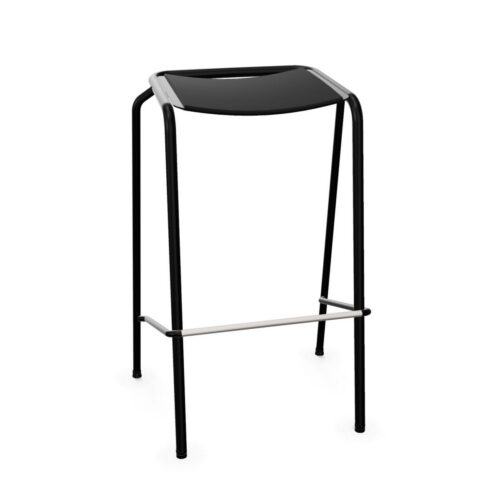
Abstracta

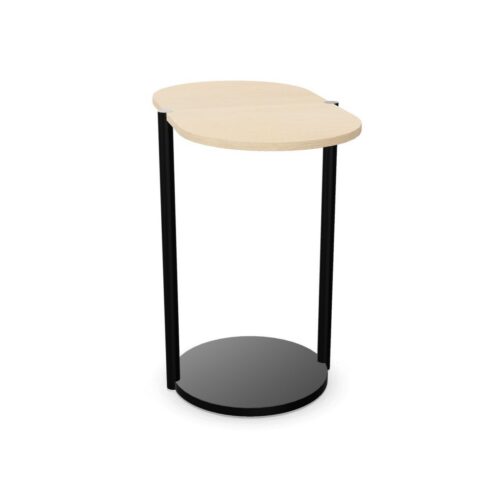

Abstracta
Myntwork
Myntwork
Myntwork
Myntwork