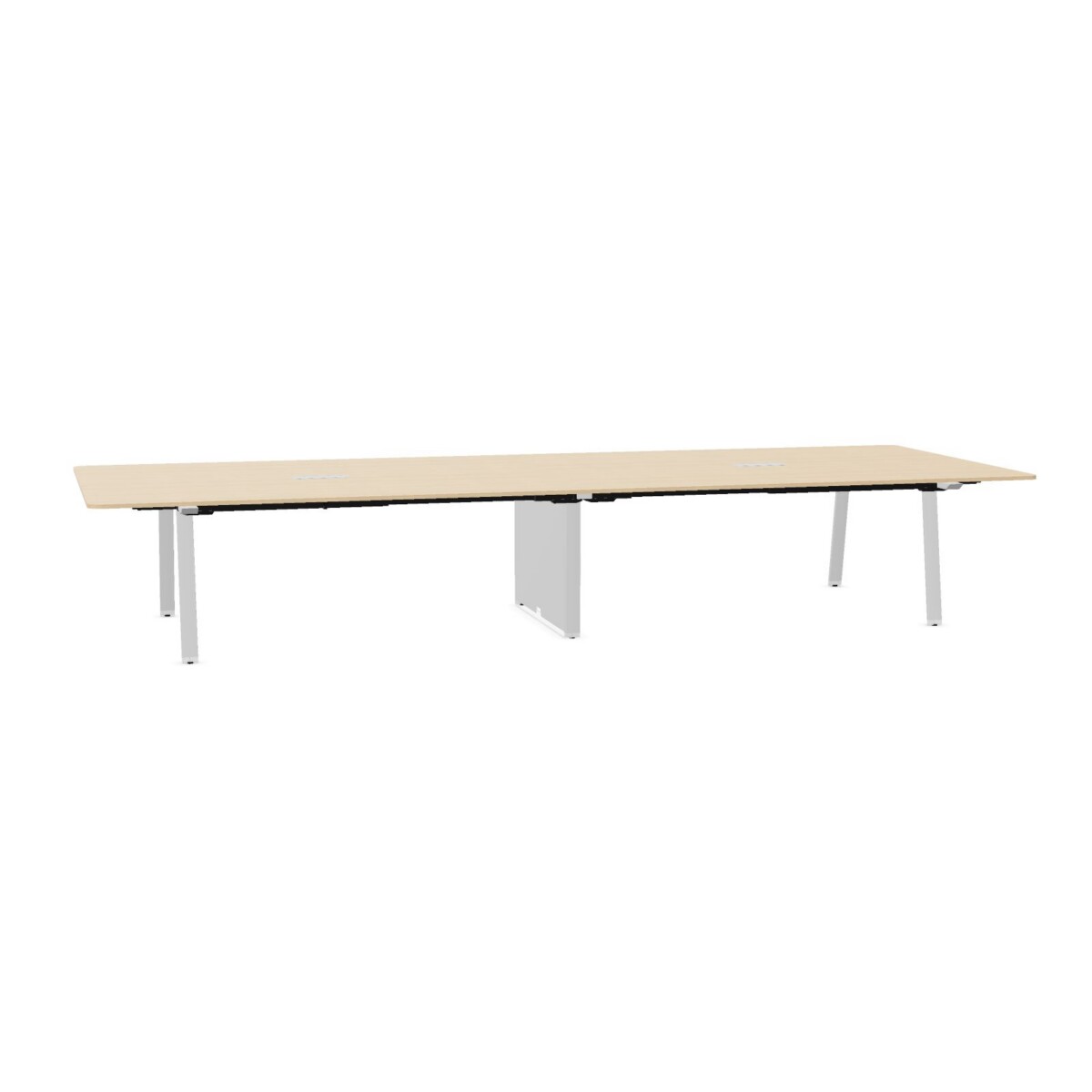
Where Bralco K3 desks work well
The K3 family is a practical option for regular individual workstations in offices, studios, education settings and flexible project areas. Its rectangular format supports a familiar desk layout for a monitor, keyboard, documents and everyday accessories, while the fixed-height design keeps planning straightforward across a row or room.
Because the desks are designed for one person and are not linkable, they are most suitable when each workstation can stand independently. They can be arranged as separate desks, paired positions or part of a wider scheme, provided the available space allows for circulation and chair movement.
How to choose between the K3 models
Compare the desk configuration
Start by checking whether the Bench Desk Top Access Desk or the Fixed-Height Top Access Desk matches the furniture brief. Both models share the core K3 characteristics, including a rectangular melamine surface, steel base and straight-leg frame. The product names identify the configuration, so confirm the selected model against your layout and procurement schedule before ordering.
Plan around a fixed-height format
Neither K3 option is adjustable. Confirm that the fixed-height arrangement is appropriate for the intended users, seating and working routine. If you are planning multiple desks, check that the consistent height works across the complete workstation group and that there is enough room for access around each position.
Materials, colours and cable management
Both models use melamine for the top and steel for the base. Surface colours include beige, black, brown, grey and white. Base colours include black, grey, beige, brown, green, pink, silver and white, giving you scope to create a restrained scheme or introduce a stronger accent.
The desks are suitable for a cable tray, but a tray is not included. Decide whether cable management is needed for each workstation and include the appropriate accessory or installation requirement in the specification. This is particularly useful when desks are being placed in open-plan areas with shared power and data planning.
What to check before leasing
Confirm the number of users, preferred configuration, surface and base colours, and the available floor area. Check the listed desk dimensions against circulation routes, storage and seating. It is also worth confirming how power, data and cable management will be handled, since the cable-tray compatibility does not mean a tray is supplied.
Myntwork offers Bralco K3 desks on a monthly lease, helping businesses specify a consistent desk family without treating every workstation as a separate furniture decision. Review the two models, select the finish combination, and check the lease requirements for your workspace project.
Veelgestelde vragen over Bralco Desk K3
What is the difference between the two Bralco K3 desks?
The collection includes the K3 Bench Desk Top Access Desk and the K3 Fixed-Height Top Access Desk. Both are single-person, rectangular desks with melamine tops, steel frames, straight legs and cable-tray compatibility. Compare the named configuration with your layout and specification requirements.
Are Bralco K3 desks height-adjustable?
No. The K3 collection is listed as not adjustable, so both models are fixed-height desks. Check that the fixed format suits the intended users, chairs and workstation plan before selecting them.
Do Bralco K3 desks include a cable tray?
No. The desks are suitable for a cable tray, but the tray is not included. Plan cable management separately and confirm the accessory or installation requirement for each workstation.
What colours are available for the K3 desk family?
The melamine surface is available in beige, black, brown, grey and white. Base colours include black, grey, beige, brown, green, pink, silver and white. Check the available combination for the specific model when finalising the order.
Are Bralco K3 desks suitable for linked workstation layouts?
The collection is listed as not linkable. They can still be positioned as individual desks within a wider office plan, but the layout should allow suitable circulation and avoid relying on linking components.