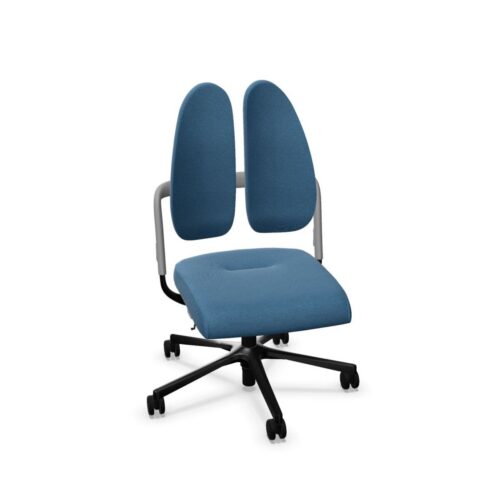


ESD office chairs are intended for workplaces where electrostatic discharge needs to be managed as part of the working environment. They are commonly considered for electronics assembly, testing, repair and other technical tasks where sensitive components may be handled.
Unlike a standard task chair chosen primarily for office use, an ESD chair is selected in relation to the wider electrostatic protected area, its flooring, grounding arrangements, clothing requirements and operating procedures. The products shown on this page are chairs classified by type; individual product information should always be checked for the construction, conductive elements and suitability required for a particular workstation.
What is an ESD chair?
ESD stands for electrostatic discharge: the rapid transfer of static electricity between objects at different electrical potentials. In some environments, an uncontrolled discharge can be a concern when working with electronic parts and assemblies. ESD seating is designed for use in electrostatic-controlled workspaces, helping form part of a considered approach to static management.
An ESD chair may differ from ordinary seating in the materials used for its upholstery, seat, back, castors or glides, and in the way it is intended to work with an appropriate grounding path. However, the exact specification varies by model. A chair should not be treated as a complete ESD control solution in isolation; it needs to be compatible with the site’s equipment, surfaces and procedures.
Why chair type matters in technical work areas
Technical teams may spend long periods seated while inspecting, assembling, soldering, testing or repairing components. Choosing a chair type that is appropriate to the environment supports a consistent workstation set-up while also addressing day-to-day comfort and posture.
- It helps procurement teams identify seating intended for electrostatic-controlled applications.
- It can provide a more suitable starting point than general office seating for electronics-focused workstations.
- It allows chair selection to be considered alongside benches, floors, mats and other workplace equipment.
- It recognises that support, adjustability, mobility and cleanability can remain important in technical roles.
Requirements will differ between a light repair desk, an electronics production line and a laboratory-style testing area. The chair’s intended use, rather than its appearance alone, should guide the shortlist.
Where are ESD chairs commonly used?
ESD chairs are often specified where people work directly with static-sensitive devices or where an organisation operates designated electrostatic protected areas. They can be relevant in both dedicated technical facilities and smaller specialist zones within a larger workplace.
- Electronics manufacturing and assembly stations
- Component inspection, quality control and test areas
- Repair, rework and service benches
- IT hardware preparation and maintenance spaces
- Research, development and prototyping environments
- Laboratories or technical workshops with defined ESD procedures
The surrounding environment is significant. For example, a chair used at an ESD bench may need to work appropriately with the floor finish and the organisation’s established controls. It is sensible to involve the person responsible for ESD processes when specifying seating for these areas.
Chair features to review
Within the ESD chair category, the practical details still determine whether a model suits the user and workstation. Product pages provide the most reliable information on dimensions, adjustment options and materials, but several areas are useful to compare at the outset.
Ergonomic adjustment
Consider seat-height range in relation to the work surface. A conventional desk, a technical bench and a raised assembly station can require quite different sitting heights. Back support, seat depth, tilt functions and arm options may also affect comfort where work is prolonged or requires close visual focus.
Base and movement
Castors can make it easier to move between adjacent tools or work points, while glides may be preferable where the chair is intended to remain in one location. The appropriate choice depends on the floor, the workstation layout and local ESD requirements. Check the individual chair’s base configuration rather than assuming all ESD models are alike.
Upholstery and maintenance
In busy technical areas, surfaces may need to tolerate regular cleaning or particular working conditions. Review the stated upholstery or covering material, cleaning guidance and any restrictions associated with the environment. A finish suitable for a general office is not necessarily the right option for a controlled technical space.
How to choose an ESD chair for your workspace
Start with the workstation rather than selecting from chair style alone. Measure the working height, identify how long users are usually seated and understand whether they need to reach equipment, turn between work surfaces or stay in a fixed position. Then confirm the chair specification against the organisation’s ESD plan and the requirements of the area.
- Define whether the location is an electrostatic protected area and identify the relevant internal procedures.
- Check the chair’s stated ESD-related construction and compatibility with the intended floor or mat system.
- Match the height range and adjustments to the bench, desk or testing station.
- Decide whether castors or glides suit the task, surface and movement needed.
- Review dimensions and user requirements when ordering for a shared workstation.
For general seating considerations such as support, desk height and adjustment, see our guide on how to choose an office chair. Technical ESD suitability should be assessed separately against site-specific controls.
Questions to consider before specifying
- What static-control measures are already in place at the workstation?
- Will the chair be used at a standard-height desk or a higher technical bench?
- Is the seat assigned to one person or shared across shifts?
- What type of floor surface is present, and is chair movement required?
- Which adjustments are needed for the tasks performed there?
- Are there cleaning, durability or space constraints to account for?
Answering these questions early can help facilities, procurement and technical teams compare chairs on the factors that matter to their environment, rather than treating ESD as the only selection criterion.
ESD seating within the wider office-chair range
ESD chairs are a specialist seating type for specific applications. Other areas of a workplace may call for task chairs, meeting chairs, operator seating or seating for shared desks, each selected according to the role and setting. Keeping these requirements separate can make a mixed workplace furniture specification clearer and more consistent.
Browse the wider range of office chairs for seating used across offices, shared workspaces and support areas. For controlled electronics and technical locations, review each ESD chair’s individual details alongside the requirements of the workstation and your established ESD procedures.