

Manual height adjustable office furniture uses a user-operated mechanism to alter the working or seating height without relying on powered adjustment. On this page, the mechanism may appear on task chairs, operator chairs, stools, desks and other workplace products where height needs to be set to suit the person, task or surrounding furniture.
Height adjustment is a practical consideration in shared workplaces and individually assigned workstations alike. A manually operated control allows users to position a chair or work surface appropriately, while procurement teams can compare products by their intended use, adjustment range, dimensions and the other features listed on each product page.
What does manual height adjustable mean?
Manual height adjustment refers to a mechanism operated directly by the user rather than through an electric motor or automated control. The exact method depends on the product. Many office chairs use a lever-operated height control, while certain desks, tables or specialist workstations may use a hand-operated crank, release mechanism or similar system.
The presence of this attribute confirms that height can be adjusted manually, but it does not by itself define the full adjustment range, the speed of adjustment or every ergonomic feature available. Those details can vary considerably between models, so they should be checked against the individual product specification.
Why adjustable height matters at work
Workplace furniture is used by people of different heights, for different durations and alongside different equipment. A suitable working height can help a user organise their posture and position relative to the desk, screen, keyboard, footrest or other task-specific equipment. For facilities and procurement teams, adjustable furniture can also make a space more adaptable when teams move, desks are shared or requirements change.
- It allows a seating or working position to be set for the individual user.
- It can support hot-desking and other shared-workspace arrangements.
- It gives workplace teams a way to accommodate varied desk heights and task requirements.
- It can make reconfiguration simpler where furniture is moved between areas.
- It avoids the need for a powered connection where a manual mechanism is appropriate for the setting.
Adjustment is only one element of a considered workstation. Chair dimensions, seat depth, back support, arm options, desk size and the nature of the work all remain relevant when selecting furniture.
Furniture commonly fitted with manual height adjustment
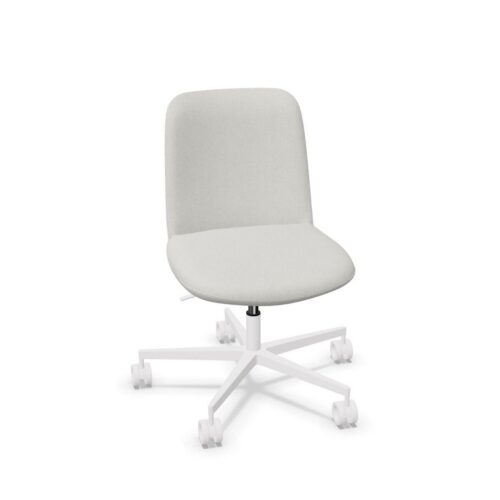
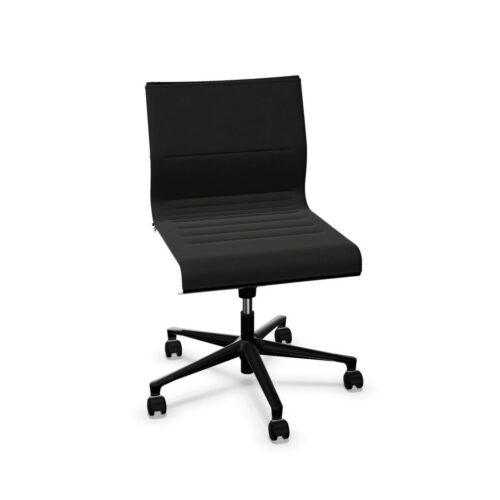
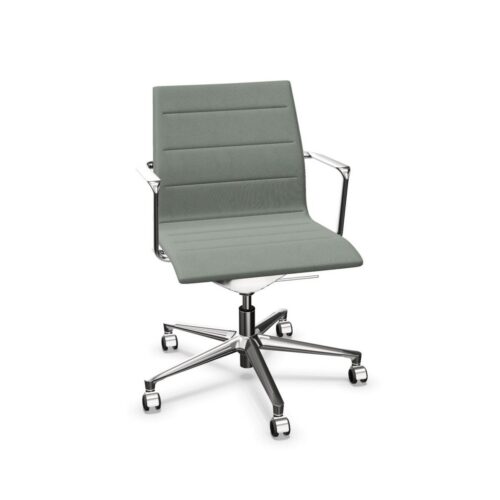
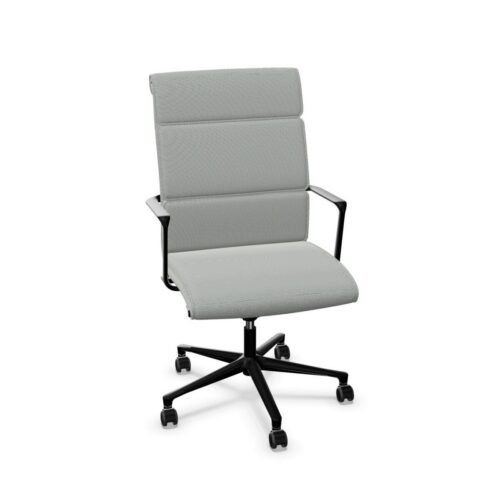
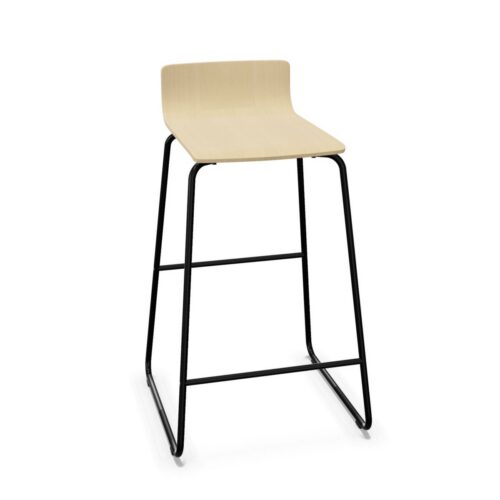
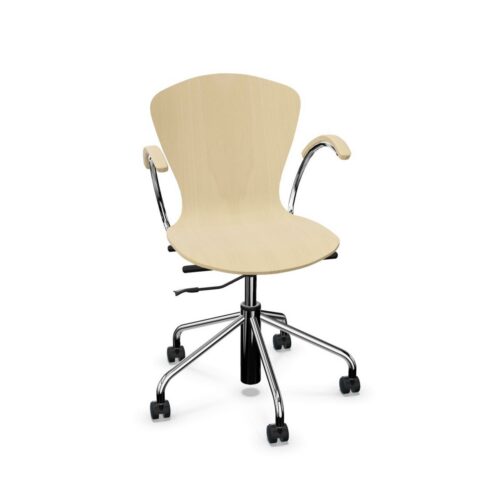
This mechanism is particularly common in seating. A manually height-adjustable task chair can be raised or lowered to work with the user and desk, while draughting chairs and stools may be specified for higher work surfaces, counters or technical environments. The wider chair configuration may include different bases, castors, upholstery types and back styles depending on the model.
Manual adjustment can also be found on desks and work tables intended to offer a changeable work surface height without electric operation. These products should be assessed according to their stated dimensions, load guidance, adjustment method and the environment in which they will be installed.
- Task and operator chairs for desk-based work.
- Meeting, training or multipurpose chairs where an adjustable version is specified.
- Stools and higher-seated workplace furniture.
- Manually adjustable desks and workstations.
- Specialist furniture for reception, education, healthcare, workshop or technical settings, where shown in the product details.
Choosing a manually adjustable chair
When selecting seating, begin with the working situation rather than the mechanism alone. Consider who will use the chair, whether the desk is fixed or shared, the likely duration of use and the other chair adjustments needed for the role. A height-adjustable chair may be suitable for many desk settings, but the right specification depends on the intended user and environment.
Review the seat height range in relation to the desk or worktop, and consider whether the chair needs features such as adjustable arms, a particular back style, a specific base or upholstery suited to the location. If seating is being purchased for a mixed team, consistency in adjustment controls and straightforward operation may also be useful considerations.
Questions to consider for chair procurement
- What is the height of the desk, counter or work surface?
- Will the chair be allocated to one person or used by several people?
- What seated tasks are carried out, and for how long?
- Is a standard task chair, a stool or a higher draughting-style seat more appropriate?
- Which additional adjustments are required for the role?
- Are particular finishes, castors or base options needed for the floor and setting?
Choosing a manually adjustable desk or table
For a desk or work surface, the adjustment mechanism should be considered alongside the work being undertaken. A manual solution may be appropriate where height is changed occasionally, where access to power is limited, or where the intended specification calls for a direct user-operated system. If frequent changes between positions are expected, review how the specific mechanism is operated and whether it fits the daily working pattern.
Measure the available footprint carefully, including clearance for any moving parts and room for the user’s chair or stool. Monitor arms, storage, cable management and equipment placed on the surface can all affect the practical set-up. The product page should be used to confirm the listed dimensions and configuration before a selection is made.
Manual mechanisms in shared and flexible spaces
Shared workspaces often need furniture that can be reset for different users without a complicated process. Manually adjustable products can provide a straightforward option where users need to alter seating or surface height as part of setting up their station. Clear local guidance can help users understand how to make an adjustment and return furniture to a suitable position after use.
In project spaces, training rooms and multipurpose areas, the requirement may differ from a permanently assigned desk. Consider whether furniture needs to be adjusted frequently, whether users will be familiar with the controls and whether the layout has sufficient space for movement and access. Matching the mechanism to the pattern of use is more useful than selecting solely on the presence of an adjustable feature.
Checking product details before ordering
The manual height adjustable filter is a useful way to narrow a larger catalogue, but it is not a complete specification. Compare individual listings for their stated dimensions, materials, configuration options and mechanism information. Where furniture is being specified across a workplace, record the required height range, intended environment and any complementary items needed for a complete workstation.
For seating, browse the wider range of office chairs to compare styles and workplace uses. Guidance on fit, adjustment and the factors involved in specifying seating is also available in our guide on how to choose an office chair.
Related Myntwork ranges
Manual height adjustable products can form part of a broader workplace furniture specification, from focused desk areas to shared spaces and specialist settings. Use the product filters alongside the individual descriptions to identify furniture with the mechanism, size and configuration appropriate to your project, then explore the relevant office chair categories and workplace planning guidance for connected requirements.
- Reset all
- Braun