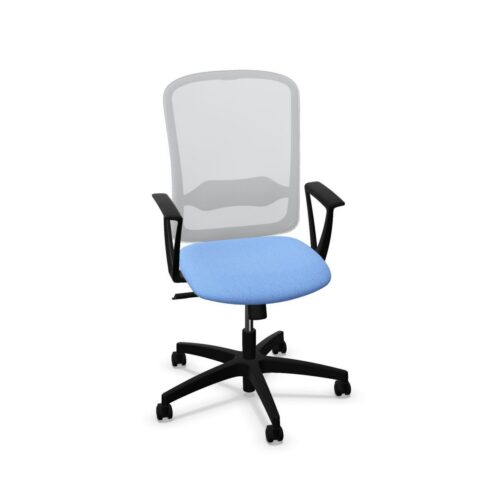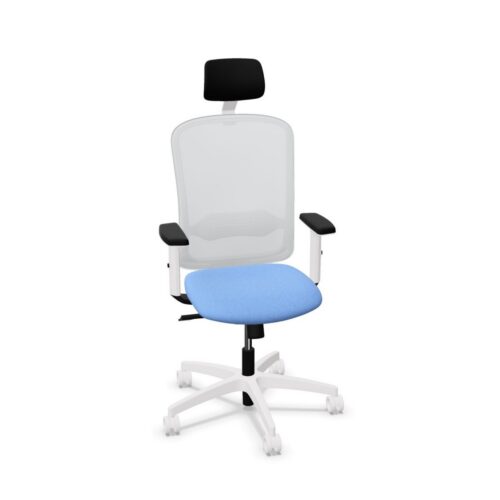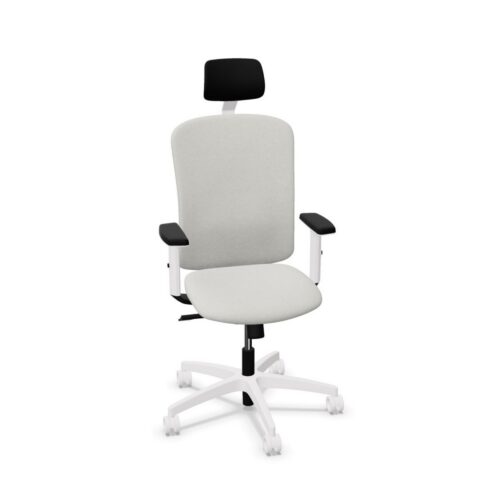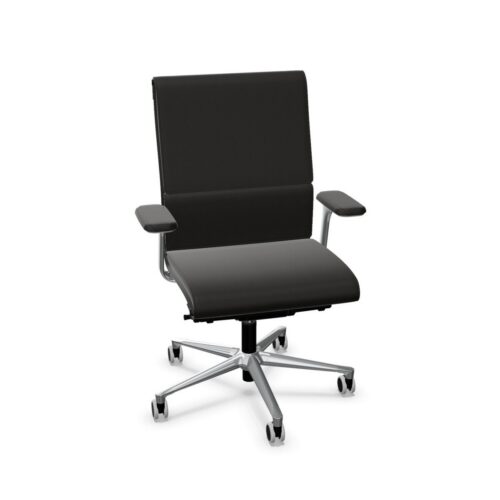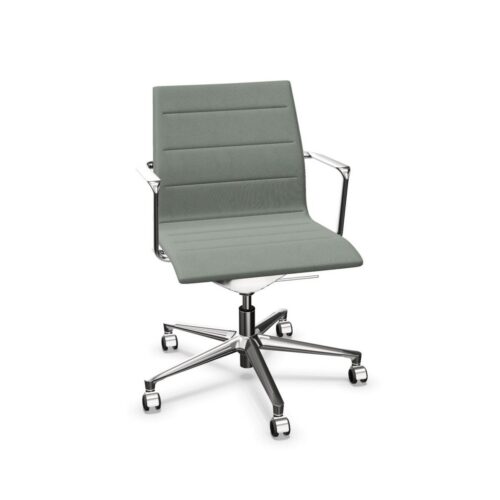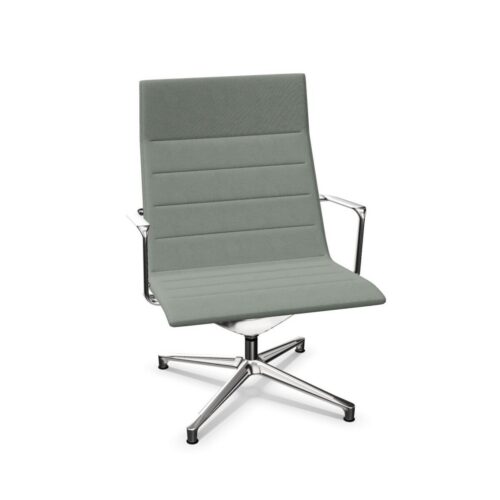


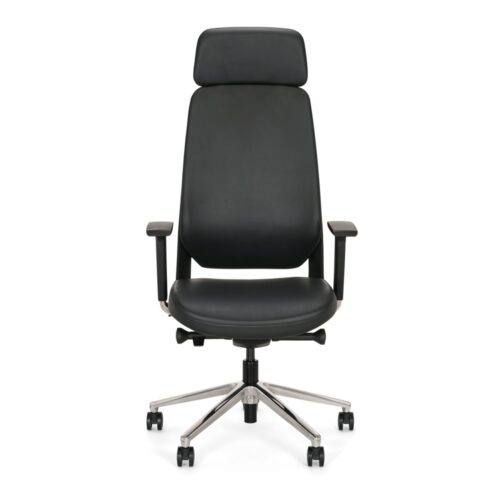
Office chairs with headrests include an integrated or attached support above the backrest, intended to support the head and upper neck when a person reclines or changes posture. This filter identifies chairs where a headrest is included; its shape, height adjustment, tilt and level of padding can vary between individual models.
For workplace procurement, a headrest is one part of the seating specification rather than a substitute for appropriate back support, adjustability and a suitable fit. Reviewing the chair’s full product details helps ensure it suits the intended users, tasks and workspace.
What does “with headrest” mean?
This attribute refers specifically to the presence of a headrest on the chair. It may be built into a high back or supplied as a distinct component positioned above the backrest. A headrest can give users a place to rest the head during reclined sitting, calls, reading or brief pauses away from intensive screen work.
It does not, by itself, indicate that every chair has the same ergonomic mechanism or adjustment range. Some designs may offer adjustable headrest height or angle, while others use a fixed position. Check the individual product specification where these details are important to the brief.
Why choose a chair with a headrest?
A headrest can be useful where people spend long periods seated and regularly alter their posture through the day. When used with a supportive backrest and correctly adjusted chair settings, it can provide an additional point of support while reclining.
- It can support the upper body in a reclined or relaxed working position.
- It may suit users who alternate between focused desk work, video calls and review tasks.
- It helps create a more considered specification for executive offices, meeting rooms and assigned workstations.
- It can be a practical preference for staff who value a higher-back chair silhouette.
Whether it is appropriate depends on how the chair will be used. For tasks requiring close, forward-focused work, users may not make regular contact with the headrest, so the principal fit of the seat, lumbar area, armrests and desk setup remains important.
Where are headrest chairs commonly used?
Chairs with headrests are often selected for individual workstations, private offices and home-working setups, particularly when the same person uses the chair for much of the day. They are also seen in executive spaces and meeting rooms where a more substantial seating profile is wanted.
In agile or shared offices, a headrest may be a useful feature where users have varied working patterns, although it is worth considering whether the chair’s other adjustments accommodate a broad range of body sizes. For hot-desking areas, clear adjustment controls and an easily understood setup can be as relevant as the headrest itself.
Chair types available with headrests
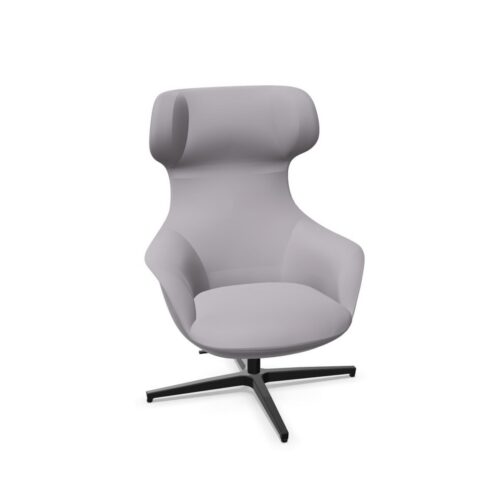
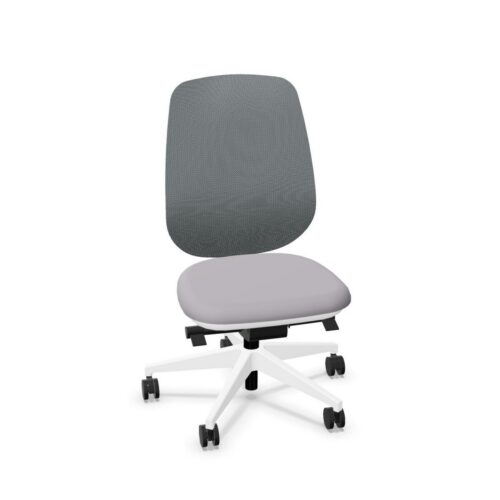
The filter may include several styles of workplace seating, from task chairs with technical adjustment features to managerial and executive designs. Back materials can include mesh, upholstered fabric or other finishes, and each construction has a different visual character and feel.
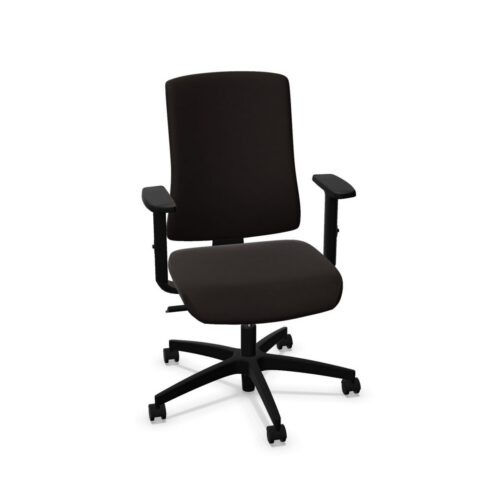
- Task chairs: often chosen for desk-based work where seat, back and arm adjustments are key considerations.
- Executive chairs: typically higher-backed designs that can suit private offices and formal workspaces.
- Ergonomic chairs: models designed around posture support and adjustability, with headrest specifications varying by product.
- Home-office chairs: suitable for dedicated work areas where comfort, scale and appearance need to work together.
A headrest should therefore be considered alongside the chair category, not instead of it. A compact chair with a headrest can work very differently from a larger executive model.
How to choose a headrest chair
Start with the user and the working environment. Consider the number of hours the chair will be used, whether it is assigned or shared, and the desk equipment it must work alongside. A chair should allow the user to sit close enough to the desk without armrests, backrest or headrest compromising the intended setup.
Review the overall dimensions and the range of available adjustments before selecting. In particular, assess seat height, seat depth where applicable, backrest support, armrest configuration and recline function. If the headrest is intended to provide support for specific users, examine its stated positioning and adjustment information rather than relying on appearance alone.
Questions to consider
- Will the chair be used mainly for concentrated screen work, calls, meetings or a combination of tasks?
- Is a fixed headrest sufficient, or is headrest adjustment required?
- Will one person use the chair, or should it accommodate a changing group of users?
- Does the chair’s size suit the desk, circulation space and room layout?
- What back material, upholstery and base finish are appropriate for the interior scheme and maintenance needs?
Headrests and wider workstation ergonomics
A well-considered workstation brings chair settings, desk height, monitor placement and working habits together. The headrest is generally most relevant when reclining or taking a short change of position; it should not encourage a user to work with the head pushed forward or the screen positioned incorrectly.
Encourage users to set up their chair for their own proportions and to make adjustments as their tasks change. Guidance on posture and workplace setup can help procurement teams create a consistent approach across offices and home-working locations. Our guide on how to choose an office chair provides further points to compare when preparing a seating brief.
Coordinating chairs across the workplace
For larger projects, it can be useful to specify headrest chairs for roles or locations where they add value, while choosing other chair formats for meeting areas, touchdown spaces or compact desks. This approach can retain a coherent workplace look without assuming that every seat needs identical features.
Compare the options in our wider range of office chairs to review seating types for workstations, offices and collaborative spaces. Individual product pages provide the detail needed to match headrest presence with the rest of the chair specification.






Myntwork

Frezza