


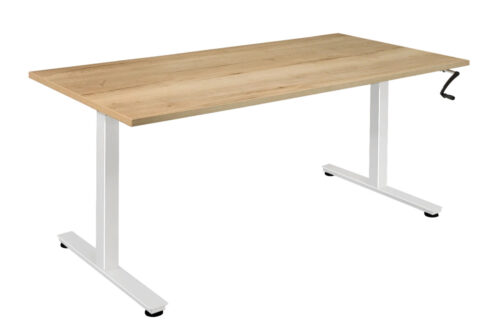
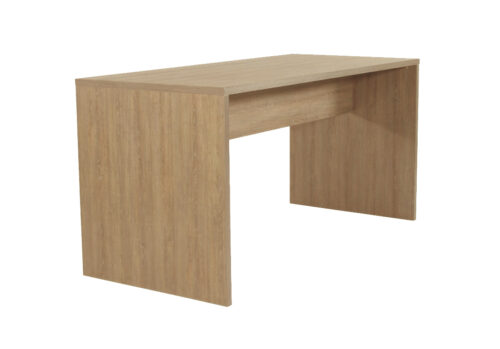
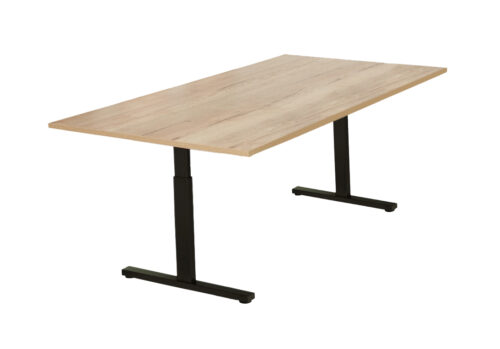
Dark gray oak surface office furniture brings a deep, wood-grain appearance to the visible working or outer surfaces of workplace furniture. On this archive, the term refers to the desktop, tabletop, cabinet front or other visible surface finish rather than the colour of the legs, frame or base.
The finish is suited to projects seeking a restrained, contemporary palette with the character of oak and a darker overall visual weight. It can help desks, storage and meeting furniture sit comfortably within schemes that use charcoal, black, grey, natural timber or muted accent colours, while retaining a recognisable wood-effect surface.
What does dark gray oak surface colour mean?
Surface colour describes the finish applied to the main visible panel of a furniture item. For a desk, this will commonly be the worktop; for a storage unit, it may be the top, sides or door and drawer fronts; and for a meeting table, it is generally the tabletop. Dark gray oak indicates a dark grey-toned oak appearance, often with grain detail that gives the surface more variation than a plain solid colour.
It does not describe the underframe, legs, handles, edging, upholstery or other components unless these are separately specified in the individual product information. This distinction matters when coordinating furniture, as a dark gray oak desktop may be paired with a contrasting metal base.
Why choose a darker oak-look surface?
A dark surface can give shared work areas, private offices and meeting settings a more grounded appearance than pale timber finishes. The oak-style grain introduces visual texture, which can soften the formality of a grey palette and provide an alternative to a completely uniform black or anthracite surface.
- It can complement dark metal frames, task seating and storage hardware without requiring an exact colour match.
- Wood-grain detail can add warmth and variation to neutral workplace interiors.
- It may suit schemes where a lighter worktop would create too much contrast with flooring, partitions or joinery.
- It provides a consistent surface direction across selected desks, tables and storage where matching ranges are available.
Colour remains only one part of specification. The perceived darkness of the surface can vary with daylight, artificial lighting, surrounding finishes and the scale of the furniture. Reviewing product imagery and finish information alongside the wider scheme is therefore useful.
Where dark gray oak furniture can work well
Dark gray oak surfaces are often considered for offices that need a professional, low-key setting without relying on plain dark panels. They can work in individual workspaces, collaborative zones and customer-facing rooms, provided the balance of light and dark finishes is considered across the whole space.
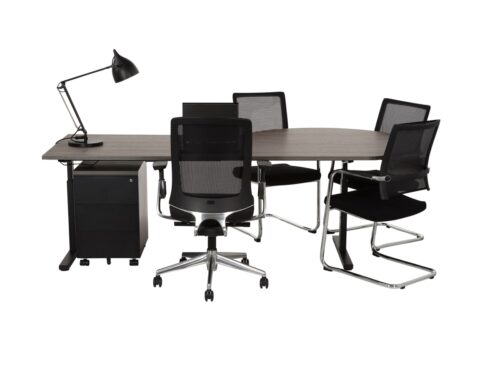
In open-plan offices, a darker desktop can create a clear visual anchor for benching or clusters of desks. In enclosed rooms, it may suit executive-style desks, project tables or storage-led layouts. Meeting rooms can use the finish to give a table a defined presence, particularly alongside lighter walls or acoustic treatments.
- Focused work areas and private offices.
- Meeting rooms, boardroom-style spaces and project rooms.
- Reception back-office areas and administrative workstations.
- Storage walls, credenzas and filing furniture where a darker visible face is required.
- Hybrid workplaces combining individual desks with shared touchdown or collaboration tables.
Furniture types to compare on this archive
The products filtered by this surface colour may include different furniture categories and configurations. A common finish does not mean that their dimensions, construction, frame colour or intended use are the same, so each item should be assessed against the needs of its location.
Desks and bench systems should be compared for workstation size, cable management, access requirements and the number of users supported. For tables, consider seating capacity, room circulation and whether the chosen shape suits the activity. When selecting storage, check the internal arrangement, access side and relationship to adjacent desks or walls.
Coordinating the surface with frames and interiors
Because this is a surface-colour filter, frame selection should be made separately. A dark gray oak top may be used with a black, grey, white or other available base depending on the product range. A close tonal combination can create a composed, understated appearance, while a lighter frame can make the work surface more visually distinct.
Consider the finish against wall colours, floor coverings, screens and seating as well as other furniture. In rooms with limited natural light, dark surfaces can benefit from lighter surrounding materials and adequate task lighting. In brighter spaces, they can provide contrast and help define working zones.
How to choose a suitable dark gray oak surface
Start with the task the furniture needs to support, then use finish as part of the wider specification. A visually suitable surface must still offer the appropriate size, layout and functionality for daily use. Where several pieces are intended to coordinate, check whether they belong to the same range or whether their grain pattern, edge detail and grey tone are likely to differ.
Questions to consider
- Which visible panels need to match: desktops, table tops, cabinet fronts or all of these?
- Is the frame colour specified separately, and how will it relate to the dark surface?
- Will the room’s lighting make a deep grey finish appear warmer, cooler or darker than expected?
- What workstation dimensions, table shape or storage capacity does the space require?
- Are nearby furniture pieces intended to coordinate closely or simply sit within the same neutral palette?
- Will the surface be used for focused desk work, meetings, shared equipment or storage?
Planning a coherent workplace palette
A consistent furniture palette can make phased office projects easier to manage, but it need not mean every item has the same finish. Dark gray oak can be used as a primary work surface alongside lighter storage, or reserved for key tables and private work areas while other zones use a different tone. The right approach depends on circulation, available light, the building’s existing finishes and the intended character of each area.
For a broader view of layouts, circulation and furniture placement, consult the office space planning guide. Practical advice on comparing form, function and finish is also available in our guide to choosing office furniture.
Related Myntwork furniture ranges
Use this filter to identify items with a dark gray oak visible surface, then review the individual product details for dimensions, configuration and complementary finishes. To compare this selection with desks, tables, storage and other workplace categories, browse the wider office furniture collection.

Myntwork
Myntwork
Myntwork
Myntwork