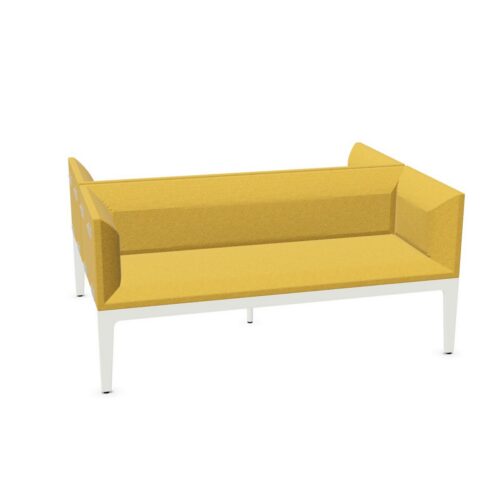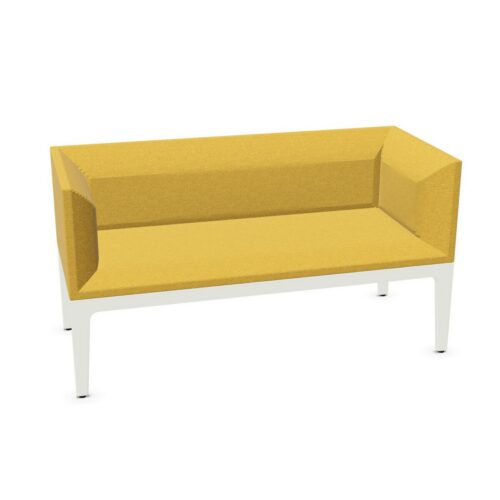


Orange upholstered office furniture brings a warm, energetic accent to workplaces while retaining the comfort and practical finish expected from seating and soft furnishings. This archive covers products where the visible fabric, textile or other upholstered surface is orange; it does not describe the colour of a chair frame, leg or base.
Orange upholstery can be used as a deliberate focal point in a reception, collaboration area or breakout space, or introduced in smaller quantities to help organise larger floorplates. The exact shade, fabric texture and amount of upholstery vary by product, so it is useful to review individual product details alongside the wider interior scheme.
What does orange upholstery mean?
Upholstery is the padded, covered part of a furniture item: for example, a task chair’s seat and back, a lounge chair’s shell, a booth’s panels or a sofa’s cushions. On this page, orange refers specifically to that upholstered material. A product may still have a contrasting black, white, chrome, timber or coloured frame and base.
The term can include a broad family of orange tones, from softer terracotta and rust-inspired finishes to clearer citrus and amber shades. Photographs provide a useful starting point, but screen settings and surrounding colours can affect how a fabric appears. Where colour coordination is important, consider the stated finish and any available upholstery information before specifying furniture across a project.
Why use orange upholstered furniture in an office?
Orange is often selected to make shared spaces feel more welcoming and active. It can provide visual relief in workplaces dominated by neutral desks, storage and flooring, while helping distinct areas stand apart without changing their layout or construction.
- It can create an identifiable arrival point in receptions and visitor areas.
- It helps bring character to informal meeting spaces, cafés and staff social areas.
- It can distinguish touchdown seating or collaborative zones within an open-plan office.
- It works as an accent against grey, charcoal, white, timber and muted green finishes.
- It offers a practical way to repeat a brand-led or interior-led colour palette through movable furniture.
The right use of colour depends on context. A few orange chairs may be enough to mark a small breakout area, whereas larger sofas or banks of upholstered seating can establish a stronger visual identity in spacious communal settings. Balance the colour with circulation routes, daylight, wall finishes and the level of visual activity already present in the room.
Typical furniture with orange upholstery
Orange fabric can appear across many furniture types, from individual work seats to larger soft-seating arrangements. The products available on an archive can change, but the colour is commonly relevant to seating intended for focused work, visitors, waiting areas and informal collaboration.
- Task and operator chairs with upholstered seats, backs or both.
- Meeting and conference chairs for project rooms and boardroom settings.
- Visitor, reception and waiting-room chairs.
- Lounge chairs, armchairs and occasional seating.
- Sofas, modular seating and booth-style arrangements.
- Stools and high seating with padded upholstered elements.
- Acoustic-inspired soft seating and screens where a textile finish forms part of the design.
When comparing products, separate the upholstery colour from other specifications. Seat height, back support, mobility, arms, dimensions, configuration and the material used for the base can all affect suitability. Orange is a finish choice rather than an indication of a particular chair mechanism, level of support or acoustic performance.
Where orange works well
Reception and waiting areas are a natural setting for orange upholstery because it can make a first impression without requiring permanent decorative changes. A single lounge chair or a coordinated set can provide a clear seating destination for guests and visitors.
In breakout spaces, orange can support a more relaxed atmosphere around coffee points, informal tables and shared amenities. In larger offices, it may also help make neighbourhoods easier to recognise: for instance, using one accent colour around a collaborative area and another in quiet zones. This approach should complement, rather than replace, clear wayfinding and sensible space planning.
Orange-upholstered meeting chairs can add warmth to enclosed rooms with otherwise restrained finishes. For focused desk settings, a more selective use may be appropriate, such as a small number of collaborative chairs near team tables or touchdown points. Consider whether the proposed colour is suitable for the frequency of use, cleaning requirements and expected lifespan of the space.
How to choose an orange upholstery finish
Begin with the intended use of the furniture. A reception sofa, a daily-use desk chair and a meeting chair may all be orange, but they need different levels of comfort, adjustment and durability for their respective settings. Measure the available footprint and allow enough clearance for users, doors, storage and circulation.
Questions to consider
- Is orange intended as a small accent, a repeated colour cue or the dominant finish in the room?
- Which orange tone sits well with existing flooring, walls, joinery and desk finishes?
- Will the upholstery be used in a high-contact shared area or a lower-traffic setting?
- Does the chosen product provide the support, seat height and configuration required for its users?
- Are different furniture pieces being combined, and do their shades and textile textures need to coordinate closely?
- How will the item fit within the room’s access routes and planned seating capacity?
It is also worth considering scale. Strong colours can look different on a compact chair compared with a long modular sofa. Repeating orange across several small items can feel cohesive, while a single large upholstered piece may be sufficient to anchor an area. A considered mix of neutral and coloured furniture usually makes future layout changes easier to manage.
Planning colour within a wider workplace scheme
Furniture colour should be considered alongside the practical organisation of the workplace. Zoning, furniture density, meeting capacity and access all influence whether a colour feature improves legibility or makes a space feel overly busy. The office space planning guide provides useful context for arranging different work settings within the available floor area.
For procurement teams, keeping a record of upholstery finishes alongside product dimensions and intended locations can make phased installations easier to coordinate. It also helps distinguish upholstery decisions from choices relating to frames, bases and work surfaces. For broader selection criteria, see Myntwork’s guidance on choosing office furniture.
Explore related office furniture ranges
Orange-upholstered seating can sit within many kinds of workplace project, whether the objective is a more distinctive reception, a sociable breakout zone or a carefully coordinated meeting environment. Review individual items for their upholstery treatment and other functional details, then compare them with the wider office furniture collection to plan complementary desks, tables, storage and seating.
- Reset all
- Transparent