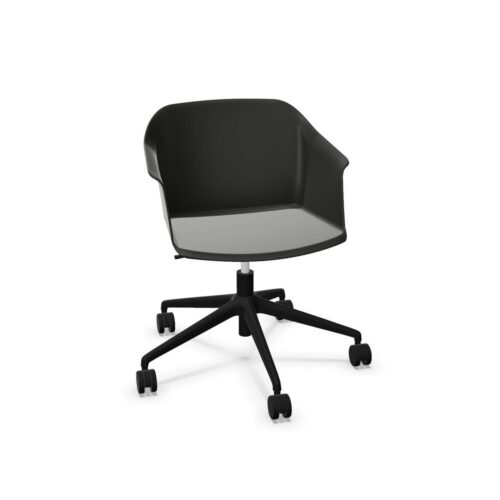


Purple upholstered office furniture brings colour to a workplace through the fabric, leather or other padded covering of a product. This filter relates specifically to upholstery colour rather than the colour of a chair frame, desk base, legs or other structural components.
Purple can range from soft lilac and muted plum to deeper violet tones, depending on the product and its material. It is available across a variety of seating and soft-furnishing formats, making it a considered option for organisations planning distinctive reception, collaboration, meeting or breakout areas.
What does purple upholstery mean?
Purple upholstery describes the visible covering on a padded product: for example, the seat and back of an office chair, the cushions on a sofa, or the fabric panels of a booth. The precise shade, texture and finish can vary between products, so it is useful to review individual product imagery and specifications when a particular tone needs to complement an existing interior scheme.
It does not indicate that every component is purple. A product may have purple fabric paired with a black, white, chrome, timber or coloured frame, depending on its design. This distinction is particularly important when coordinating furniture across a larger office fit-out.
Why choose purple upholstered furniture?
Colour is one of the practical tools available when defining different workplace settings. Purple upholstery can introduce warmth and character while supporting wayfinding, zoning or a brand-led interior palette. Softer shades may sit comfortably in calm, informal spaces, while richer shades can provide a more pronounced visual focal point.
- Use purple seating to distinguish a lounge, waiting area or collaboration zone from desk-based work areas.
- Pair it with neutral finishes where a coloured accent is wanted without overwhelming the room.
- Coordinate complementary shades across chairs, sofas and booths for a more coherent shared space.
- Specify contrasting frames or tables to make the upholstered element clearer within the scheme.
For leased office furniture, selecting a recognisable upholstery colour can also help create a consistent look across a temporary project space, a growing team area or a refreshed customer-facing environment.
Where purple upholstery works well
Purple is often considered for spaces where people meet, wait or take a break rather than for every workstation in an office. The right application depends on the intensity of the shade, available light, surrounding finishes and the atmosphere the organisation wants to create.
In reception areas, a purple lounge chair or sofa can provide an immediate point of interest while still leaving the surrounding desks, storage and flooring neutral. In breakout spaces, upholstered stools, benches and soft seating can help make a less formal setting feel distinct from focused work zones. Meeting rooms may use purple conference seating as part of a colour-coded room identity.
It can also be useful in education, hospitality-style workplace areas and project spaces, where colour may assist orientation and contribute to an environment that feels less uniform. In smaller rooms, lighter purple shades may be easier to integrate than darker tones; in larger open-plan settings, deeper shades can define seating groups more visibly.
Furniture types available in purple upholstery
The products shown on this archive can include different furniture categories with purple upholstered surfaces. Availability and upholstery placement will vary by item, so product-level details remain important when preparing a specification.
- Task chairs and operator chairs with upholstered seats, backs or both.
- Meeting and conference chairs for boardrooms, project rooms and touchdown settings.
- Reception chairs, lounge chairs and sofas for welcome areas and informal workspaces.
- Booth seating, benches and modular soft seating for collaboration and dining-style areas.
- Stools and occasional seating that add flexible capacity around high tables or communal spaces.
When comparing products, consider whether the upholstery is on the full seat, a panel, a cushion or only part of the back. This affects the amount of purple visible within the finished layout.
Choosing the right purple shade and material
A purple upholstery choice should be assessed in context rather than in isolation. Natural light, artificial lighting, wall colours and adjoining finishes can all change how fabric appears. A shade that reads as subdued in a well-lit sample setting may appear darker in an enclosed meeting room.
Material is equally relevant. Woven fabric, textured upholstery and smoother finishes can reflect light differently and create noticeably different visual effects even when their base colour is similar. Consider the intended use of the furniture as well as its appearance: high-use communal seating may need a finish appropriate to the level of regular contact and cleaning expected in that location.
Questions to consider
- Is the required purple a soft accent, a mid-tone feature or a dark statement colour?
- Which parts of the product are upholstered, and what frame or base finish accompanies them?
- Will the colour work with existing flooring, wall finishes, tables and workplace branding?
- Is the furniture intended for focused work, meetings, waiting, informal collaboration or a mixture of uses?
- How many items are needed, and should the same upholstery be repeated across several zones?
- Will lighting conditions differ between the spaces where the furniture is placed?
Planning purple furniture within an office layout
Colour can help make an office layout easier to read. Rather than distributing purple pieces evenly throughout a floorplate, some organisations use them to create purposeful clusters: a bank of meeting chairs in one room, a pair of lounge settings near reception, or a defined breakout zone within an open area. This approach can maintain visual consistency while giving each zone a clear role.
Allow sufficient space around upholstered seating for circulation, access and the activities planned nearby. For example, lounge furniture may need room for occasional tables, while meeting seating needs to work with the dimensions and clearance requirements of the table. The office space planning guide offers useful context for considering furniture placement as part of the wider workplace.
Coordinating with other office furniture
Purple upholstery can be combined with a broad range of office furniture finishes. Neutral desks and storage can let the seating take visual priority, while timber details may introduce warmth and metal frames can give a more contemporary contrast. Where several upholstered products are being selected, matching an exact tone is not always necessary; closely related shades can create depth, provided their materials and surrounding finishes are reviewed together.
For broader product comparisons and planning considerations, see our guidance on choosing office furniture. You can also browse the wider office furniture collection to explore seating, tables, storage and other categories that may support a coordinated workplace scheme.
- Reset all
- Sky