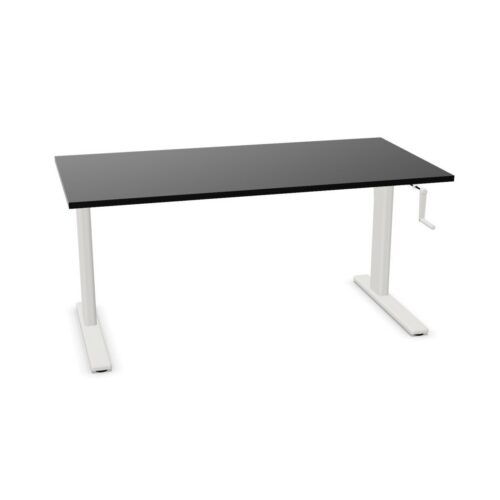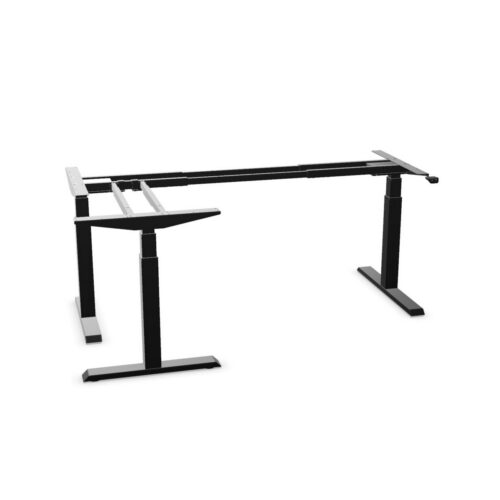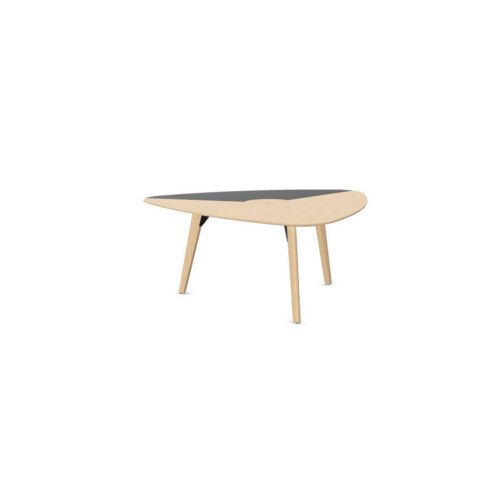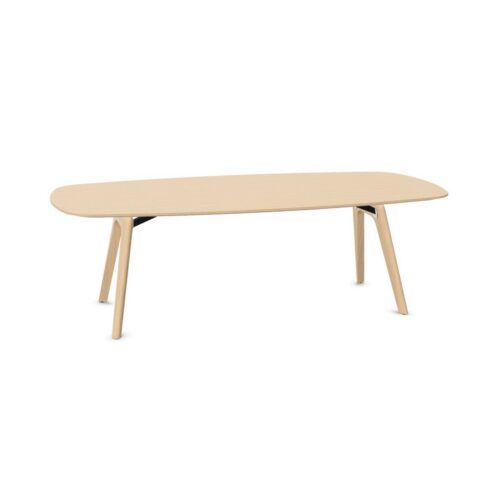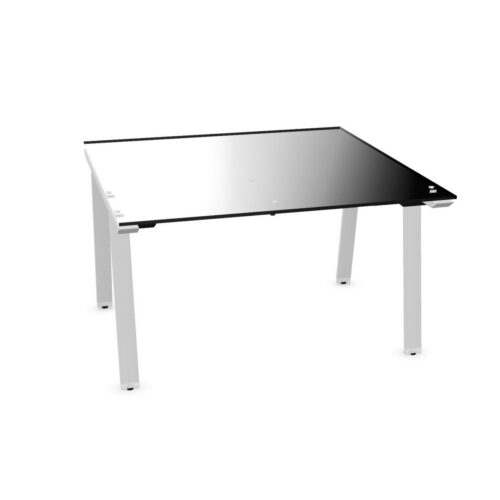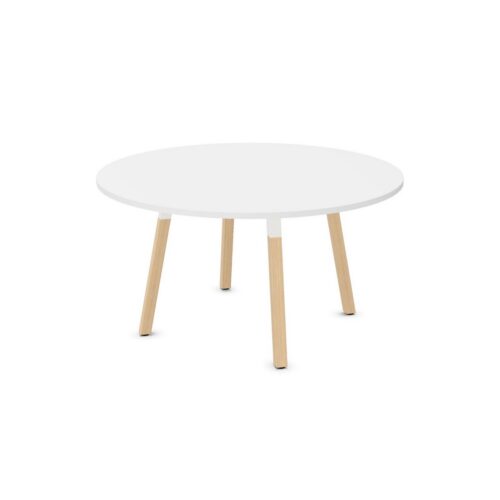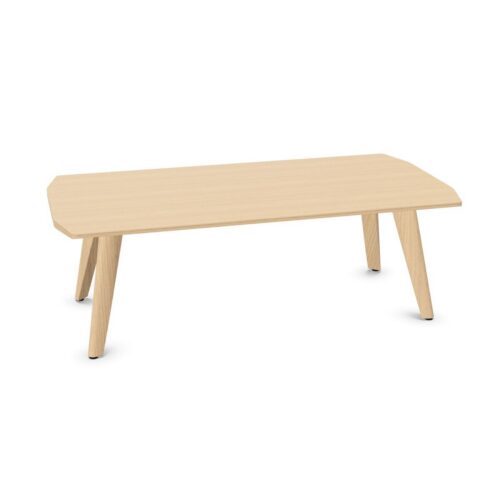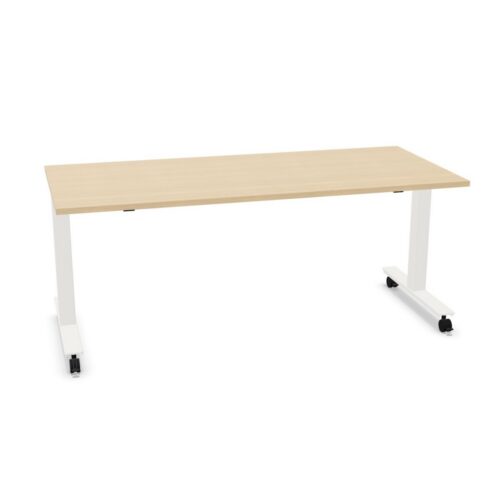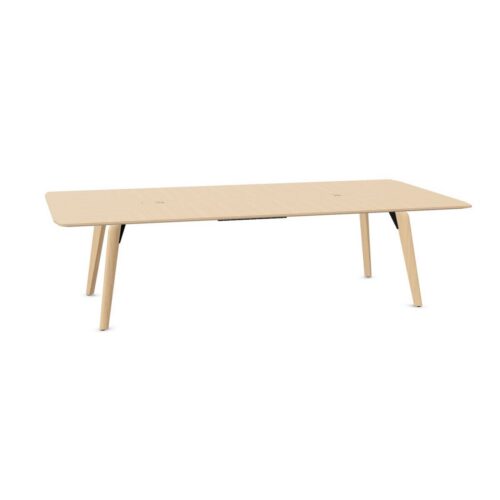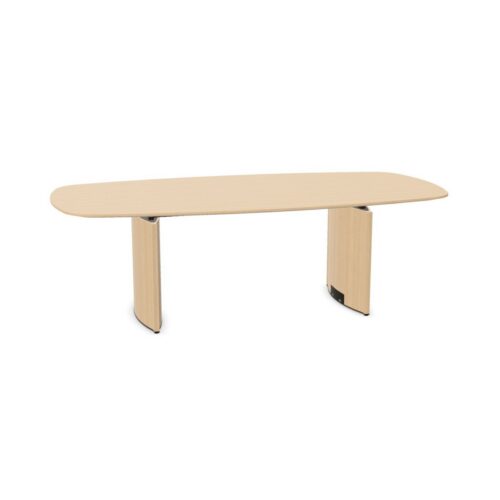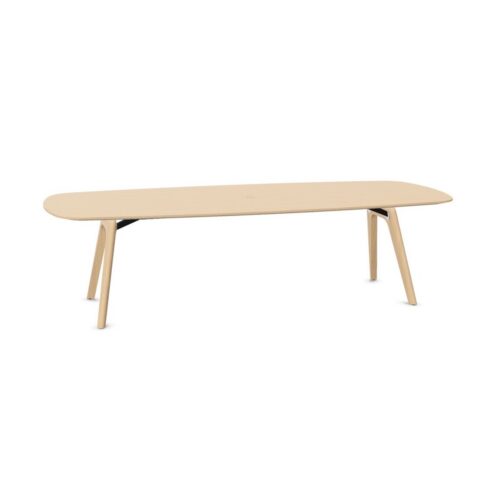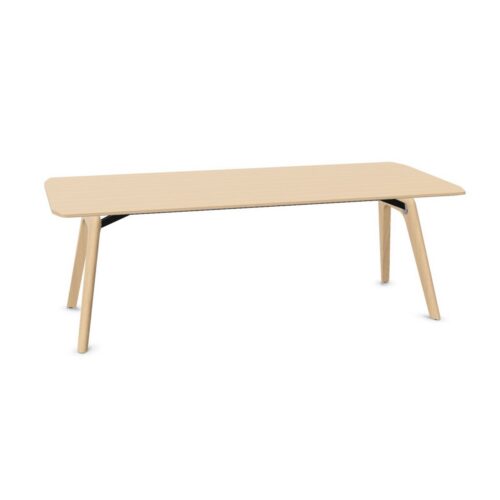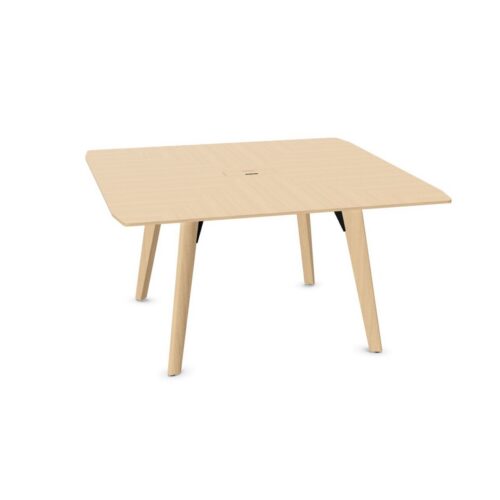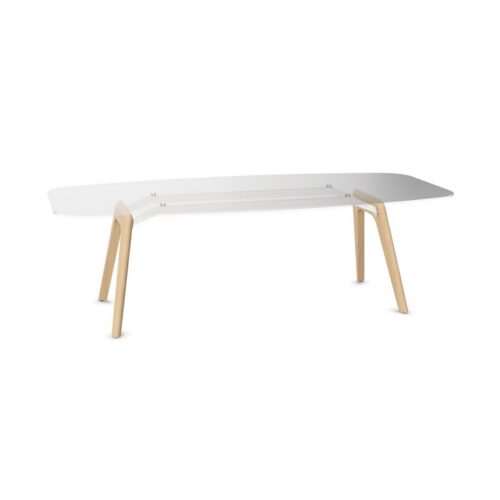


Angled leg desks and tables use a frame geometry in which the legs sit at an outward or inward angle rather than running vertically from the worktop. The result is a recognisable, architectural profile that can suit workplaces seeking a lighter visual alternative to conventional straight-leg furniture.
On this page, the frame type refers specifically to the shape and position of the desk or table legs. It does not describe the top material, overall colour, cable provision or any other specification, all of which should be checked on the individual product listing before a leasing decision is made.
What does an angled leg frame mean?
An angled leg frame is defined by legs that lean or splay away from the top, or meet the floor at an angle. Depending on the design, the legs may form an A-frame-like outline, sit diagonally beneath the worktop, or be connected by beams positioned between them.
This construction changes the visual character of a desk or table without necessarily changing its intended use. Angled legs are found on individual work desks, shared benches, meeting tables and occasional collaborative tables. The exact footprint, under-desk clearance and support structure vary by model, so frame type is a useful starting filter rather than a complete specification.
Why choose angled legs for a workplace?
Frame geometry is often considered alongside layout, interior style and practical access around furniture. Angled legs can give a work setting a more open, contemporary appearance, particularly where a substantial pedestal or enclosed base would feel visually heavy.
- The sloped profile can introduce a deliberate design detail into desk and meeting areas.
- It may complement interiors that use natural materials, exposed structure or simple linear forms.
- Angled frames can help distinguish collaboration zones from banks of more conventional workstation furniture.
- The space beneath the top may be easier to visually read than with solid-panel base designs, depending on the specific frame.
These are design and planning considerations rather than universal performance claims. A desk with angled legs should still be assessed for the required worktop size, stability, user comfort and suitability for the planned equipment.
Where are angled leg tables and desks used?
This frame style can work across a range of professional settings. In open-plan offices, it may be selected for team desks or touchdown positions where a less formal appearance is wanted. In project rooms and studios, angled leg tables can support flexible group work while maintaining a clear, uncluttered look.
Meeting spaces are another common application. A table with angled legs can create a more domestic or hospitality-inspired feel than a traditional boardroom base, while still providing a dedicated surface for discussions, laptops and shared materials. The available space around the table remains important: consider chair movement, access routes and the position of power or presentation equipment.
Reception-adjacent meeting points, training rooms and hybrid work areas may also benefit from this style where the furniture needs to sit comfortably within a broader interior scheme. For focused desk work, check that the leg position does not conflict with the user’s preferred seating position or storage arrangement.
Product types available with angled frames
Angled legs are a frame characteristic rather than a product category. They may appear on several types of workplace furniture, each with different planning requirements.
- Individual desks for assigned workstations, home-office-style settings or private rooms.
- Bench desks that support side-by-side work while using a shared structural arrangement.
- Meeting and conference tables for formal discussions, team sessions and visitor meetings.
- Project and collaboration tables for workshops, reviews and informal group activity.
- High or occasional tables where the product specification confirms the intended height and use.
Not every angled frame has the same construction or proportion. Some are compact and understated, while others make the leg profile a central part of the design. Compare product dimensions and images alongside the frame description when building a coordinated furniture schedule.
Planning clearance around the frame
Angled legs need careful space planning because their lower footprint can differ from the edge of the worktop. A leg that spreads towards the floor may occupy space that would otherwise be used for a chair, visitor seating or circulation. Conversely, a design with legs set in from the corners may leave more room at the table edge but affect where people can sit.
For desks, consider how task chairs move in and out, whether mobile pedestals are required and where users will place monitors, docking stations and cables. For shared tables, map the intended number of seats and avoid placing users directly where frame members restrict knee space.
It is also sensible to account for room features such as radiators, floor boxes, doors and existing storage. Dimensions shown for the top do not always communicate the complete floor-level footprint of an angled base.
How to choose an angled leg desk or table
Start with the activity the furniture needs to support, then narrow the selection by size, seating capacity and frame arrangement. An attractive profile is important, but procurement decisions should also reflect how the piece will be used day to day and how it relates to the wider workplace layout.
Questions to consider
- What worktop width and depth are needed for the users and their equipment?
- Where do the angled legs meet the floor, and will that affect seating or storage?
- Does the table need to accommodate a fixed number of people on each side?
- Is cable management needed, and is it included in the selected product configuration?
- Will the frame finish and top finish coordinate with existing furniture?
- Is the piece intended for concentrated work, meetings, training or flexible collaboration?
For leased office furniture, selecting a frame type that remains appropriate if the layout changes can also be helpful. Modular planning, consistent dimensions and compatible seating can make it easier to reconfigure spaces as teams and working patterns evolve.
Coordinating frame types across an office
Using angled legs in selected areas can create visual continuity without requiring every item to have the same base geometry. For example, a meeting table may share an angled-frame language with nearby desks, while storage, task seating and accessories provide contrast. Alternatively, angled legs can be used as a distinct feature in client-facing rooms or collaborative areas.
Consider the relationship between the frame and other visible elements, including chair bases, monitor arms, lighting and floor finishes. A cohesive scheme does not require identical materials throughout, but repeated proportions, tones or lines can help office furniture feel intentional.
Explore related workplace furniture
Browse Myntwork’s range of office desks for individual and shared work settings, or view conference tables for meeting rooms, project spaces and collaborative environments. Individual listings provide the dimensions and configuration details needed to compare angled leg options within a wider furniture plan.