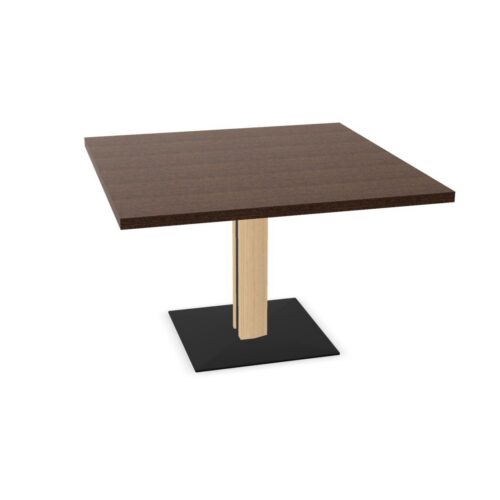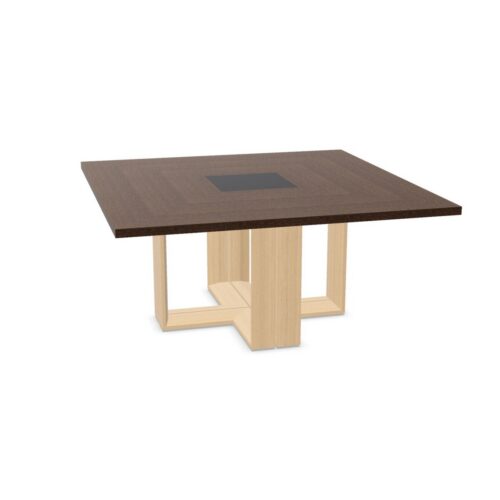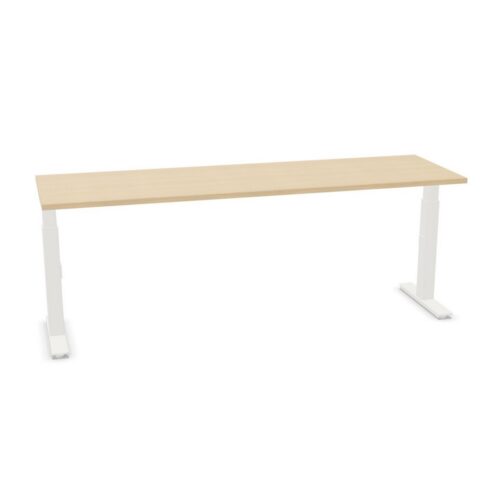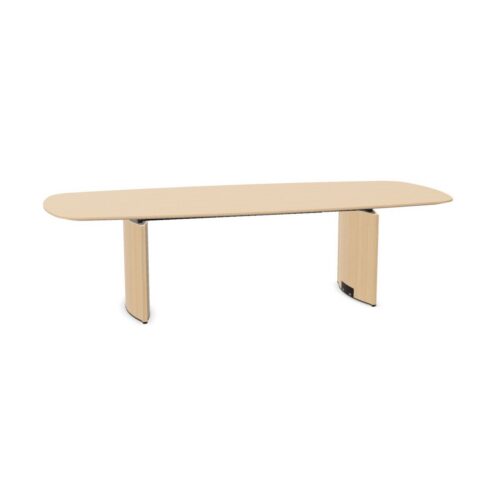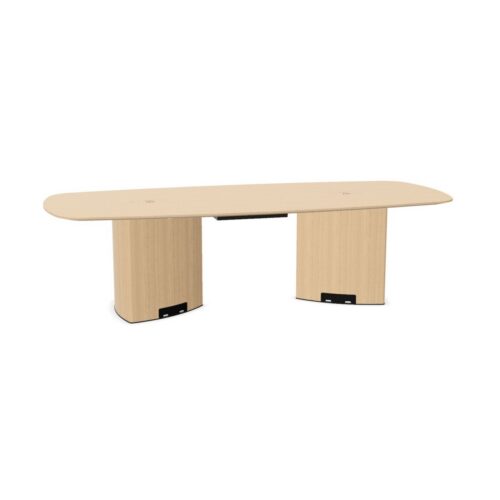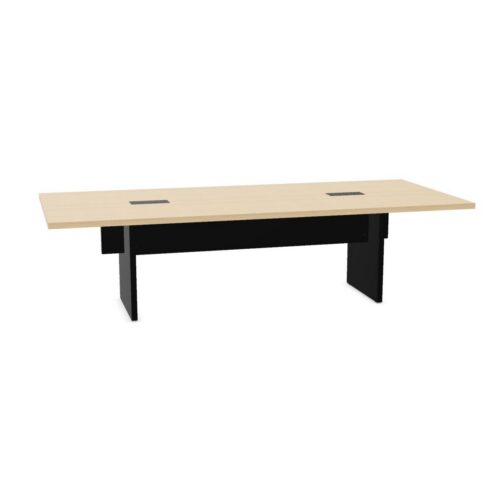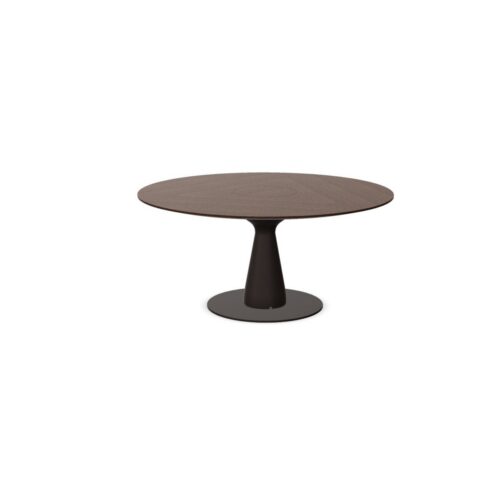


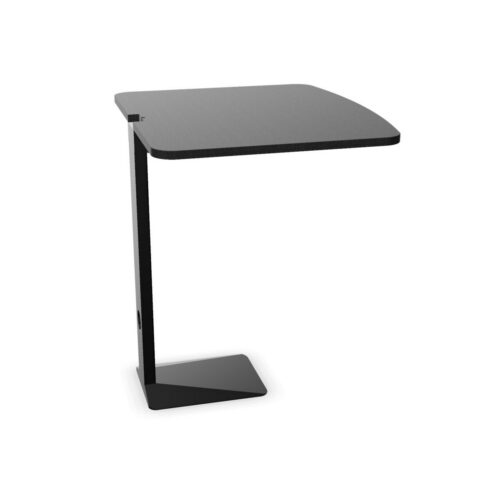
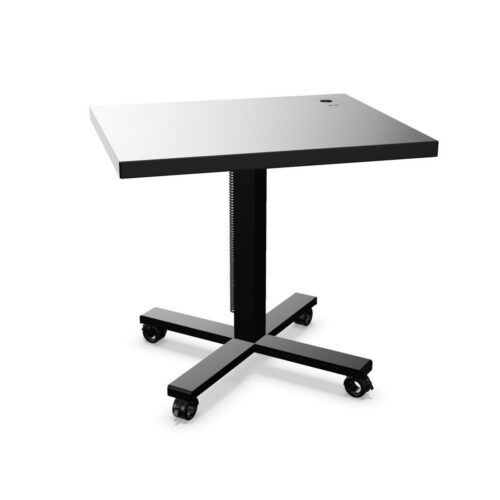
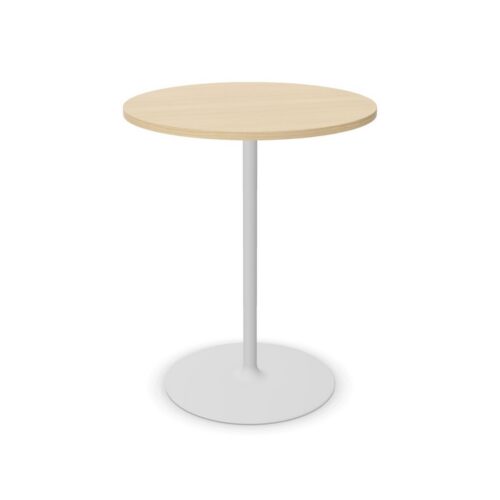
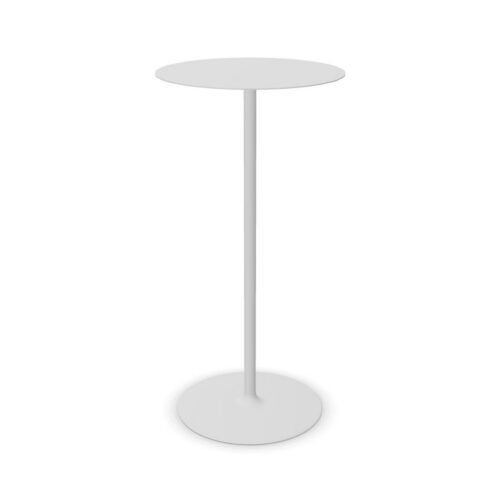
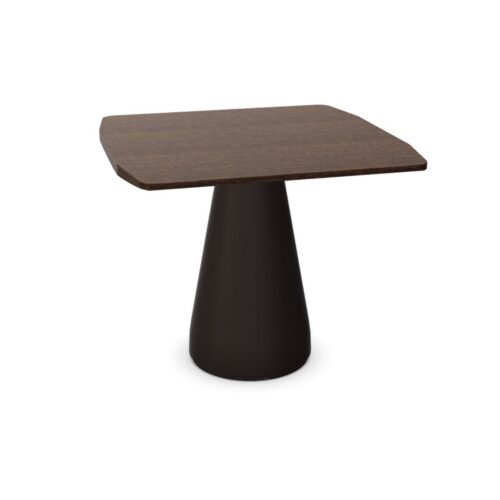
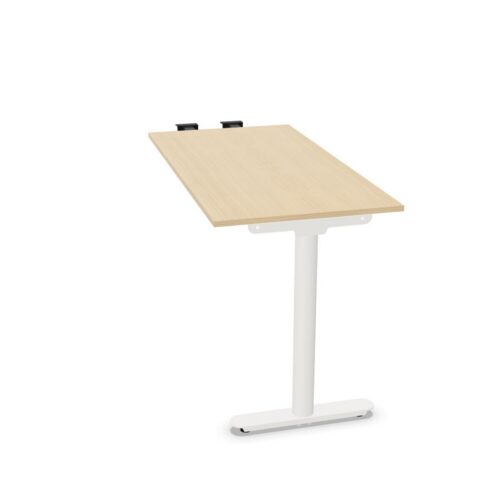
Column-frame desks and tables use one or more upright supports positioned beneath the worktop rather than a conventional four-leg or cantilever arrangement. In office furniture, this frame geometry can create a clear, uncluttered footprint while providing a practical support solution for individual workstations, meeting tables and shared touchdown surfaces.
The column describes the structure beneath the top, not the finish, colour or material of the furniture. The products shown in this selection may therefore vary in dimensions, top shape, base configuration and intended setting. Reviewing the product specification remains important when selecting furniture for a particular room or project.
What is a column frame?
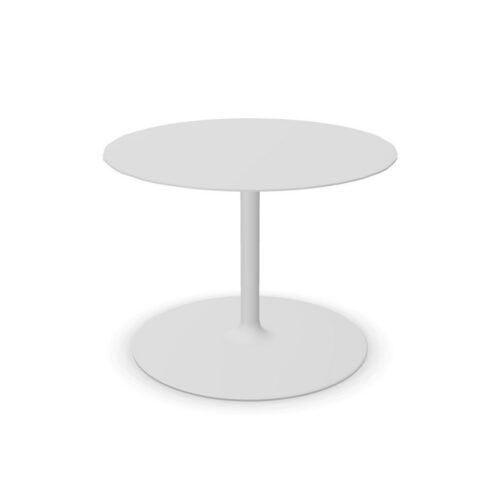
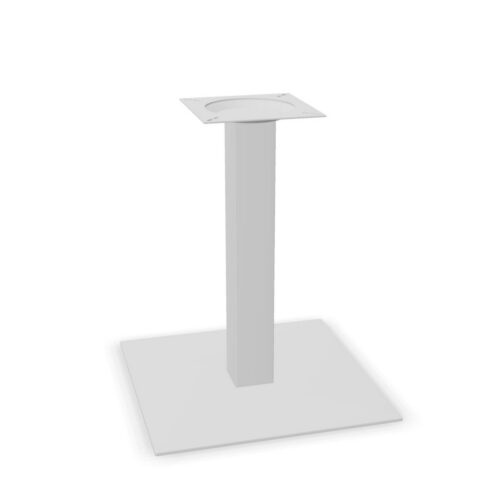
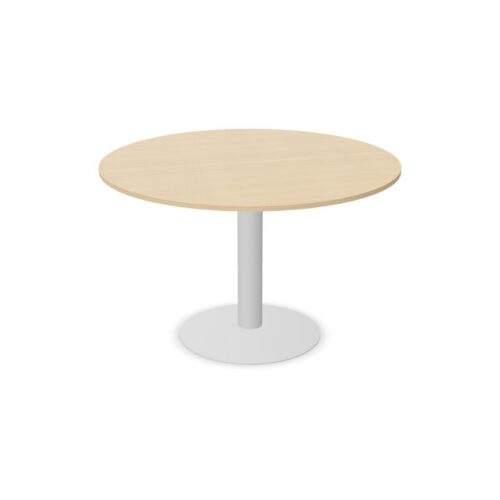
A column frame is a central or offset vertical support that connects the worktop to a floor base or plate. It may be used on its own for a compact table, or as part of a multi-column arrangement supporting a longer or larger top. The base is typically designed to spread the load and help keep the table stable.
Unlike frames with legs at each corner, a column arrangement moves much of the structure away from the perimeter. This can leave more open space around the seated position and beneath the work surface, depending on the size and layout of the base.
Why choose column-frame furniture?
Column bases are often considered where a simple, organised appearance and flexible seating positions are priorities. With fewer supports at the edges of the top, they can be useful where people need to sit around several sides of a table or where chairs need to be moved in and out regularly.
- They can provide a tidy visual profile for meeting, breakout and reception-adjacent areas.
- Supports are kept away from many corner seating positions.
- They suit round, square and smaller rectangular table formats, subject to the individual design.
- They can work well with tables intended for occasional collaboration as well as everyday use.
- The open perimeter can make it easier to plan chair placement around the top.
These benefits depend on the particular product. Base width, top size, number of columns and intended loading all affect how a desk or table performs in use.
Common workplace applications
Column frames appear across a range of commercial interiors. A small single-column table can be a useful surface in a café-style breakout area, informal meeting point or waiting space. Larger tops with multiple columns may be specified for shared project tables and formal meeting rooms.
For desk planning, the geometry can be relevant in spaces where users need a clear approach to the worktop or where the room layout benefits from less visual interruption at floor level. In meeting environments, a column base can also help accommodate seating around the table without placing a leg directly at every corner.
- Small meeting and interview rooms
- Collaboration zones and touchdown spaces
- Breakout, dining and refreshment areas
- Reception-side waiting and informal discussion points
- Boardrooms and larger meeting spaces, where the table design uses multiple supports
Desk and table formats to consider
The frame type is only one part of the specification. Column supports can be paired with different worktop shapes, so it is useful to start with the activity the furniture needs to support. Round tops encourage face-to-face conversation and can be practical in compact spaces. Square tops suit smaller groups and regular room layouts, while rectangular or boat-shaped tops may be more appropriate for longer meetings.
Within the wider selection of office desks, consider how much individual workspace, equipment space and cable access are required. For shared surfaces, ensure the top depth and width allow users to sit comfortably without conflicting with the position of the base.
Planning space around a column base
A clear-looking underside does not remove the need for careful space planning. The floor base occupies space beneath the top, and its dimensions can affect where feet, chairs and mobile pedestals can be positioned. Check the product drawings where available, especially when tables will be closely grouped or placed beside walls, storage or circulation routes.
Allow sufficient room for chairs to be pulled back, for people to pass behind seated users and for accessible routes through the workplace. On a larger table, consider the location of each column in relation to expected seating positions. This is particularly relevant when a room includes a mix of fixed chairs, task chairs and occasional visitor seating.
How to choose a suitable column-frame table
Select the frame in combination with the top size, room use and number of users. A compact occasional table has different requirements from a meeting table used daily by a team. Confirm that the support configuration is intended for the top you are considering rather than assuming that all column bases are interchangeable.
Questions to consider
- How many people need to use the surface at the same time?
- Will the table be used for laptops, monitors, papers or refreshments?
- Does the room need seating on every side of the top?
- Where will chair movement and pedestrian circulation take place?
- Is a single central support appropriate, or does the top require several columns?
- Do you need provision for power and data within or near the table?
- Which top shape fits the room dimensions and working style?
For project specifications, it is also sensible to check overall height, base footprint, top overhang and assembly requirements against the proposed floor plan. These details help ensure the selected geometry works in the available space rather than simply matching the desired appearance.
Column frames in meeting spaces
Meeting furniture needs to balance capacity with practical clearance. A column-frame design can be especially relevant where participants are seated around the end or corners of a table, as there may be fewer perimeter legs to plan around. However, the base layout should still be assessed against the intended chair positions and the type of meeting taking place.
For smaller discussions, a compact column table can offer a focused place to meet without filling the room. For larger rooms, browse the available conference tables alongside the frame specification to compare top formats and support arrangements suited to group use.
Coordinating with the wider workplace
Because frame type describes the underlying geometry, it can be considered separately from the visible finish scheme. A column-base product may be selected to complement other furniture through its top, base finish or overall silhouette, while still meeting practical layout needs. Review each product individually when coordinating with task seating, storage, meeting chairs and existing interior elements.
Column-frame furniture can support a range of workplace settings, from compact informal areas to structured meeting rooms. Continue to the relevant desk and conference-table categories to compare sizes, shapes and uses within the broader Myntwork catalogue.

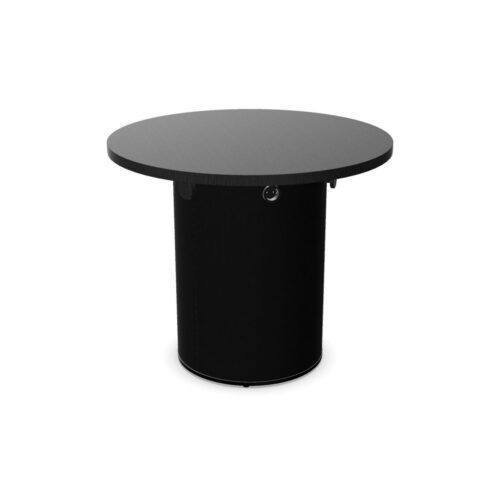




Bralco

Bralco