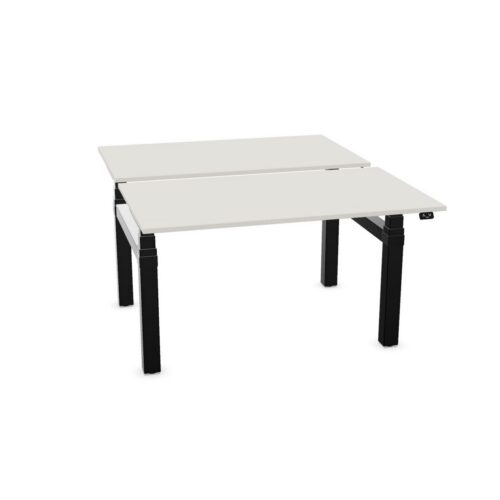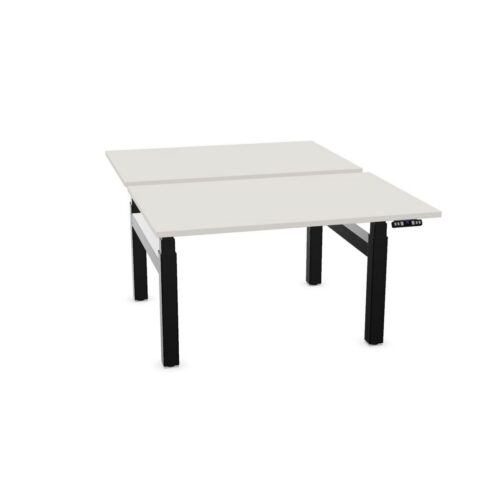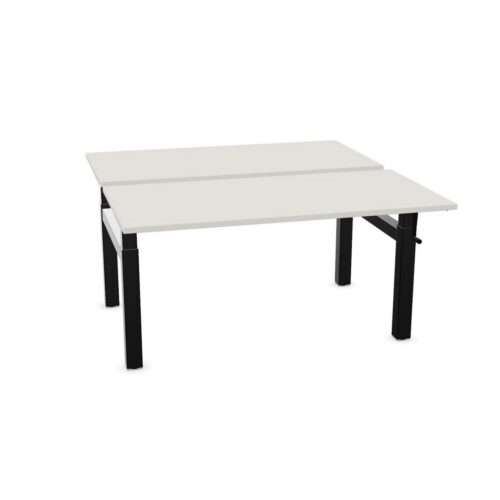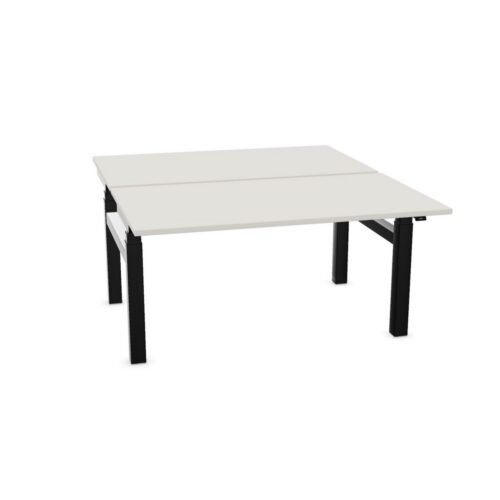


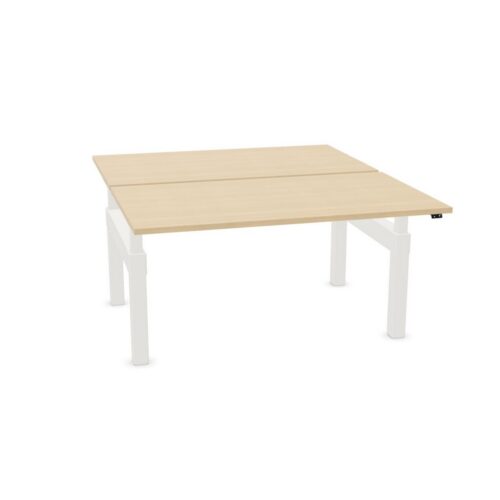
H-leg desks and tables use a frame arrangement in which the supporting legs are connected by a horizontal member, creating an H-shaped profile when viewed from the side or end. This practical geometry is commonly used for workplace tables where steady support, a clear work surface and a straightforward visual appearance are important.
Within a leased office-furniture scheme, H-leg frames can suit a broad mix of individual workstations, shared benching areas, meeting rooms and project spaces. The exact dimensions, finish, materials and adjustment features vary by product, so the frame type is a useful starting point when comparing compatible desks and tables for a planned workplace layout.
What does an H-leg frame type mean?
An H-leg frame generally consists of two upright leg structures joined by a lower or mid-level horizontal rail. Together, these elements form the recognisable H configuration. The rail helps connect the supports while leaving the tabletop area open for day-to-day work.
The term describes the geometry of the base rather than the colour of the frame, the tabletop finish or the furniture’s intended setting. Two products with H-leg frames may therefore look quite different: one may be a compact desk for focused work, while another may be a longer table intended for meetings or collaboration.
Why H-leg frames are used in workplaces
Frame design affects how a table or desk sits within a room, how people approach it and where supporting components are positioned. H-leg designs offer a familiar, orderly structure that can work well in office environments where furniture needs to be easy to understand, arrange and combine with other pieces.
- The connected-leg structure gives the base a defined, balanced appearance.
- Legs are positioned at the ends of the worktop, helping to keep the central work surface unobstructed.
- The simple frame profile can sit comfortably alongside task chairs, storage and meeting seating.
- H-leg tables can be considered for both dedicated desks and shared work surfaces, subject to the dimensions of the individual product.
- A consistent frame type across an area can support a more coordinated furniture layout.
For procurement teams, selecting a common frame style can also make it easier to compare tabletop sizes, edge finishes and accessories without changing the fundamental look of the base from one area to another.
Suitable settings for H-leg desks and tables
H-leg furniture is often relevant wherever a stable, conventional table format is required. In a focused workstation zone, it can provide a defined desk position for a laptop, monitor or paperwork. In a team area, longer versions can support shared tasks, hot-desking arrangements or temporary project work.
Meeting spaces are another natural use case. Depending on the table’s size and configuration, an H-leg base can support an everyday meeting table for small groups or a larger surface for discussions, presentations and collaborative sessions. Explore the available range of conference tables when planning meeting-room furniture alongside H-leg options.
They may also be useful in training rooms, touchdown areas and multipurpose spaces. In these settings, check the particular product’s footprint and the room circulation needed around chairs before deciding how many tables to place in a row or group.
Desk and table formats to compare
Frame type is only one part of a furniture specification. An H-leg base may appear on products with different worktop widths, depths and shapes, and those choices determine how the furniture will perform in its intended location.
- Individual desks: for assigned workspaces, home-office-style settings within a workplace, or compact focus areas.
- Shared desks: for teams that need adjacent places for computer-based work or project activity.
- Meeting tables: for informal catch-ups, structured meetings and collaborative work.
- Training or project tables: for spaces that need clear, usable work surfaces for changing groups.
When reviewing office desks, use the product information to assess whether the top size and frame arrangement suit the planned task. A desk that is suitable for one person may not offer the same working room, cable provision or seating access as a table intended for several users.
Planning an H-leg layout
Start with the room plan rather than the frame alone. Mark door swings, storage access, windows, power locations and main routes through the space. Then allow adequate room for chairs to be pulled out and for colleagues to pass behind seated users. This is particularly important where several desks or tables are aligned in a bank.
Consider the relation between the frame rails and the people using the furniture. A horizontal support can be placed differently between product designs, so it is sensible to review photographs, dimensions and technical details for the exact item. The position of any modesty panel, cable tray, power unit or other accessory may also influence how the desk is specified and installed.
How to choose the right H-leg product
Choose according to the work being done, the number of users and the room constraints. A consistent frame geometry can bring visual order, but it should not replace practical checks on size, seating and equipment requirements.
Questions to consider
- How many people need to use the surface at the same time?
- What worktop width and depth are needed for screens, documents and other equipment?
- Will the table be used in a fixed layout or need to support changing activities?
- Where will chairs, drawers, pedestals and storage be positioned?
- Does the product include, or allow for, the cable-management approach required for the space?
- Will the frame finish coordinate with the rest of the office furniture without being confused with the top or upholstery colour?
It is also helpful to consider the furniture as part of a wider scheme. Combining compatible desk and table formats can create continuity between work areas, project spaces and meeting rooms while allowing each setting to use an appropriately sized surface.
H-leg furniture within a broader office scheme
An H-leg frame has a restrained, functional character that can work with many workplace styles. It may be paired with task seating in desk areas or with meeting chairs around communal tables, depending on the product selected. The important distinction is that the H-leg label identifies the base geometry; it does not by itself indicate the chair type, tabletop material, acoustic performance or height-adjustment capability.
For a considered office-furniture plan, compare H-leg products by their individual specifications and then review related desk and meeting-table categories. The Myntwork collections of office desks and conference tables provide useful starting points for connecting workstations with collaborative spaces.
- Reset all
- Silber


Bralco