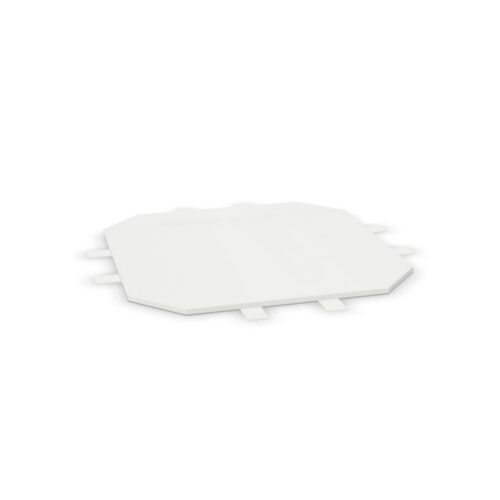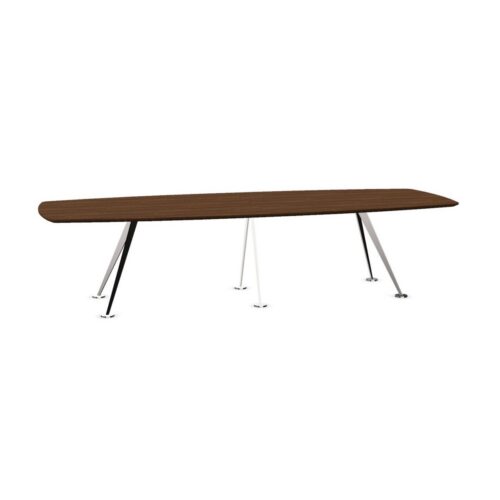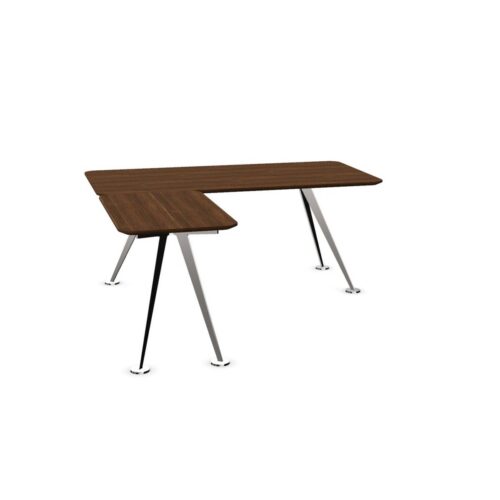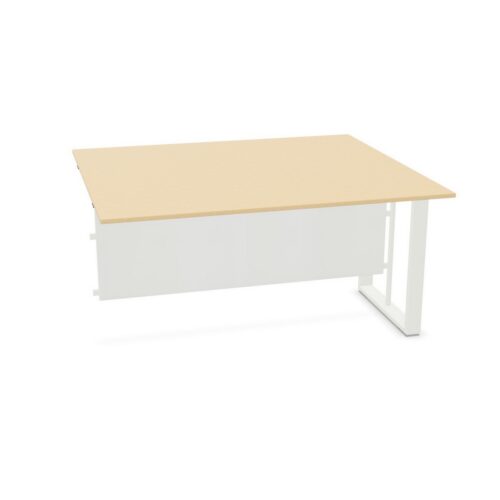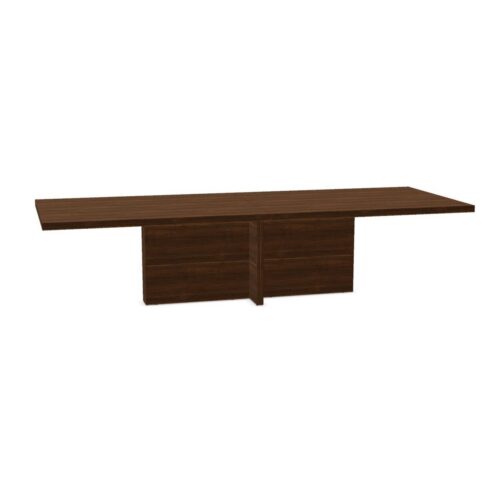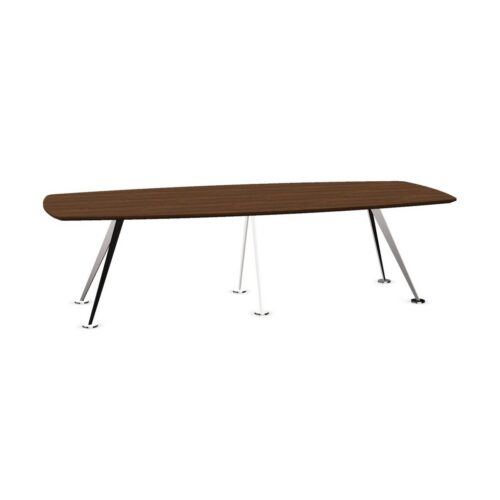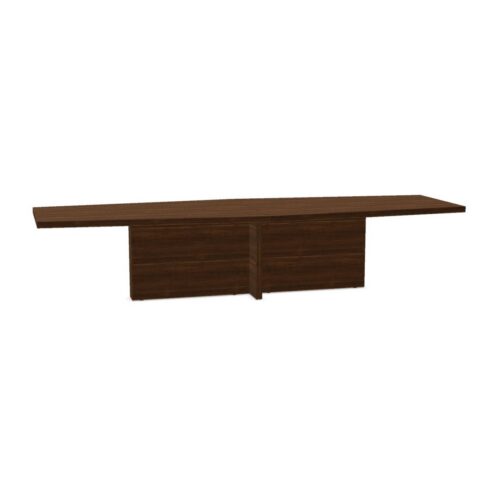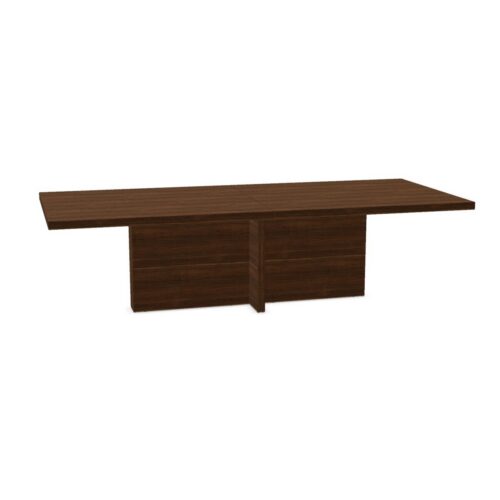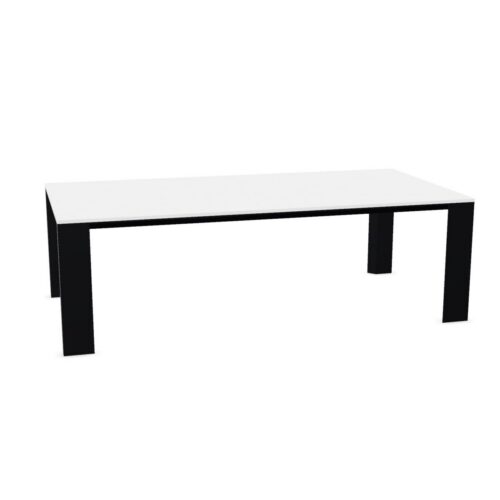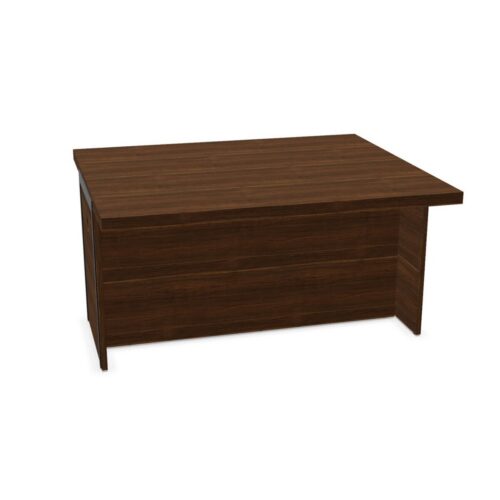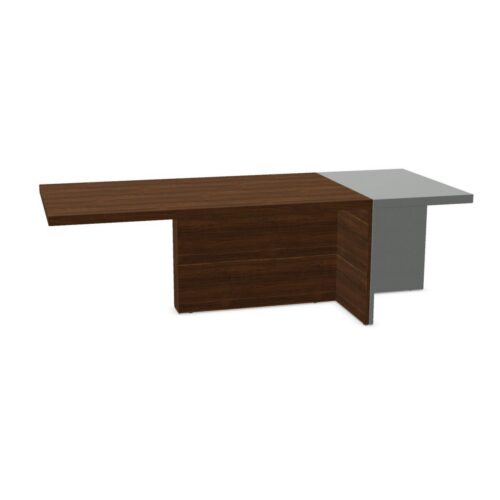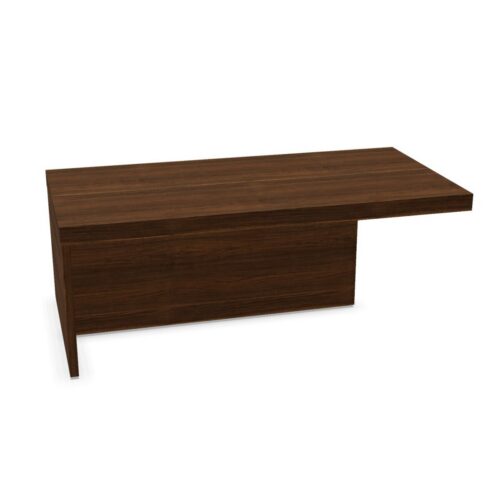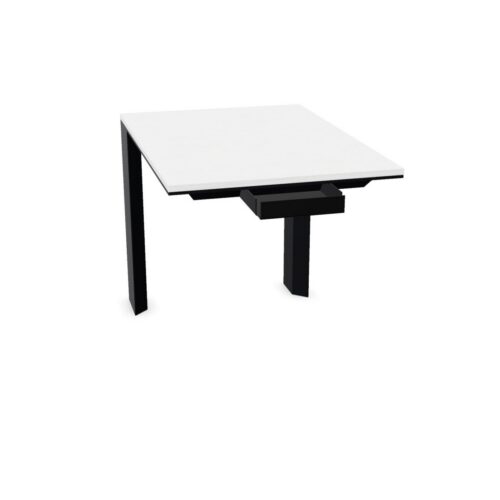


HPL table tops provide a practical work surface for offices, meeting rooms, collaborative settings and staff areas. HPL, or high-pressure laminate, is used here to describe the tabletop surface material only; it does not indicate the material, finish or colour of the table frame, legs or base.
For procurement teams, an HPL surface can be a useful consideration where tables will see regular everyday use and need to suit a defined workspace, layout and visual scheme. The products shown on this page vary by table type, size, shape and base design, so the individual product specification remains important when comparing options.
What is an HPL table top?
High-pressure laminate is a decorative surface material made by pressing layers of paper and resin together under heat and pressure. It is commonly applied to a supporting tabletop core to create a finished, consistent surface. The visible HPL layer supplies the table’s working finish, while the core, edging and supporting structure are separate parts of the overall construction.
HPL can be specified in a range of plain colours, wood-effect decors and other finishes, depending on the product. A table listed with an HPL top may therefore look very different from another HPL-topped table. Check the product page for the available decor, edge treatment, thickness and any care guidance.
Why specify HPL for workplace tables?
Tabletops are among the most heavily used surfaces in an office. They may support laptops, paperwork, monitors, refreshments and shared equipment throughout the day. An HPL finish is often selected for its hard-wearing, easy-to-maintain character and its ability to provide a neat, uniform appearance across a furniture scheme.
- A practical surface option for regular desk, meeting and shared-table use.
- A broad choice of decors can help align tables with an existing interior palette.
- A finished surface that can be considered alongside edge style and tabletop thickness.
- A consistent material specification that can be repeated across relevant table types.
Suitability will depend on the particular product and its intended use. Surface performance, core construction and cleaning recommendations can differ between ranges, so HPL should be assessed as one element of the table specification rather than as a complete performance guarantee.
Where are HPL-topped tables commonly used?
HPL is relevant across many workplace settings because tables perform different roles while needing a surface that is straightforward to accommodate within day-to-day operations. It can appear on individual work desks, bench systems, meeting tables, project tables, touchdown tables and dining or breakout furniture.
In open-plan offices, an HPL desktop may be chosen to create a coordinated run of workstations. In meeting rooms, the decor can be considered alongside seating, storage and presentation equipment. Shared spaces may call for shapes and sizes that support informal conversations, hot-desking or team activity, with the tabletop finish forming part of the wider specification.
Choosing an HPL tabletop finish
Start with how the table will be used, then consider the visual and practical requirements of the room. Light finishes can contribute to an open feel, while darker or wood-effect decors may be selected to relate to surrounding joinery or furniture. The right choice is not simply a matter of colour: the table’s dimensions, edge profile, base arrangement and cable management can all affect how well it works in the space.
- Match the tabletop size and shape to the number of users and available circulation space.
- Consider whether a light, dark, neutral or wood-effect decor suits the wider scheme.
- Review the table base separately, particularly where legroom, access or stability are priorities.
- Check edge details, tabletop thickness and available configurations on the product listing.
- Plan for power, data and monitor requirements where the table will be used for focused work.
When coordinating several spaces, it may help to define a small palette of finishes rather than selecting each table in isolation. This can make it easier to maintain continuity between work areas, meeting rooms and shared settings while allowing each table type to meet its own functional needs.
HPL compared with other tabletop materials
Tabletop materials and finishes are specified for different reasons. HPL is a surface finish, whereas terms such as solid wood, veneer, glass or metal may describe different visible materials or constructions. Even within laminate-based options, the appearance, edge, core and intended setting may vary.
A comparison should focus on the requirements of the project: expected use, preferred appearance, cleaning routine, room character and the selected table design. It is also useful to distinguish the top from the rest of the product. An HPL top does not tell you whether the base is metal, timber or another material, nor does it define the base colour.
Care and everyday use
Routine care should follow the instructions supplied for the specific table. In general, keeping the surface clear of spills and using suitable cleaning methods helps maintain its appearance. Avoid assumptions based on material name alone, particularly where a table has specialist finishes, integrated fittings or a particular edge detail.
For workplaces managing furniture over a longer cycle, it is worth considering how tables will be cleaned, moved, reconfigured and reused as teams change. Selecting appropriate products for their setting, and maintaining them in line with product guidance, supports considered use of workplace furniture. Read our guide on how to extend the lifespan of office furniture for broader planning considerations.
Questions to consider before specifying
For a single table or a wider project
- What activities will take place at the table: individual work, meetings, training, dining or collaboration?
- Which top dimensions, shapes and heights suit the room and intended number of users?
- Does the chosen HPL decor coordinate with existing furniture without making the space feel overly uniform?
- Are power access, cable routing or screen supports needed as part of the table arrangement?
- What cleaning and maintenance approach can the workplace support?
These questions can help procurement teams compare like for like and identify the details that matter beyond the tabletop finish. For further guidance on balancing function, layout and furniture selection, see our resource on choosing office furniture.
Explore related workplace furniture
The HPL table tops on this page can be considered as part of a broader furniture plan, alongside task seating, storage, meeting furniture and collaborative pieces. Browse the wider office furniture collection to explore categories that can support a coherent workplace layout.