


Metal cabinet doors provide a practical, hard-wearing option for workplace storage, supporting organised and secure spaces in offices, education settings, back-of-house areas and shared facilities. On this page, the door material refers specifically to the doors of a cabinet, rather than the material used for its frame, body, shelves or handles.
Metal doors suit environments where storage is used frequently and needs a straightforward, professional finish. They can be found across a variety of storage formats, from low cupboards and credenzas to taller cabinets and lockers, with the overall design, locking arrangement and internal layout varying by product.
What does metal door material mean?
A metal-door cabinet has doors manufactured from metal, typically formed panels fitted to the cabinet body with hinges and a closing mechanism. The cabinet itself may use metal throughout, or it may combine metal doors with other materials. For procurement and specification, this distinction matters: a metal door is a visible, regularly handled component, but it does not by itself define every aspect of the storage unit.
Metal doors are commonly finished with a protective coating or paint system. The finish can affect the visual appearance and day-to-day cleaning requirements, while the construction of the cabinet determines factors such as capacity, shelf arrangement and whether the unit can be secured.
Why choose cabinets with metal doors?
Metal is often selected for storage doors because it is well suited to repeated use in busy workplaces. It offers a clean, purposeful appearance that works alongside many office furniture schemes, particularly where practical storage is a priority.
- Frequent-use suitability: metal doors are a sensible consideration for shared cupboards, staff storage and operational areas where doors are opened throughout the day.
- Simple maintenance: smooth metal surfaces are generally straightforward to wipe down as part of normal workplace cleaning routines.
- Consistent appearance: metal storage can create a coordinated look in offices, studios, workshops and support spaces.
- Useful for secure storage designs: many metal-door products are available with locks, although locking should always be confirmed on the individual product specification.
- Appropriate for practical interiors: the material complements task-focused, industrial-inspired and contemporary workplace settings.
The appropriate choice will depend on the expected use of the cabinet. A storage unit for occasional paperwork may have different requirements from one used daily for personal belongings, equipment or supplies.
Where are metal-door cabinets commonly used?
Cabinets with metal doors can be used across both customer-facing and operational parts of a workplace. Their structured, durable-looking finish makes them particularly relevant where furniture has to support an orderly environment without becoming visually distracting.
In open-plan offices, they can house documents, stationery, IT accessories or shared resources. In meeting suites and project rooms, a low cabinet can help keep presentation materials and equipment out of sight between sessions. Metal-door storage is also relevant in staff rooms, mail areas, education environments, reception back offices and facilities spaces.
- Shared office storage zones and print areas
- Staff rooms, changing areas and personal storage spaces
- Workshops, studios and technical departments
- Education, training and community facilities
- Back-of-house storage in hospitality and visitor settings
- Archive, supplies and equipment rooms
Storage formats to consider
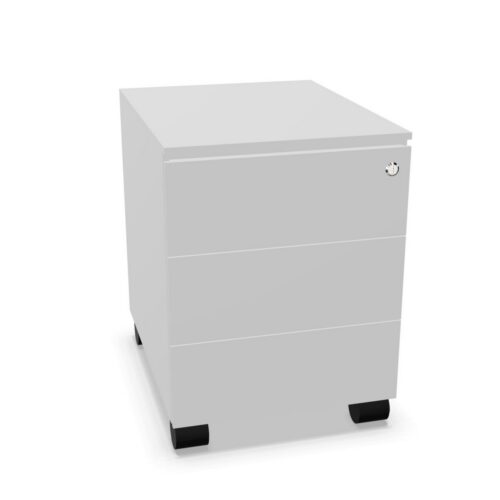
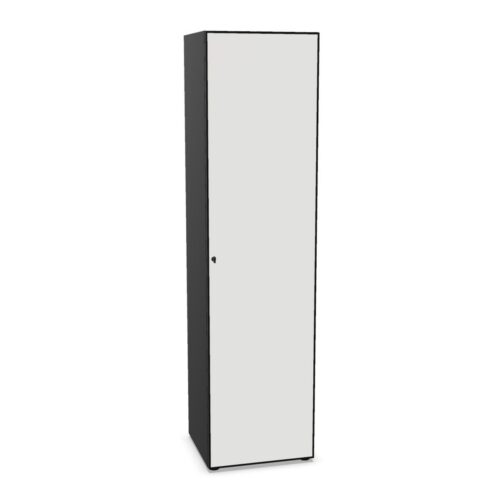
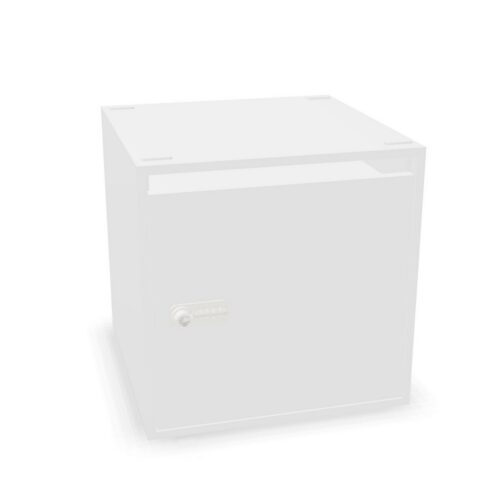
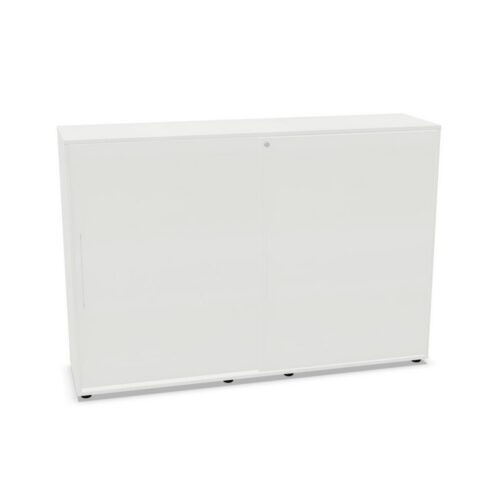
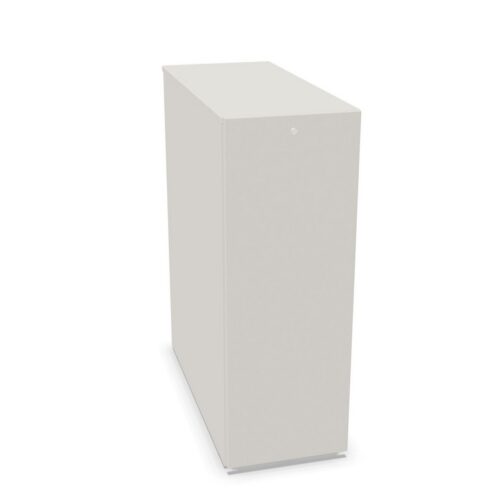
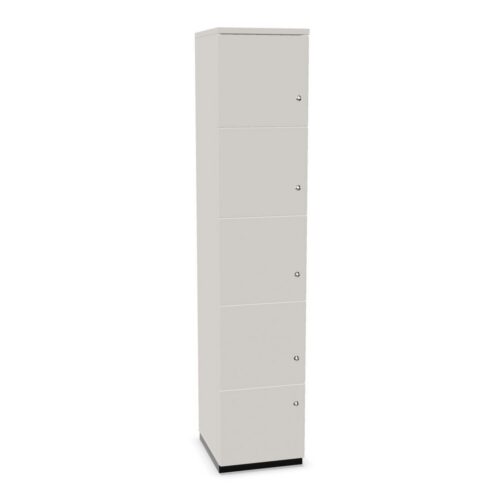
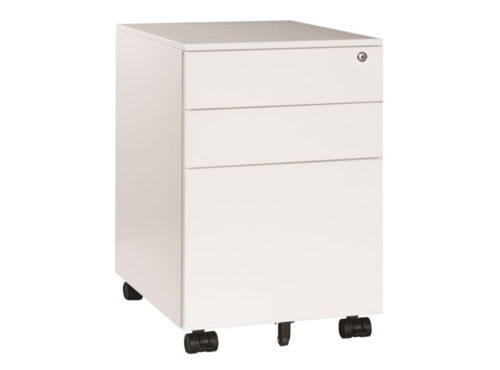
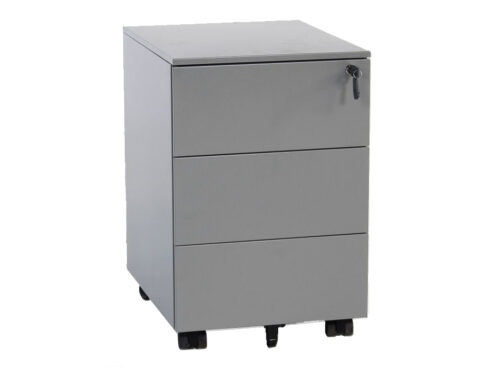
The door material is only one part of choosing a suitable cabinet. Metal doors may appear on tall storage cabinets, low cupboards, sideboards, mobile storage and locker-style units. Each format supports a different way of working and makes different demands on the available floor area.
Tall cabinets make use of vertical space and can be useful where storage capacity is needed within a small footprint. Lower cabinets may sit alongside desks, beneath windows or around collaboration areas, subject to the dimensions of the product and room. Locker configurations are more focused on individual or compartmentalised storage, while cupboards with shelves can be better suited to shared consumables and files.
Before specifying a format, consider the items being stored, the access required and whether the cabinet will be positioned against a wall, within a bank of storage or as part of a wider furniture layout. The broader office furniture collection can help place storage alongside desks, seating and other workplace essentials.
How to choose metal cabinet doors for your workplace
Start with the function of the storage, then assess the cabinet construction and door arrangement on the relevant product page. A metal door can be appropriate in many settings, but the right unit should also meet the practical needs of the people using it.
Questions to consider
- What will be stored: documents, personal items, equipment, stock or cleaning supplies?
- How often will the doors be opened, and will access be shared by several people?
- Is a lock required, and if so, what level of access control is needed?
- What internal configuration is required, including shelves, compartments or hanging space?
- Will the cabinet need to fit within a defined height, width or depth?
- Does the chosen finish work with existing workplace storage and interior materials?
- Are there site-specific requirements for fixing, positioning or safe use?
For a more complete view of specification priorities, read our guide to choosing office furniture. It is useful when balancing layout, function, maintenance and the anticipated life of a workplace scheme.
Finish, care and everyday use
Metal doors are generally designed for routine workplace use, but their condition still depends on appropriate care and use. Wiping surfaces with suitable cleaning materials, dealing with marks promptly and avoiding knocks from heavy equipment can help preserve the appearance of the finish. Follow any care guidance supplied for the specific item, especially where the cabinet has particular coatings, locks or fittings.
It is also good practice to avoid overloading shelves, forcing doors closed or using cabinet tops for unintended storage. Regular checks of hinges, handles and locking components can identify minor issues before they affect everyday operation. These simple considerations form part of how to extend the lifespan of office furniture across a changing workplace.
Metal doors within a coordinated storage scheme
When planning a larger storage installation, consider metal door material alongside dimensions, colour, handle style and the materials used elsewhere in the room. A coordinated scheme does not require every item to be identical; it should instead provide a consistent level of practicality and a considered visual balance.
Metal-door cabinets can sit comfortably with desk systems, task seating, soft seating and meeting furniture, particularly where clear organisation and easy maintenance are important. Review the individual product details for dimensions, door configuration and other relevant features, then explore the wider office furniture categories to complete a practical workplace layout.








Myntwork