



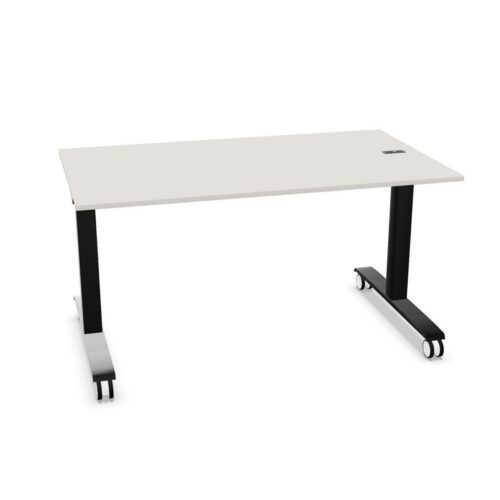
Planning electrically adjustable conference tables
Start with a concrete reason for changing the meeting surface height. A team may want different settings for discussion and presentation, or may prefer to prepare the table differently for successive sessions. Electric adjustment is relevant when powered changes have a clear place in that routine.
Consider who makes the change and when it happens. An adjustment before a meeting creates different demands from a change while participants are gathered around the table. Establish a shared routine so people understand the intended setting and can prepare their chairs, devices and documents before the surface moves.
Plan the Table's Power Connection
Identify where the electrically adjustable table will connect to room power. Consider the route between that point and the table, keeping it compatible with entrances and movement around occupied seats. Height adjustment introduces movement into the arrangement, so the connection route needs to accommodate the intended settings without being pulled tight or trapped.
Review any other leads associated with meeting equipment separately. The selected feature does not establish a cable tray, sockets or tabletop access. A device lead that works at one setting may need a different arrangement when the surface moves, making the complete connection path an important part of room planning.
