



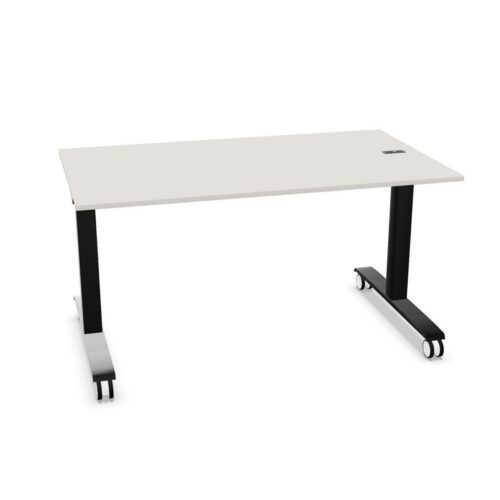
Planning electrically adjustable conference tables without a cable tray
The practical distinction is whether changing the table height serves a recurring purpose. Electric adjustment can accommodate different working levels, but a room benefits only when people understand when and why to adjust it. Identify the activities that need a change before making height flexibility central to the layout. Consider how chairs, nearby cabinets and presentation equipment relate to the tabletop throughout its intended movement. Agree on a usual starting position for meetings so that visitors encounter a predictable arrangement, while keeping the option to change the level when the activity calls for it.
Plan Cable Routes Without a Tray
Without a cable tray, connected leads need an intentional route between the equipment and its power or signal connection. Consider the arrangements required for electric adjustment separately from those used by meeting devices. Any cable that moves with the tabletop needs sufficient freedom throughout the intended height changes. Avoid routing leads through chair movements or across approaches to the table. Review what happens when someone disconnects a laptop and leaves its charger behind. A workable room routine should account for both active connections and loose ends after the meeting finishes, without relying on an absent tray.
