








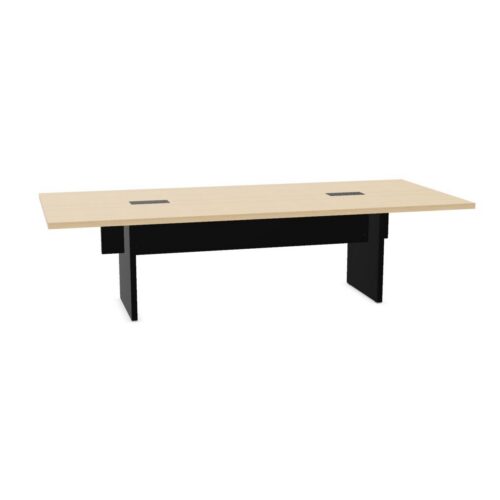
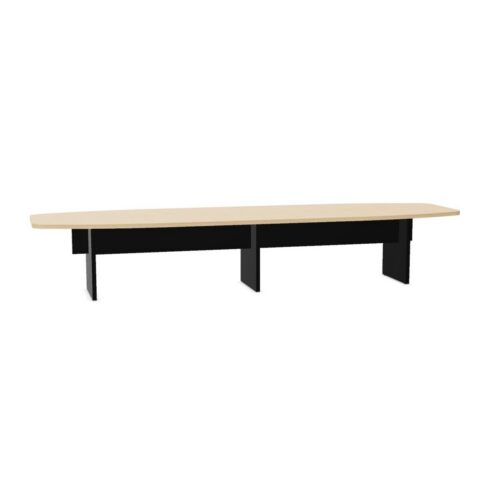


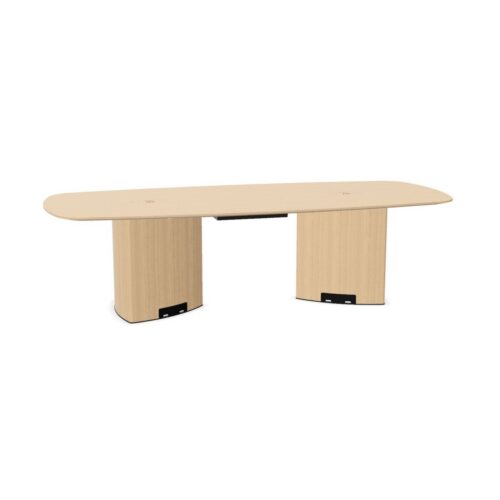


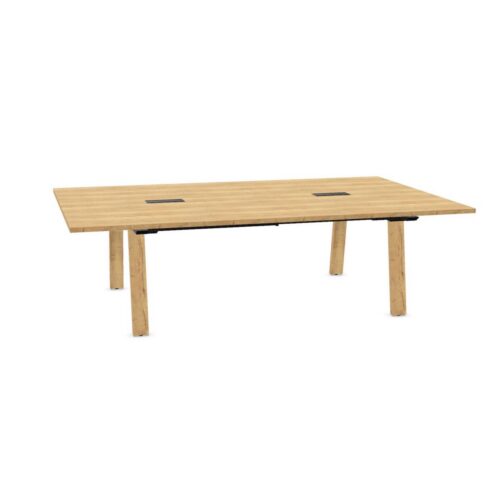

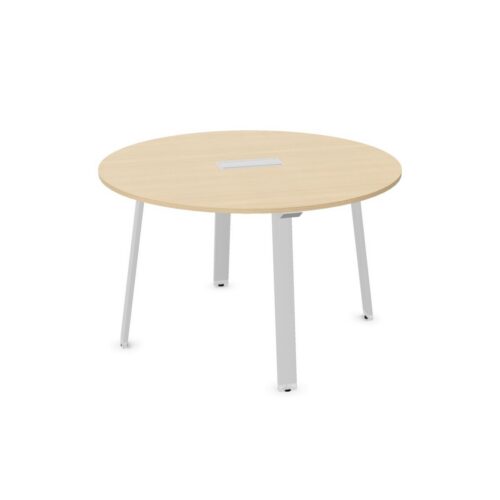


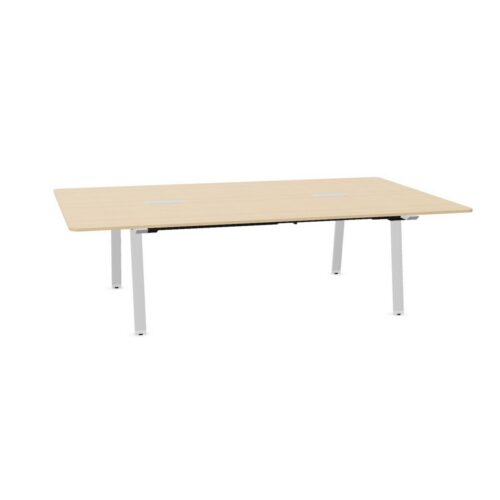
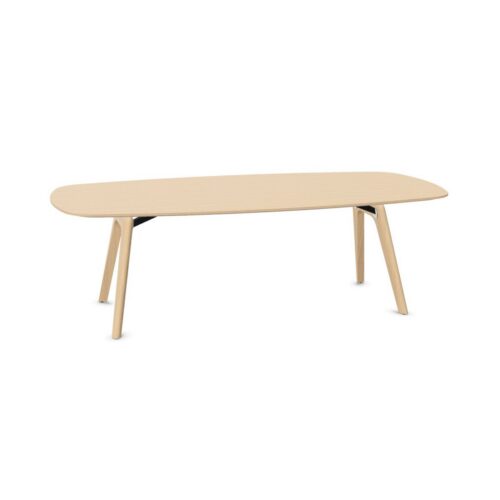
Seat Planning for Fixed-Height Conference Tables
With a constant tabletop level, the relationship between the table and the seating deserves early attention. Consider how participants approach their chairs, settle into a working position and leave during a meeting. Where adjustable chairs are used, assess their relationship to the table rather than assuming chair adjustment resolves every seating concern. Think about the tasks performed at the surface, including writing, reading and working with a laptop. Position shared papers or meeting equipment so that people can use them without disrupting neighboring places. The aim is a coherent seated arrangement based on the table's unchanged working level.
Arrange Connections Without a Cable Tray
Start cable planning at the room connection and follow the route to the device. Without a tray, each lead needs somewhere intentional to run and somewhere to go when disconnected. Pay attention to the paths people take when entering, changing seats or approaching a presentation area. A cable that appears unobtrusive before a meeting may interfere once chairs are pulled out. Consider whether equipment can be positioned closer to its connection without compromising the discussion layout. Avoid relying on participants to improvise a different route each time, especially when the room is shared by teams with different equipment habits.
