



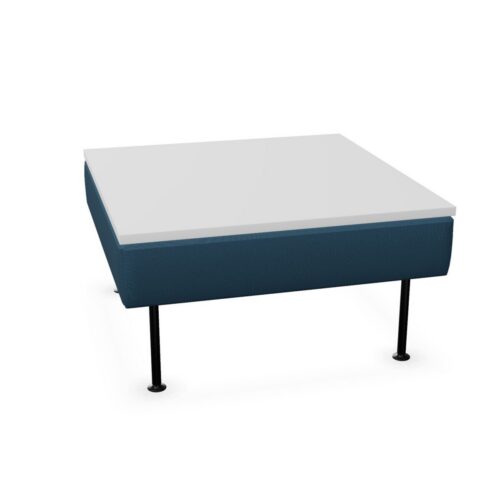
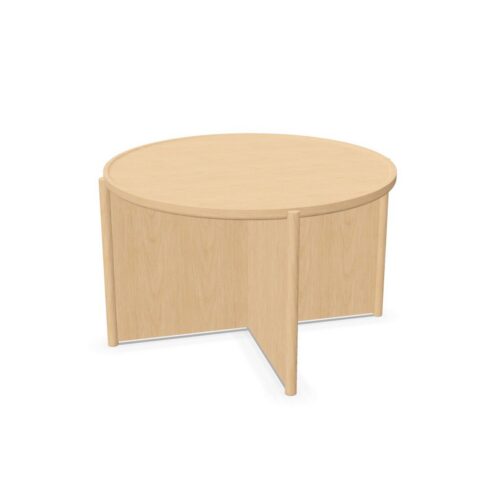


Choose Between Edge Alignment and Rotation
Start with one edge of the square aligned to the main seating frontage. This creates an easy reference for assessing the rest of the group. Then consider whether the arrangement benefits from a different orientation. Rotating the square changes where its corners sit, even though the tabletop outline itself remains the same.
Judge both options from the opening into the seating area. A corner directed toward that opening needs deliberate consideration. The aim is to give the table a clear place within the group while preserving an understandable route to every intended seat.
Coordinate Lounge Furniture With Square Tops and Wood Bases
The equal sides of the top can provide a repeated visual reference across separate seating areas. The wood base offers another point of coordination, but its appearance must be assessed independently. Confirm the finish and visible supporting form before deciding how closely it relates to existing furniture elsewhere in the room.
With lounge furniture with square tops and wood bases, do not extend the base material description to the surface. A square top may have its own material and appearance. Treat the perimeter, supporting configuration, and confirmed finishes as related decisions rather than assuming one establishes the others.
Use Repetition With Purpose
Square outlines can contribute to a consistent arrangement when several lounge groups share the same room. Decide whether consistency should come from the table orientation, its relationship with a sofa, or its placement between chairs. A repeated principle can be clearer than forcing every group into an identical furniture layout.
Compare lounge furniture with square tops and wood bases from the main circulation route. Check how the corners line up with adjacent groups and whether the visible bases form a coherent material relationship. Revisit any arrangement where visual alignment has taken priority over the actual positions of the seats.
