

CARB Phase 2 compliant office furniture is relevant to procurement teams seeking products made with composite-wood materials that meet California formaldehyde-emission requirements. The CARB Phase 2 framework concerns the formaldehyde emissions associated with specified composite wood panels and finished goods containing them.
On this page, Myntwork lists furniture carrying this certification. It can be a useful filter when comparing desks, storage and other workplace products with manufactured wood components, particularly where material information, indoor environments and responsible sourcing form part of the specification process.
What does CARB Phase 2 compliant mean?
CARB Phase 2 refers to the California Air Resources Board Composite Wood Products Regulation. It sets formaldehyde-emission limits for certain composite wood products, including hardwood plywood, particleboard and medium-density fibreboard (MDF). These boards are widely used in office furniture for worktops, desk panels, cupboards, shelving and other constructed elements.
Formaldehyde may be present in resins used to bind wood fibres, particles or veneers. CARB Phase 2 compliance indicates that the relevant composite-wood products have been manufactured to the applicable emissions limits under this programme. In furniture procurement, the term is commonly used as supporting evidence when a buyer needs to understand the emissions-related credentials of wood-based components.
Why this matters for office furniture procurement
Furniture is often specified in volume and installed within enclosed workplaces, meeting rooms, educational settings and shared amenity spaces. Asking clear questions about constituent materials can therefore be appropriate alongside considerations such as size, durability, layout and end-of-use arrangements.
A CARB Phase 2 filter helps procurement teams identify products with a recognised composite-wood compliance reference. It does not, by itself, describe every material in an item, its overall environmental impact or its suitability for a particular building standard. It is one piece of product information to assess within a broader brief.
- It provides a defined point of reference for formaldehyde emissions from covered composite-wood materials.
- It can support internal material-requirement schedules and supplier due diligence.
- It helps teams compare wood-based furniture specifications on a more consistent basis.
- It may be relevant where project teams request emissions documentation for products entering an indoor space.
Which furniture can carry this certification?
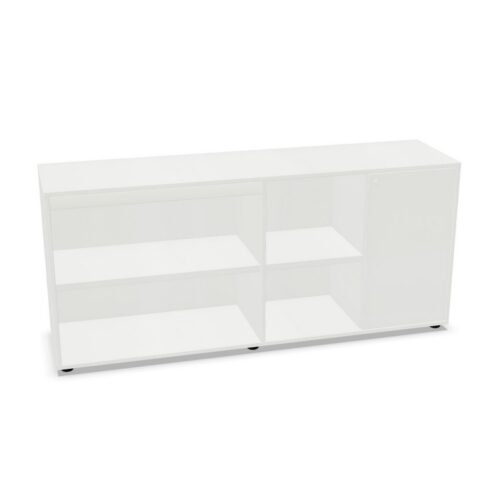
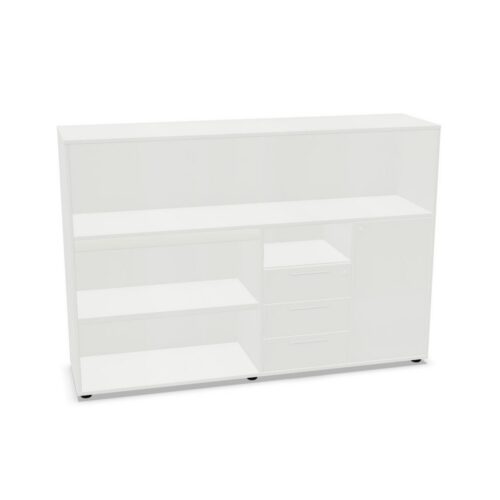
CARB Phase 2 compliance is most likely to be relevant where furniture includes engineered wood boards, rather than where a product is made entirely from metal, glass or solid timber. The precise components vary by product design and manufacturer. A desk might use particleboard or MDF within its top, for example, while a storage unit may contain composite wood in its carcass, shelves, doors or back panels.
Typical workplace product types to review include:
- Desks, benching systems and workstations with wood-based tops or modesty panels.
- Pedestals, cupboards, lockers and credenzas.
- Bookcases, shelving and display storage.
- Meeting tables, café tables and breakout furniture with composite-wood surfaces.
- Reception, collaborative and ancillary furniture containing manufactured wood elements.
The certification relates to the qualifying material requirement represented by the product listing. It should not be read as a statement that every component has the same material composition, or that the product carries unrelated environmental, health or quality certifications.
CARB Phase 2 and workplace material requirements
Procurement requirements can arise from a client brief, a fit-out specification, an organisation’s responsible-purchasing policy or a project documentation process. Where CARB Phase 2 is requested, record the requirement clearly in the furniture schedule and retain the relevant product information with the project file.
It is also useful to distinguish material-emissions information from broader sustainability criteria. Recycled content, responsible forestry, repairability, refurbishment potential, packaging, transport and product longevity are separate considerations. A practical approach to sustainable procurement of office furniture considers these factors together rather than relying on a single label.
How to specify compliant furniture
Start with the furniture function and the component most likely to contain composite wood. For a large workstation project, this may mean confirming the material basis of desk tops and storage. For a reception or meeting-space scheme, it may involve reviewing the boards used in visible panels as well as structural elements.
Then ensure that the project requirement is expressed precisely. “CARB Phase 2 compliant” is more useful than a general request for “low-emission wood”, because it identifies a known regulatory framework. Where documents are needed for a tender, handover pack or client review, establish what evidence is required and at which stage it must be supplied.
Questions to consider
- Which proposed items contain hardwood plywood, particleboard or MDF?
- Does the specification require CARB Phase 2 for all relevant composite-wood components or only named product groups?
- What product documentation should be retained for the project record?
- Are there additional client, landlord or building requirements that need separate evidence?
- Will the furniture be installed alongside joinery or other wood-based fit-out materials that should be reviewed independently?
Using the filter alongside other procurement criteria
The products on this archive have been selected through the CARB Phase 2 Compliant certification filter, but selection should still reflect the operational needs of the workplace. Consider dimensions, configuration, finishes, cable management, storage capacity and compatibility with existing furniture. For leased furniture, planned duration of use, reconfiguration needs and return arrangements may also influence the final choice.
For organisations connecting furniture decisions to governance and reporting processes, emissions-related product information can sit within a wider evidence trail. Read Myntwork’s guidance on ESG and workplace furniture procurement for a broader view of the information that may be relevant to workplace purchasing decisions.
CARB Phase 2, formaldehyde and other standards
CARB Phase 2 is specifically concerned with formaldehyde emissions from covered composite wood products. It is not a general declaration that a product is free from all volatile organic compounds, contains no chemical substances, or meets every indoor-air-quality requirement. Equally, it does not assess a chair’s ergonomics, a desk’s load capacity or the recycled content of a product.
Different projects may refer to other standards, regulations or voluntary schemes. These should be checked against the exact wording of the brief, as their scope, evidence requirements and applicability can differ. Where a requirement names a particular standard, avoid assuming that a similar-sounding claim is interchangeable.
Related Myntwork furniture ranges
Use this archive to review CARB Phase 2 compliant options while narrowing the selection by furniture type, dimensions, finish and workplace use. Relevant category pages can help place these products within a wider desk, table, storage or collaborative-furniture scheme, while the resource guides above provide context for material and ESG-led procurement.