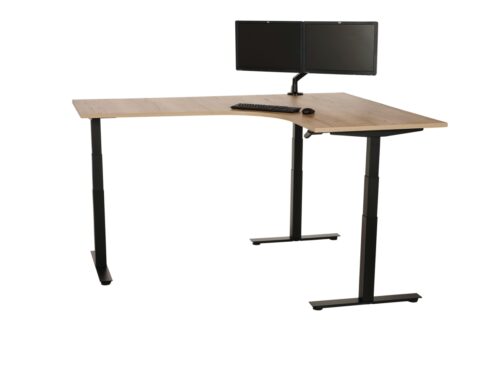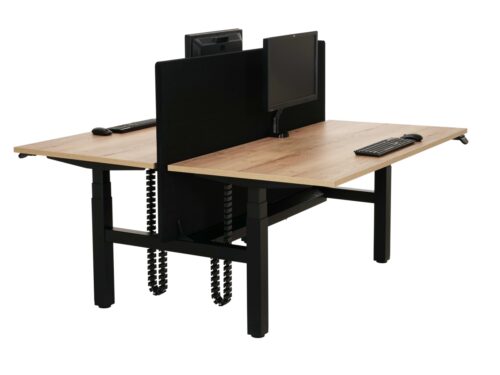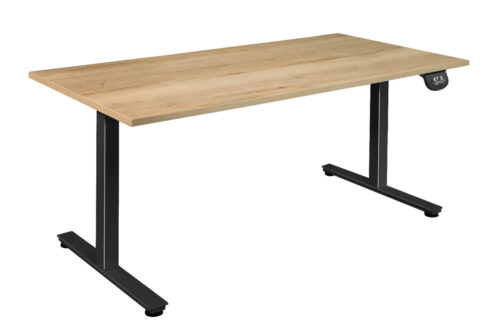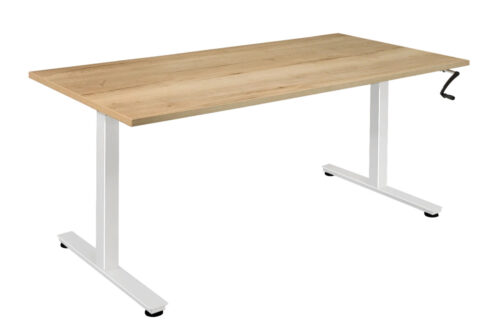


Cognac walnut surface colour office furniture brings a warm, dark timber appearance to workstations, storage and other pieces with a visible outer finish. On this archive, the term refers to the colour of the desktop, cabinet face or comparable visible surface rather than the colour of the legs, frame or base.
The cognac walnut finish can help introduce depth and material contrast into a workplace scheme while retaining a professional, considered look. It is particularly useful where furniture needs to sit comfortably alongside neutral flooring, black metal details, warm lighting or existing wood-toned interiors.
What does cognac walnut surface colour mean?
Cognac walnut describes a walnut-inspired brown finish with rich, warm undertones. Depending on the individual product, it may be applied to a worktop, desk surface, table top, storage front, cabinet exterior or another prominent panel. The precise grain pattern, sheen and edge detail can vary between ranges and manufacturers.
This filter is concerned with the visible surface finish only. It does not indicate that a product has a cognac walnut frame, leg set, pedestal or handle. Always review the product specification and images when the relationship between the surface and base colours is important to the overall interior design.
Why choose a warm walnut-toned surface?
Warm timber-effect finishes are often selected to make offices feel less utilitarian without making the layout visually busy. Cognac walnut can provide a stronger contrast than pale oak or white surfaces, yet it generally works well with restrained workplace palettes.
- It can add warmth to open-plan offices, meeting rooms and client-facing areas.
- Its deeper tone can create definition against light walls, carpets and acoustic finishes.
- It pairs naturally with black, charcoal, bronze and some neutral base colours.
- It can support a consistent look across desks, tables and storage where matching finishes are available.
Colour remains one part of the specification. Dimensions, cable management, storage capacity, configuration and suitability for the intended use should be considered alongside the finish.
Where cognac walnut surfaces work well
A cognac walnut surface can suit workplaces that need a more residential, hospitality-influenced or executive visual character, while still being planned around day-to-day business use. In meeting spaces, a darker table top may help establish a focal point. In private offices, it can offer a composed alternative to standard white or light wood finishes.
It can also be useful in reception-adjacent settings, touchdown areas and team spaces where furniture needs to relate to existing joinery or timber accents. In larger schemes, introducing this finish selectively can distinguish leadership areas or meeting zones from banks of standard desks without changing the underlying planning approach.
Furniture types to compare on this archive
Products filtered by this surface colour may span several furniture types. Availability and exact specifications vary, so use the individual product details to confirm the visible components finished in cognac walnut.
- Desks and benching systems with walnut-toned work surfaces.
- Meeting and boardroom tables with a darker top finish.
- Storage units where the front or outer panels are visible within the room.
- Supporting tables or workstation elements designed to coordinate with a wider furniture scheme.
When specifying several pieces, check whether the named finish is identical across ranges rather than relying on the colour description alone. Small differences in texture, edge banding and wood-grain direction can be noticeable when furniture is positioned side by side.
Balancing surface, base and surrounding finishes
Because this is a surface-colour attribute, it is important to separate the desktop or outer-panel choice from the base finish. A cognac walnut top may be combined with a contrasting metal frame, a lighter support structure or another specified leg option. That combination affects both the visual weight of the product and how it connects with neighbouring furniture.
For a coherent scheme, consider the main permanent finishes already in the space: flooring, wall treatments, doors, kitchen units and architectural metalwork. A warm walnut surface may complement these elements directly, or act as a deliberate counterpoint to cooler grey and black materials. Sample review can be worthwhile where a close colour match is required.
How to choose the right furniture configuration
Start with the work being carried out rather than the finish alone. A desk for focused individual work may need a different depth, cable route and storage arrangement from a shared project table or formal meeting table. Once the functional requirements are clear, cognac walnut can be used as the unifying visible finish.
Questions to consider
- Which surfaces will be seen most often by staff, visitors and clients?
- Will the finish be used throughout the office or reserved for selected zones?
- What frame, leg or base colour will sit beneath the surface?
- Does the furniture need to coordinate with existing timber, veneers or laminate finishes?
- How will monitor arms, cable trays, desk accessories and seating affect the appearance of the workstation?
- Are the dimensions and layout appropriate for circulation, collaboration and the available floor area?
For a broader view of layouts, furniture functions and specification decisions, the Myntwork office space planning guide is a useful starting point. The guidance on choosing office furniture can also help compare practical requirements before settling on a finish.
Using cognac walnut in a coordinated office scheme
A consistent surface finish can make a mixed furniture layout feel more intentional, especially where desks, meeting tables and storage are visible from the same area. Cognac walnut can be used across a whole zone for continuity, or introduced in smaller quantities to add contrast within a neutral workplace palette.
Consider sightlines as well as individual products. A meeting table seen from reception, for example, may become a prominent visual element, while storage positioned behind desks can create a continuous backdrop. Combining the finish with restrained accessories and clearly selected base colours helps avoid competing materials in compact spaces.
Explore related Myntwork furniture ranges
Browse the wider office furniture collection to compare desks, tables, storage and supporting workplace pieces across different configurations and finishes. Product pages should be used to confirm the exact cognac walnut surface components, dimensions and available options for each item.
Myntwork