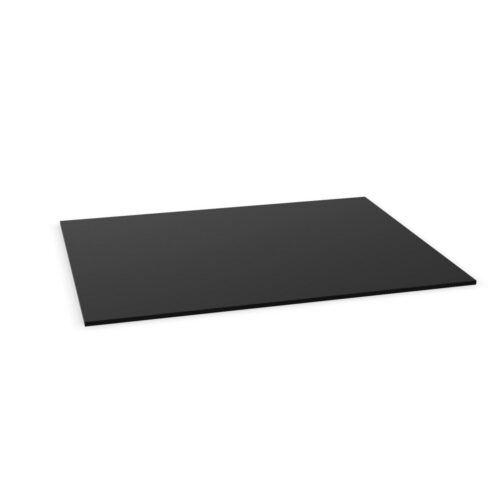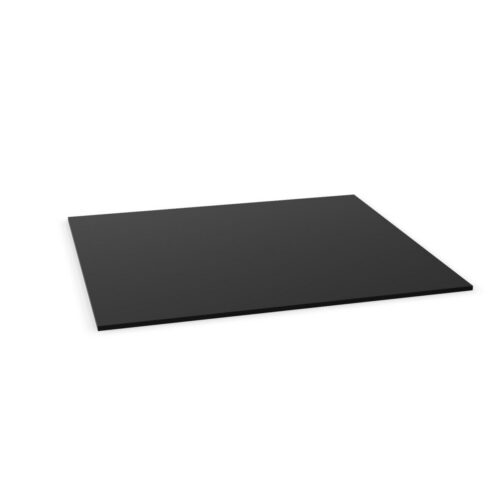


Black office furniture provides a practical, adaptable finish for workplaces that need a consistent, professional look across desks, seating, storage and meeting areas. On this page, black refers to the product’s primary visible colour as a whole, rather than solely the colour of its frame, base or upholstery.
Black can work in understated, formal interiors as well as contemporary schemes with stronger contrasts. It is commonly selected for its visual clarity, ability to sit alongside existing finishes and suitability for shared commercial environments. The products shown here vary in form, material and intended use, so the specification of each item should always be reviewed alongside its colour.
What does black mean in office furniture?
Colour is one part of a furniture specification, but it has a noticeable effect on how a workplace feels and how easily different items can be brought together. A black product may use painted metal, laminate, plastic, fabric, mesh, leather-effect material or another finish, depending on its construction. The black appearance is the dominant visible colour of the item.
It is useful to distinguish this filter from more specific attributes. A chair with a black base but a coloured seat, for example, may not be included here if black is not its overall primary colour. Likewise, a desk with black legs and a contrasting top is different from a desk presented as predominantly black. Product imagery and individual descriptions remain important when comparing exact shades, textures and component colours.
Why choose a black finish?
Black is often used where a restrained palette is needed across several areas of an office. It can define workstations and collaborative settings without introducing a dominant decorative colour, and it can provide contrast against lighter walls, floors and worktops. In a mixed furniture scheme, it may also help visually connect pieces from different ranges.
- It can complement neutral materials such as white, grey, timber and concrete-look finishes.
- It is suitable for formal reception, boardroom and executive settings as well as everyday work areas.
- It can create clear contrast with pale surfaces and backgrounds.
- It offers a consistent reference point when specifying furniture for multiple rooms or locations.
- It can suit both minimal interiors and schemes that use colour through accessories, artwork or zoning.
Practical appearance will depend on the material and surface treatment. Smooth black finishes may show dust, fingerprints or scratches differently from textured fabric, mesh or matt powder-coated components. Consider cleaning routines, expected use and the level of visual maintenance appropriate for each setting rather than relying on colour alone.
Where black office furniture is commonly used
A black finish can be applied across many workplace zones. In reception spaces, it may provide a composed first impression when paired with lighter walls or branded graphics. In meeting rooms, black tables and chairs can support a focused, uncluttered setting. Within open-plan offices, it can be used selectively to differentiate touchdown points, collaboration spaces or storage from lighter desk banks.
It is also a useful choice in training rooms, project spaces and staff facilities where furniture may need to coordinate with existing fixtures. For home working or smaller satellite offices, black can provide a simple, compact visual language that integrates with a variety of interiors. The right balance depends on available daylight, wall colours, flooring and the quantity of dark furniture in the room.
Furniture types available in black
The black filter can include a broad mix of office-furniture types rather than one particular category. Availability will change as ranges are updated, but the selection may cover furniture for individual work, shared spaces, storage and support areas.
- Desks, benching and worktables for focused or team-based work.
- Task chairs, visitor seating, stools and lounge seating.
- Meeting tables and associated conference furniture.
- Pedestals, cupboards, shelving and other storage pieces.
- Reception, breakout and occasional furniture.
- Accessories and supporting items where black is the principal visible finish.
When assembling a scheme, matching colour names do not necessarily mean identical tones across different materials. Black fabric, black metal and black laminate can each reflect light in different ways. Samples, imagery and product-level finish information can help establish whether the combination is suitably coordinated for the intended room.
Using black within an office colour scheme
Black can be used as the main furniture colour or as an anchoring accent. A predominantly black scheme may feel structured and contemporary, especially where natural light and lighter finishes prevent the space from appearing overly dark. Alternatively, using black for selected chairs, table bases, storage or occasional pieces can add definition while allowing other finishes to remain dominant.
Think about scale as well as colour. Several large black storage units or meeting tables will have a greater visual weight than a small number of black task chairs. In compact rooms, balancing dark furniture with clear circulation, adequate lighting and lighter surrounding surfaces can help maintain an open feel. In larger spaces, repeated black elements can help bring consistency across zones.
How to choose black office furniture
Start with function, dimensions and workplace use, then assess whether black is appropriate for the room and existing specification. A desk should be selected for its work surface, cable-management needs and configuration; a chair for its intended use and relevant adjustments; and storage for capacity, access and placement. Colour should support those requirements rather than replace them.
Questions to consider
- Is black needed across the whole item, or only on a particular component such as the frame or seat?
- Will the finish coordinate with existing desks, flooring, partitions and wall colours?
- How much natural and artificial light does the space receive?
- Which surface materials are appropriate for cleaning, wear and the expected level of use?
- Are items being specified for one room or a consistent standard across several locations?
- Do the dimensions, configuration and product features meet the needs of the people using the space?
For projects involving multiple furniture types, recording the preferred finish alongside product dimensions and intended location can make comparisons more straightforward. It also helps avoid assuming that a black component, trim or base will produce the same overall result as an item whose principal colour is black.
Planning a coordinated workplace
Black furniture can be part of a wider approach to zoning and workplace planning. Consider sightlines, circulation routes, access to storage, meeting capacity and the relationship between individual and shared work settings. A consistent palette may help a varied office feel organised, but different rooms can still require different furniture forms and surface materials.
For broader browsing, view the Myntwork office furniture collection. Guidance on comparing requirements is available in our resource on choosing office furniture, while the office space planning guide offers useful context for arranging furniture within the available floor area.