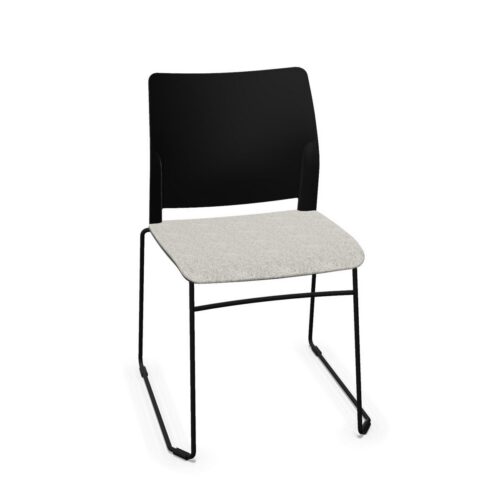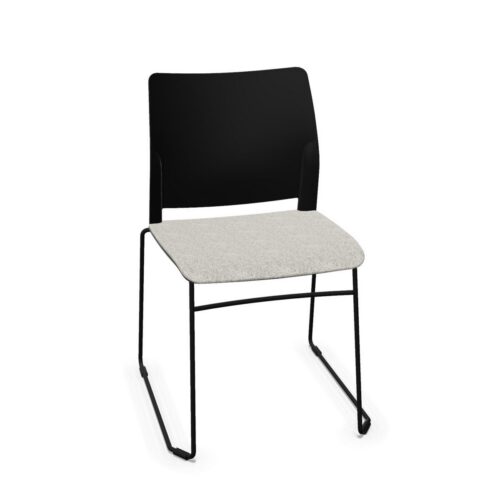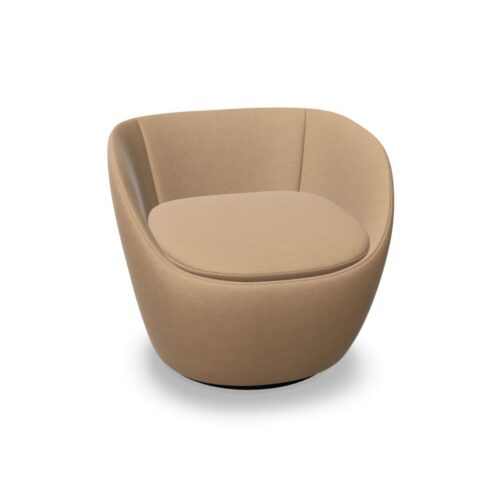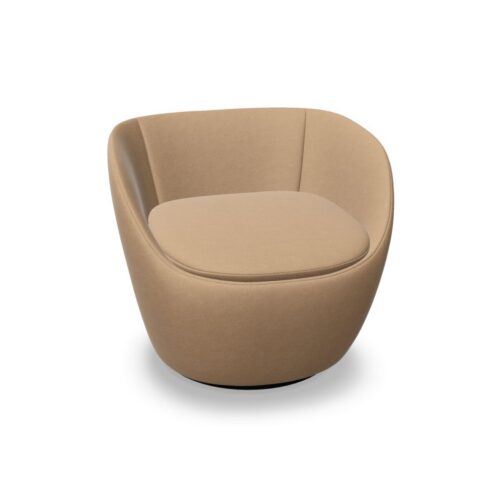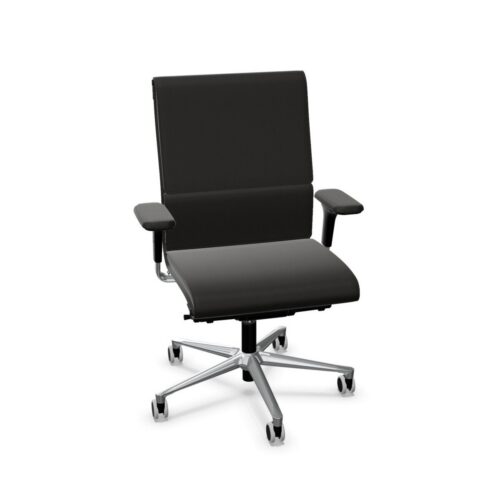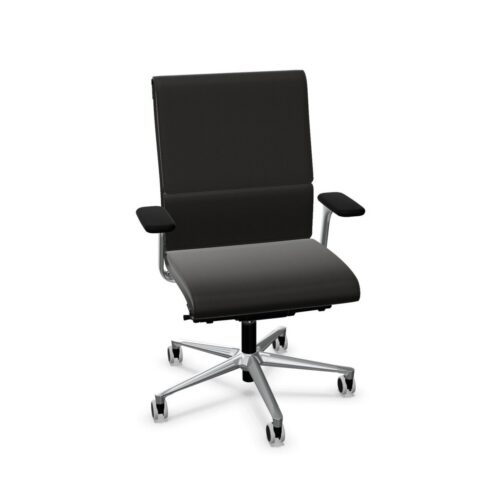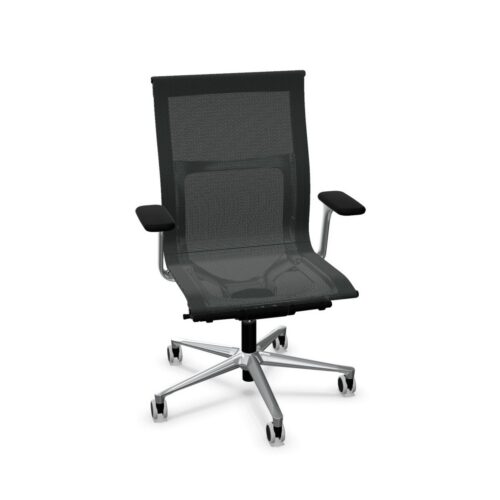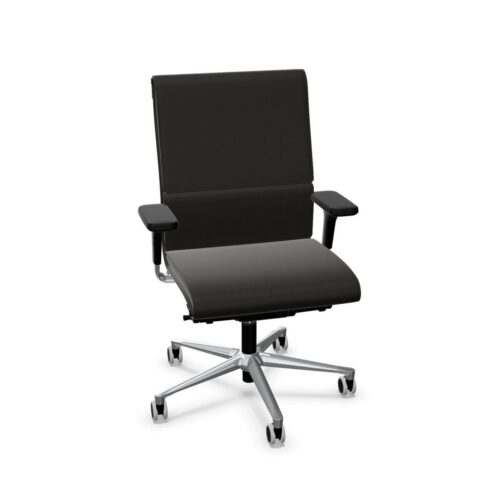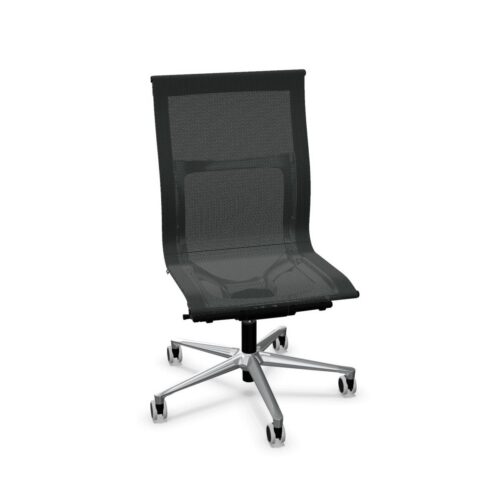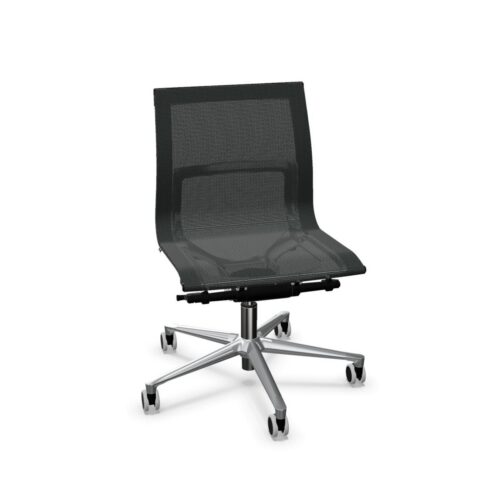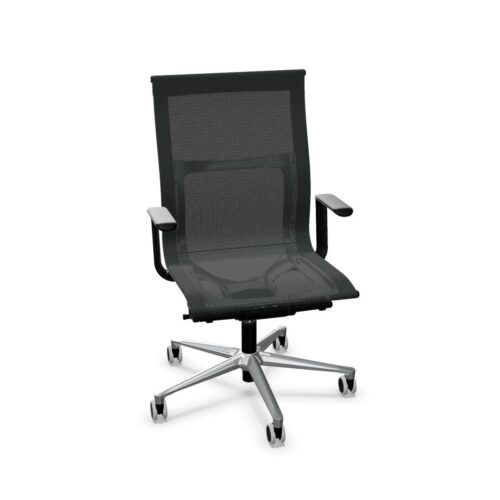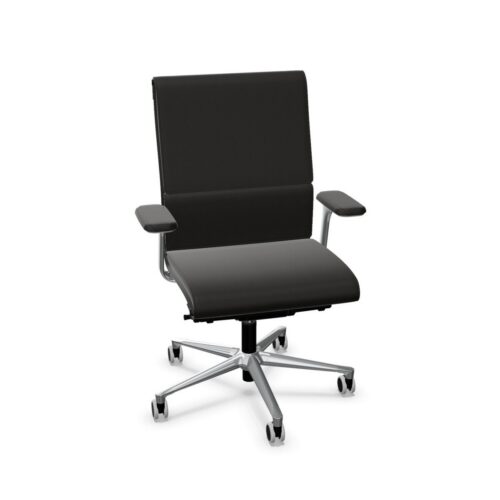


Office chairs with lumbar support include a feature intended to support the lower back while seated. On this page, the attribute confirms that the chair has lumbar support, helping workplace teams identify seating with an additional point of back support for desk-based work.
Lumbar support can take different forms, from a shaped backrest to an adjustable lumbar pad or mechanism. The presence of this feature does not by itself indicate its size, adjustment range or suitability for every user, so individual product specifications remain important when comparing chairs for a workplace.
What does lumbar support mean on an office chair?
The lumbar region is the lower part of the back. In office seating, lumbar support is designed to provide contact in this area when the user sits back in the chair. It may be built into the profile of the backrest, provided by a separate cushion or pad, or adjusted through a control on the chair.
This filter applies to chairs that include lumbar support in some form. It should not be read as a guarantee that every chair has the same type of support. Some models may offer height, depth or tension adjustment, while others have a fixed contoured backrest. Review the product description and available adjustment details before selecting a model for a particular person or setting.
Why lumbar support matters in workplace seating
People often spend substantial parts of the day at a desk, in meetings or moving between tasks. A chair that supports the lower back can be a useful part of a considered workstation setup, particularly where users need to maintain a comfortable seated position for extended periods.
- It can help users position themselves against the backrest rather than perching at the front of the seat.
- It gives procurement teams a clear feature to include when setting seating requirements.
- It may suit shared work areas where adjustable seating is needed for a range of users.
- It complements other chair features such as seat-height adjustment, recline controls, armrests and a suitable desk setup.
Chair comfort is personal, however. Lumbar support works alongside the chair’s dimensions, backrest shape, seat depth and adjustment options, as well as the user’s posture and working pattern.
Where chairs with lumbar support are commonly used
Lower-back support is relevant across many professional interiors. It is commonly considered for assigned desks, where one person can set up a chair for their own working position, and for hot-desking areas, where straightforward adjustments can help accommodate different users.
These chairs can also be appropriate in home-working arrangements, call and support teams, project spaces and administrative areas. In meeting rooms, the required level of adjustment may differ from that of a workstation chair because sitting periods are often shorter. The intended duration and nature of use should guide the specification, rather than lumbar support alone.
Types of lumbar support to compare
Although this archive groups all chairs that include lumbar support, the design can vary considerably. Understanding the distinction helps buyers make a more useful comparison between products.
- Fixed lumbar shaping: a curved or contoured section within the backrest, with no separate user control.
- Adjustable lumbar support: a component that can be moved or altered to better match the user’s preferred position.
- Integrated mesh support: support created through the form, tension and construction of a mesh backrest.
- Separate lumbar pad: an added cushion or element positioned in the lower-back area.
A chair may have lumbar support without offering every other ergonomic function. Equally, an adjustable chair may have controls that affect recline or height but not the lumbar area. Check each listing for the exact configuration.
How to choose a chair with lumbar support
Start with the role the chair will perform and the people likely to use it. For an individual workstation, it can be helpful to consider adjustment range and the user’s desk height. For a larger fit-out, a consistent specification may simplify purchasing while still allowing appropriate variation in seat size or controls where required.
Consider the chair as part of the full workstation. Screen position, desk height, keyboard placement and the opportunity to change posture all influence how a chair feels in daily use. A chair with lumbar support is one element of an ergonomic working environment, not a substitute for setting up the rest of the space appropriately.
Questions to consider before specifying
- Is the chair for a dedicated user, a shared desk or an occasional-use area?
- Is the lumbar support fixed, or does the intended user need to adjust its position or firmness?
- What seat-height, seat-depth, recline and armrest adjustments are also needed?
- Will the chair be used mainly for focused desk work, collaboration or short meetings?
- Does the backrest material and overall chair format suit the environment?
Planning a consistent seating specification
For workplace procurement, filtering by lumbar support can be a practical first step in narrowing a broad seating range. The next step is to compare product dimensions, adjustment features, finishes and compatibility with the layout. This can be particularly useful when selecting chairs for a mix of private offices, open-plan desks and touchdown spaces.
Where teams are leasing furniture for a changing workplace, it is also worth considering whether the selected chair format can be used flexibly across different zones. A task chair suited to daily workstation use may need different features from visitor seating or a conference chair, even when a similar visual finish is preferred.
Related Myntwork seating ranges
Browse the wider range of office chairs to compare lumbar-supported models with other seating options for workstations, meeting spaces and shared offices. For more guidance on chair features, workstation needs and practical considerations, see our resource on how to choose an office chair.
These related pages can help place lumbar support alongside the wider requirements of an office furniture specification.