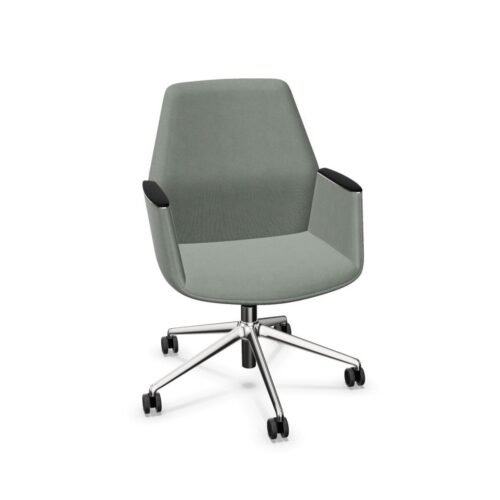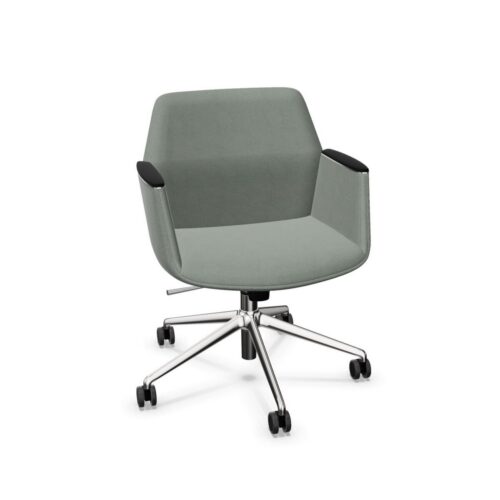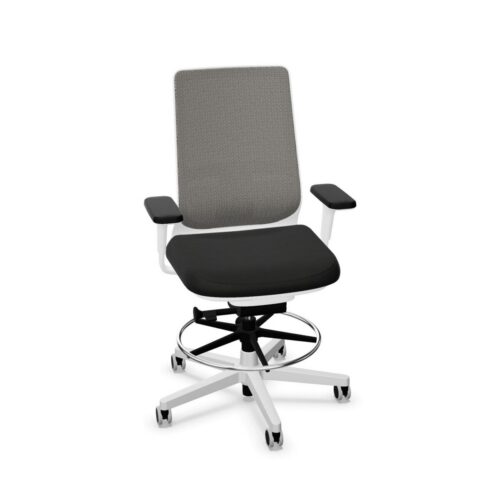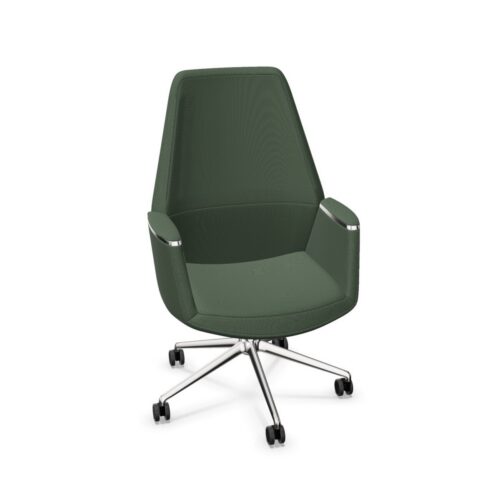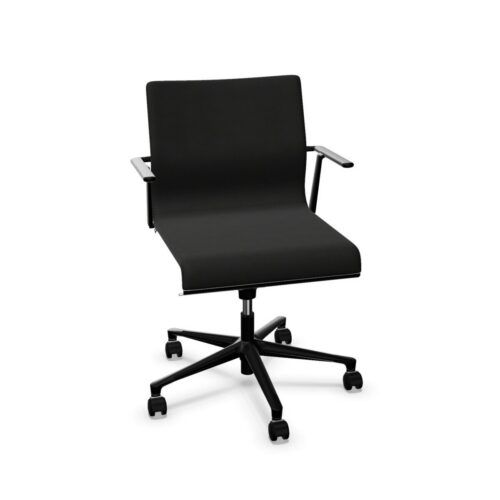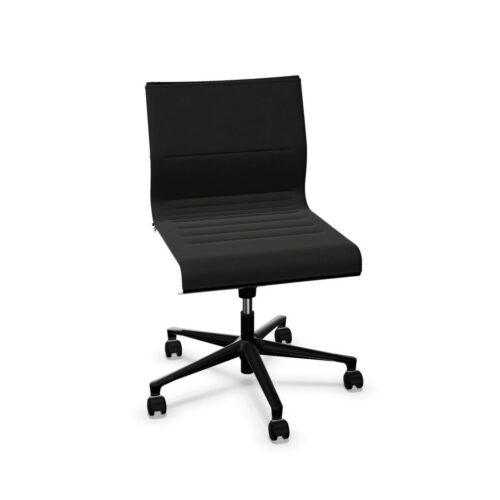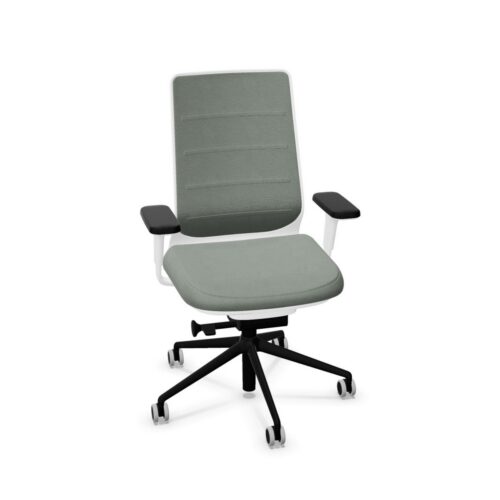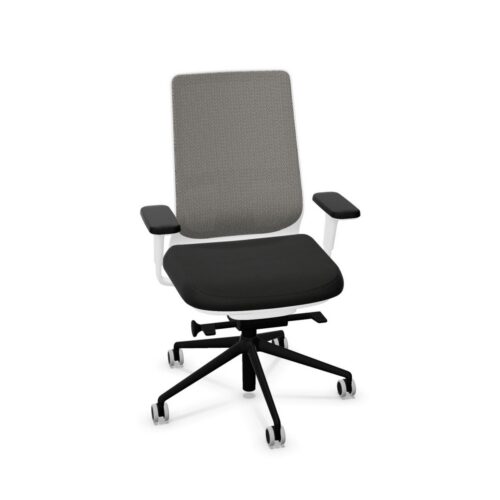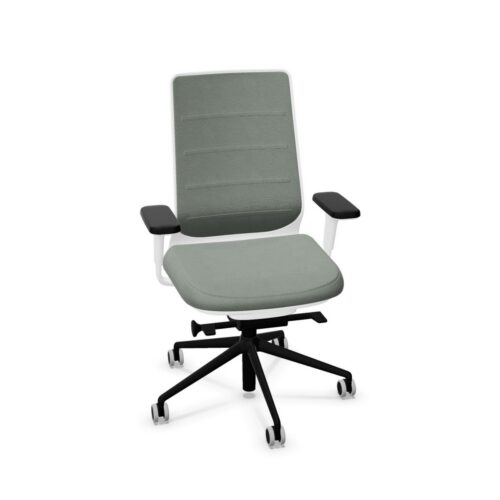


Office chairs with a synchronous mechanism are designed to support movement while seated by coordinating the movement of the backrest and seat. Rather than holding the body in one fixed posture, this type of mechanism allows a chair to respond as the user reclines, helping to make changes of position easier during desk-based work.
On this archive, the mechanism attribute identifies furniture with synchronous movement or adjustment. It is most commonly associated with task and ergonomic office chairs, although the exact controls, recline range, tension adjustment and locking positions vary by model. Product information should always be checked for the functions provided on an individual chair.
What is a synchronous mechanism?
A synchronous mechanism, also called a synchro mechanism, links the movement of a chair’s seat and backrest. When the user leans back, both sections move in a coordinated way, usually at different rates. This is intended to maintain a more natural seated position than a simple fixed-back chair while allowing the user to recline.
The mechanism sits beneath the seat and is operated through controls that may adjust recline resistance, lock the chair in a chosen position or set other aspects of its movement. These controls are not identical across the range, so a synchronous mechanism describes the overall movement principle rather than a single, standard specification.
Why synchronous movement matters at work
Office work often involves long periods at a screen, frequent changes between focused tasks, meetings and calls, and varying postures throughout the day. A chair that permits controlled movement can suit people who prefer not to remain upright and static for the whole day.
- It allows the seat and backrest to move together as the user changes position.
- It can provide a reclined working or resting posture where the chair’s design includes that setting.
- It supports a more adaptable seating position for tasks that alternate between keyboard work, reading and conversation.
- It can be useful in shared workspaces where different people may adjust the chair to suit their own preferences.
The presence of this mechanism does not remove the need to set up the chair correctly. Seat height, lumbar support, armrests, desk height and screen position all remain relevant to a comfortable workstation.
Common uses for chairs with synchro mechanisms
Synchronous mechanisms are widely specified for task seating in offices, home-working environments and other professional settings where users spend substantial time seated. They are particularly relevant where a chair needs to accommodate regular posture changes rather than occasional, short-term use.
Within a workplace, these chairs may be considered for individual desks, agile neighbourhoods, touchdown areas and assigned workstations. They can also suit project spaces where users work at tables for extended periods. For reception, meeting or visitor seating, a simpler chair may be more appropriate when prolonged task work is not expected.
Furniture types found under this mechanism
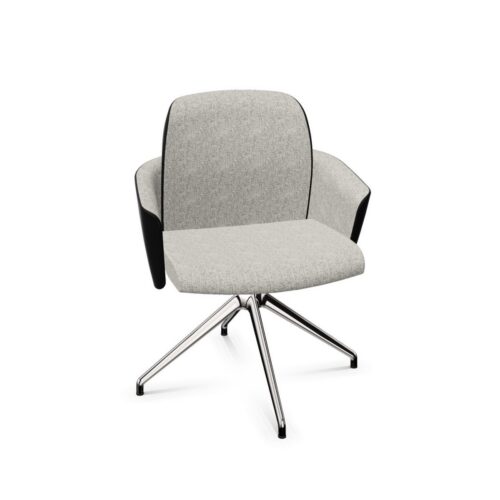
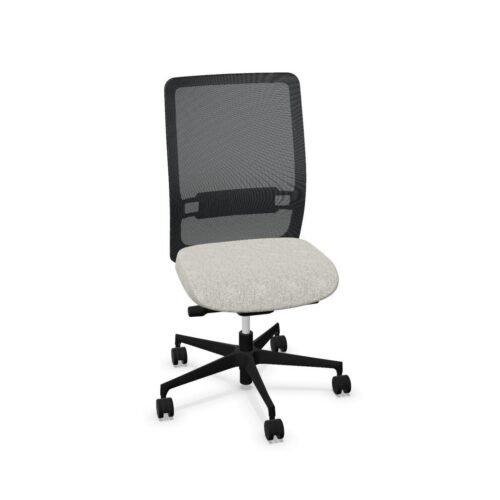
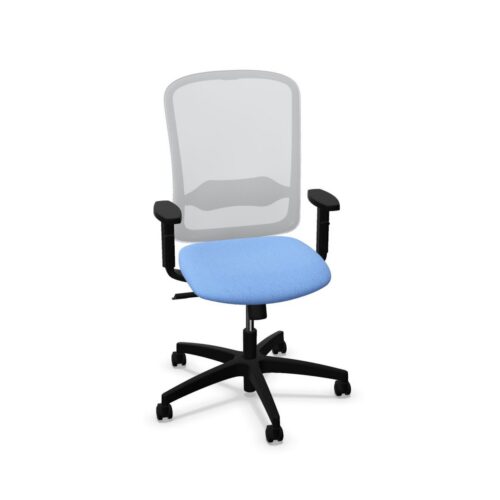
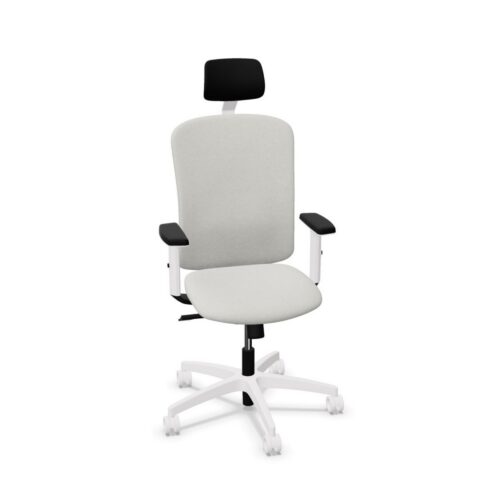
This filter is principally useful when reviewing adjustable seating. Depending on the product assortment, the archive may include a range of chair forms with synchronous movement, from compact task chairs to more fully specified ergonomic models. A mechanism alone does not determine whether a chair has a headrest, armrests, lumbar adjustment, mesh back or upholstered finish.
- Task chairs for everyday desk work.
- Ergonomic office chairs with multiple adjustment points.
- Operator seating for individual or shared workstations.
- Selected management or executive-style chairs where recline adjustment is included.
Use the other filters and the individual product description to narrow the range by dimensions, material, back type, arm options or other requirements for the project.
How to choose a synchronous mechanism chair
Start with the role the chair will perform and the people expected to use it. For a dedicated workstation, it may be worth considering the full adjustment package alongside the synchronous mechanism. In a shared office, straightforward and clearly accessible controls can be just as important, since users may need to reset the chair regularly.
Also consider how closely the chair needs to work with the desk and surrounding furniture. The lowest and highest seat settings affect fit at the work surface, while armrest dimensions may affect whether the chair can be tucked beneath the desk. If users work across different tasks or have varied physical requirements, assess the available adjustments as a whole rather than selecting on mechanism type alone.
Questions to consider
- Will the chair be used for full-day screen work or occasional seating?
- Can the recline tension be adjusted to suit different user weights and preferences?
- Does the chair offer a backrest lock, and are the available positions suitable for the intended use?
- Which other adjustments are needed, such as seat depth, armrest position or lumbar support?
- Will the chair be used by one person or by several users in a shared setting?
- Do the chair’s size, finish and base options fit the workspace specification?
Understanding the controls and adjustment options
A synchronous mechanism is one part of a chair’s specification. Some models provide a simple reclining action with adjustable resistance; others combine synchronous movement with additional settings. These may include height adjustment, seat-slide functions, tilt lock positions, forward tilt or adjustable support components. The naming and operation of controls can differ between manufacturers and chair designs.
For procurement teams, it is helpful to compare the product data for each shortlisted model rather than assuming that all synchro chairs perform in the same way. Consider whether the adjustment range is appropriate for the user group, whether controls are easy to reach from a seated position and whether the mechanism matches the expected intensity of use.
Planning for ergonomic workstation setup
Movement in the chair should be considered alongside the wider workstation. A user should be able to position their feet comfortably, work at an appropriate desk height and maintain a practical relationship with the monitor, keyboard and input devices. A well-chosen chair can contribute to a more flexible setup, but it is not a substitute for reviewing the whole working environment.
For a fuller overview of seating features and fit, read our guide on how to choose an office chair. It can help when comparing adjustment types and deciding which features matter for a particular workplace or user profile.
Related Myntwork seating ranges
Browse the wider collection of office chairs to compare synchronous-mechanism models with other seating types, finishes and adjustment options. The category range is a useful starting point when creating a coordinated specification for workstations, meeting areas and flexible office spaces.