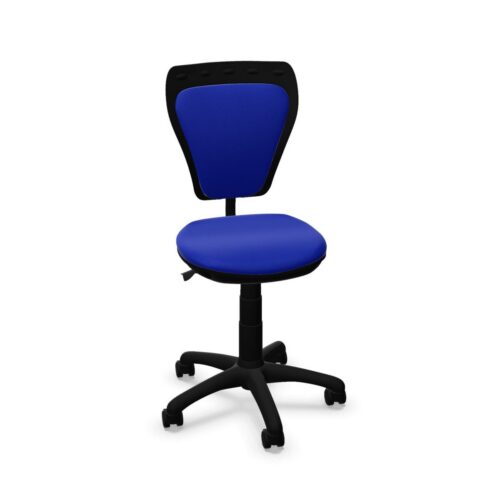


Education chairs support teaching, learning and training environments where seating needs to suit changing groups, varied activities and regular use. On Myntwork, this term brings together office-chair styles that can be considered for classrooms, seminar rooms, training suites, libraries and other education-focused spaces.
Rather than describing one fixed construction, an education chair is a typology based on its intended setting. Individual products may differ in their frame, base, upholstery, mobility, arm options and adjustability, so it is important to review each specification alongside the way the room will be used.
What is an education chair?
An education chair is seating selected for environments centred on instruction, study, group discussion or practical training. It may be used by learners, tutors, support staff or visitors, depending on the room layout and the planned duration of use.
These chairs often need to work within spaces that change character during the day: a room may host a lecture in the morning, collaborative work later on and a staff briefing afterwards. The appropriate model depends on whether occupants will be mainly listening, writing, using screens, meeting in groups or moving between activities.
Why chair selection matters in learning spaces
Seating contributes to how straightforward a room is to organise and how comfortably people can take part. In an educational setting, procurement decisions usually need to balance the expected number of users, the available floor area, the type of tables or desks already in place and the level of flexibility required.
- Chairs with a compact footprint can help maintain circulation around desks, teaching positions and doorways.
- Mobile or easily repositioned seating can suit rooms that are frequently rearranged for group work.
- More supportive, adjustable office-chair formats may be relevant where a user is seated for longer periods.
- Consistent chair choices across comparable rooms can simplify planning, replacement and visual coordination.
The needs of a computer room, for example, are not necessarily the same as those of a lecture theatre or a short-session training room. Defining the primary activity before comparing products makes the selection more practical.
Common settings for education chairs
Education chair styles can appear across schools, colleges, universities, learning centres and workplace training areas. They can also be useful in spaces that support learning without being a conventional classroom, such as libraries, project rooms or induction areas.
- Classrooms and seminar rooms arranged around tables or desks
- Training rooms used for presentations, workshops and assessments
- IT suites and study areas where screen work is a regular activity
- Libraries, learning hubs and quiet research spaces
- Staff development rooms and internal training facilities
- Flexible project areas used for discussion and collaborative tasks
Consider the users as well as the room. A chair intended for a tutor workstation may need different adjustment and support options from seating used by attendees during a one-hour session. Where a space accommodates a broad range of people, dimensions and user adjustment can be especially relevant.
Chair formats to compare
The education chair category can include several office-chair formats. A task-style chair may suit study desks, teaching workstations and computer-based learning, while a simpler meeting or multipurpose chair can be appropriate for seminars and short-duration sessions. Chairs on castors can assist with reconfiguration on suitable floors, whereas fixed-base options can offer a more settled layout.
Upholstered, mesh, plastic and mixed-material designs each create a different feel and maintenance consideration. Upholstery may be selected to coordinate with an interior scheme; wipeable or hard-surface elements may be considered where routine cleaning is a priority. These are product-specific matters, rather than universal characteristics of education chairs.
How to choose education seating
Start with the intended activity and the length of a typical session. Then assess the room as a working environment, including table heights, desk clearances, storage, power access, floor finish and routes through the space. A chair should complement these practical details rather than be considered in isolation.
Questions to consider
- Will the chair be used principally for teaching, screen work, meetings or independent study?
- How long are users likely to remain seated at one time?
- Does the layout need to be reset between classes or training sessions?
- Are castors, armrests, height adjustment or a particular base type appropriate for the task?
- What space is available when chairs are in use and when the room is being cleared?
- Which materials and finishes align with the wider interior and cleaning routine?
- Is the chair for a dedicated workstation or shared by a changing group of users?
For desk-based use, check that the chair’s adjustment range and arm configuration work with the specified work surface. For shared learning rooms, it can be useful to plan a small trial layout first, confirming circulation and how readily the furniture can be moved.
Planning a flexible learning environment
Flexible education spaces are often designed to support both concentration and interaction. Seating can help make that possible when its format is matched to the planned layouts. A room with rows facing a presenter has different demands from one organised into small teams, and neither arrangement will automatically suit every chair.
Think about the number of layouts the space must support. If the room is largely fixed, prioritising a consistent seating position may be appropriate. If teaching methods require frequent change, consider the effort involved in moving chairs, the clear storage or stacking requirements where applicable, and whether the chosen configuration remains comfortable and functional at each stage.
Coordinating chairs with the wider furniture scheme
Education seating is usually part of a broader furniture plan that may include desks, tables, storage and staff workstations. Base finish, shell or upholstery colour, material texture and overall scale can all affect how coherent the room feels. When comparing alternatives, distinguish between the visible finish and the operational features that users will notice every day.
It is also useful to separate the learner seating requirement from staff and administration needs. A coordinated palette can be maintained while selecting different chair types for distinct tasks. This approach gives each area furniture suited to its role without making the wider environment feel disconnected.
Related Myntwork ranges
Browse the wider selection of office chairs to compare seating types for learning, training and workstation settings. For further guidance on adjustment, use patterns and key considerations, see Myntwork’s resource on how to choose an office chair.