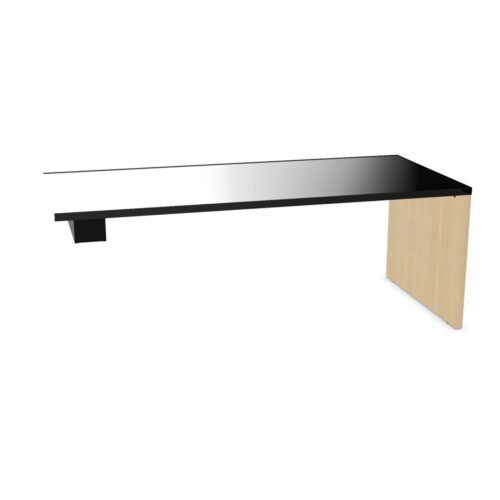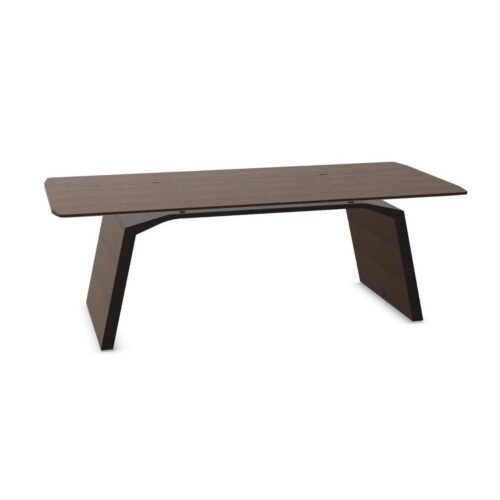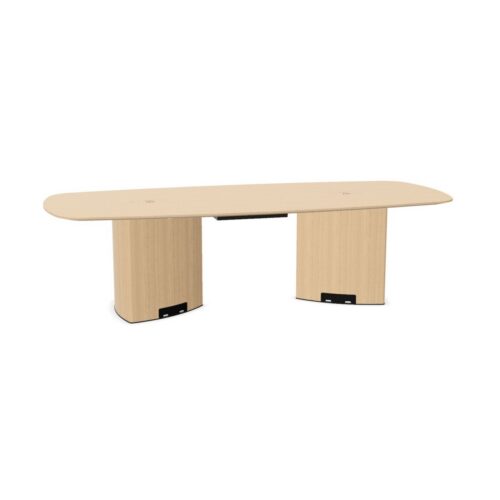


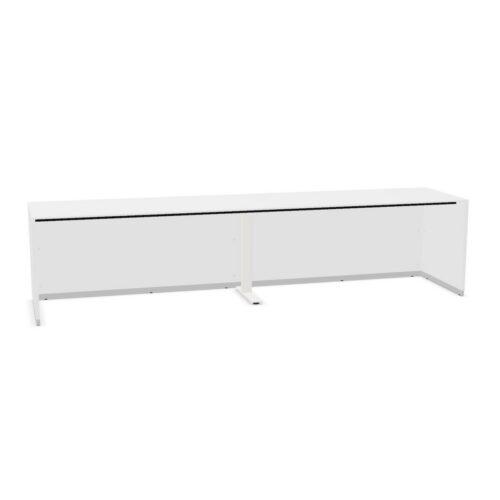
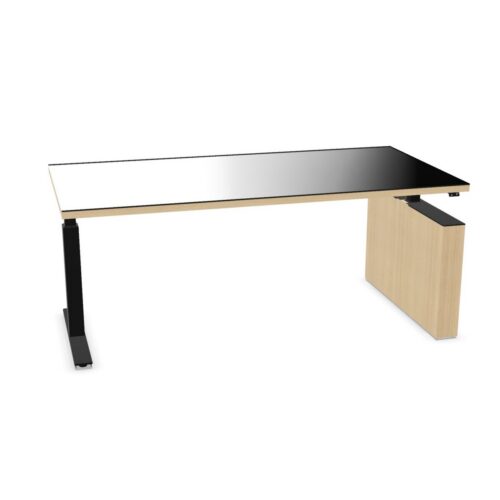
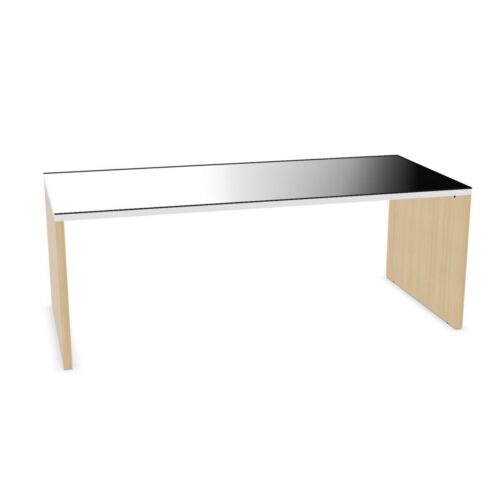
Panel leg desks and tables use broad, solid-looking side supports rather than individual legs positioned at each corner. The frame geometry creates a clean, continuous outline that suits a wide range of workplace settings, from individual workstations to meeting rooms and shared project areas.
On this page, Frame type refers specifically to the supporting structure beneath the worktop. A panel leg is not a statement about the desk’s overall colour, surface finish, storage provision or cable management; those details vary by product. It describes the form of the end supports and the visual character they give to the furniture.
What is a panel leg frame?
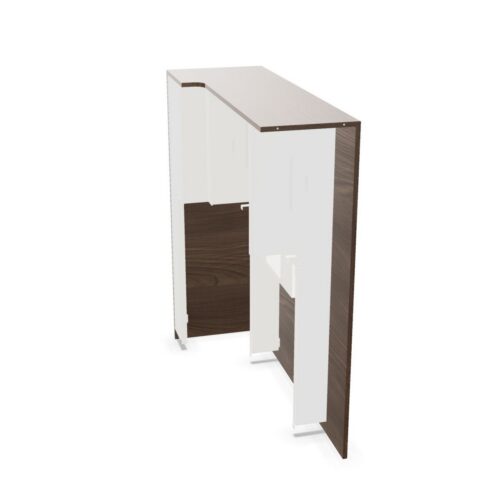
A panel leg frame normally consists of two vertical end panels joined by rails, a modesty panel or another structural element beneath the top. The panels run down towards the floor, creating wider supports than a conventional four-leg frame. Depending on the design, they may sit flush with the ends of the top or be set slightly inwards.
This construction is common in desking and tables because it gives the piece a balanced, substantial appearance without relying on a separate underframe. Panel legs can be made from the same material and finish as the worktop, or be deliberately contrasted with it. The exact dimensions, fittings and construction differ between ranges, so it is useful to check the individual product specification before selecting a layout.
Why choose panel leg furniture?
Panel leg geometry is often selected for its straightforward appearance and its suitability for organised workplace schemes. The broad side supports can make a desk or table feel visually anchored, particularly in rooms with simple architectural lines or coordinated storage and cabinetry.
- A consistent, structured look for banks of desks and meeting-room furniture.
- End supports that can complement wood-effect, plain or contrasting worktop finishes.
- A frame style that works well in both cellular offices and open-plan arrangements.
- A familiar format for individual desks, benching configurations and larger table tops.
- A clear visual boundary at either end of the work surface.
The right choice still depends on how the furniture will be used. A panel leg may be suitable where a formal, furniture-led aesthetic is required, while a different frame type may be preferable where unrestricted leg room at all sides, mobile use or a more lightweight visual effect is the priority.
Typical workplace applications
Panel leg frames appear across many office environments. At an individual workstation, they provide a conventional desk profile that can sit neatly against a wall, in a private office or within a row of workstations. In a management or executive setting, the more substantial end-panel form can coordinate well with matching pedestals, cupboards and meeting furniture.
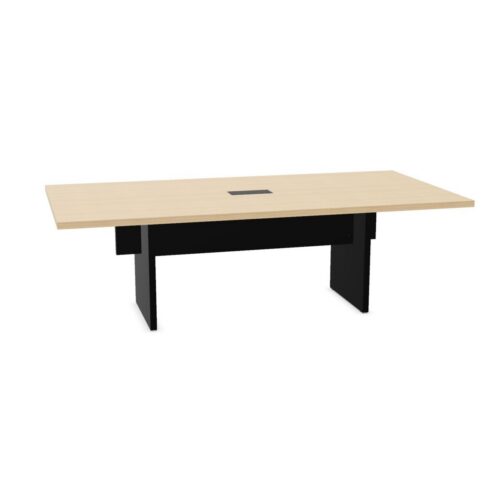
For collaborative spaces, panel leg tables can create a composed central surface for discussions, presentations and day-to-day project work. Larger tops may be used in meeting rooms, although the location of supports should be considered carefully in relation to chair positions and the number of people expected to sit around the table. Browse the wider selection of conference tables when planning a dedicated meeting space.
Desk and table formats available with panel legs
The panel leg style can be found on more than one type of workplace furniture. Product listings on this archive may include variations in top shape, dimensions, finishes and configurations, even though they share the same underlying frame geometry.
- Rectangular desks for focused individual work.
- Return desks and workstations that support more than one work zone.
- Shared desks and linked layouts for teams.
- Meeting and project tables with larger central work surfaces.
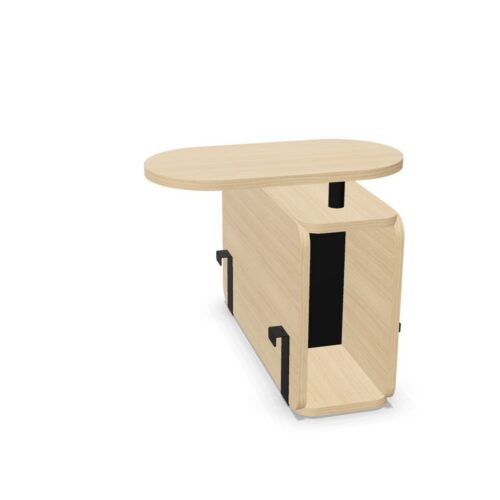
- Tables intended for training, touch-down work or informal collaboration.
Not every panel leg product is intended for the same setting. Compare the footprint, top size and supporting components of each model rather than choosing solely on the appearance of the frame. For everyday workstation planning, the complete range of office desks provides useful context across different desk styles.
Planning leg room and seating
The placement of panel legs is an important practical consideration. Because the supports are wider than individual metal or timber legs, they can affect where a chair is most comfortably positioned, especially at the ends of a table. This is not necessarily a disadvantage: at a desk, the panels can create a defined personal work area and a tidy visual division between neighbouring positions.
For meeting tables, consider the number of attendees, the preferred seating pattern and whether end seats are needed. Measure the clear space between the panels, not simply the overall width of the top. Also account for task chairs with arms, visitors’ chairs and any accessible seating requirements within the room layout.
Choosing a panel leg desk or table
Start with the intended activity and room dimensions. A compact desk may be appropriate for a focused workstation, whereas a wider top can accommodate monitors, documents and shared equipment. In meeting spaces, table length and depth should reflect the expected group size as well as the circulation space around it.
Questions to consider
- Where will people sit in relation to the end panels?
- Does the clear width beneath the top suit the users and chairs planned for the space?
- Will the furniture stand alone, align in a run, or form part of a larger workstation arrangement?
- Which top finish and panel finish will work with existing office furniture and interiors?
- Are power access, cable routing, screens, storage or modesty panels required for the chosen application?
- Does the room need a desk for one person, a shared work surface or a table for group use?
Review product dimensions alongside room plans, especially when combining several desks. A panel leg silhouette can look particularly orderly when furniture is aligned, but sufficient space for movement, chair use and access to storage remains essential.
Coordinating frame type with the wider scheme
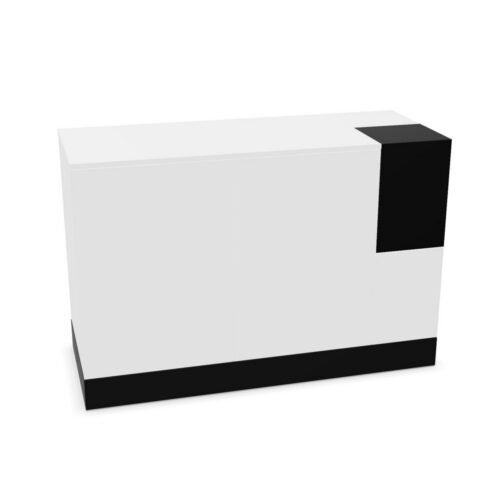
Frame type is one part of a considered furniture specification. Panel legs may be selected to echo the solid planes of storage units, reception counters or architectural joinery, or to introduce a calmer alternative to more exposed underframes. Their appearance can range from understated to more prominent depending on the chosen finish and worktop proportions.
When specifying several pieces, check whether the relevant range offers compatible desk sizes, meeting tables and supporting furniture. This helps maintain a coherent visual language while allowing each area to serve its own function. Use this panel leg archive to compare available configurations, then refer to the desks and conference-table categories for related workplace furniture.
Bralco

Bralco

Bralco







Bralco