


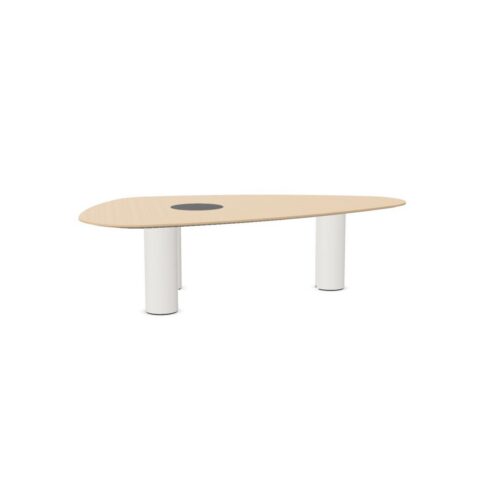

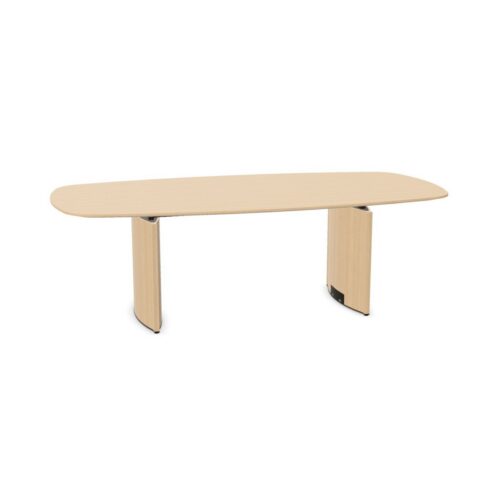


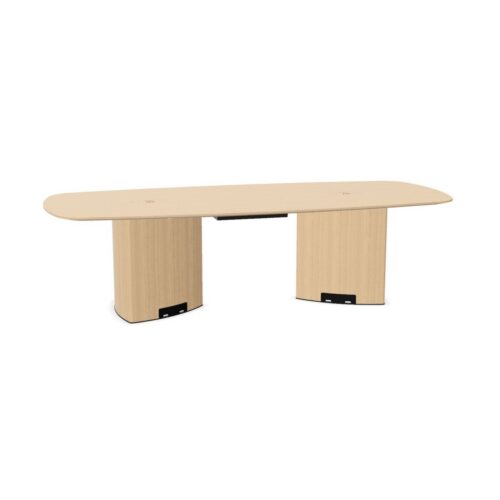


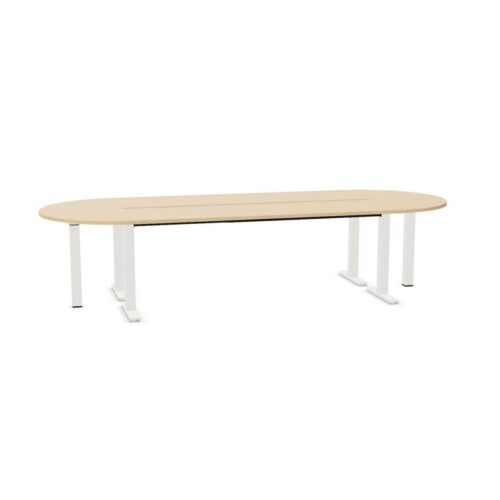



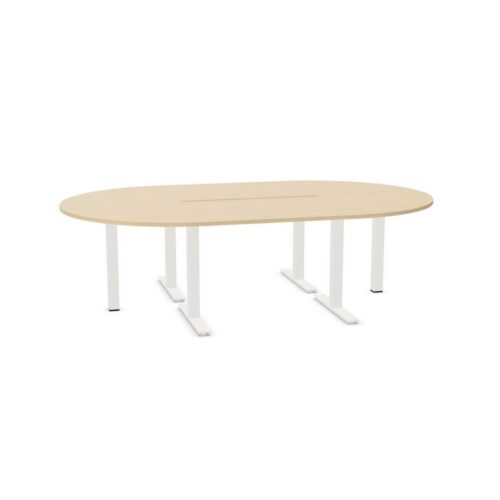

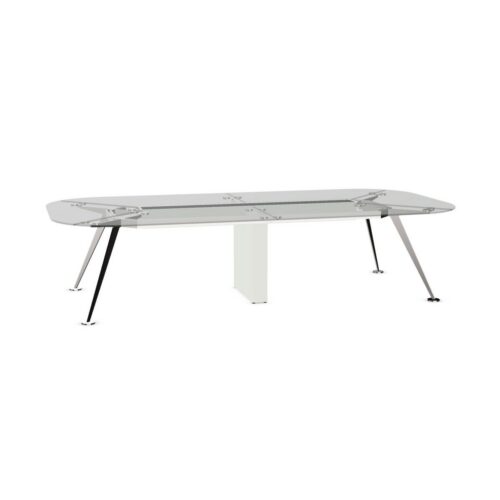
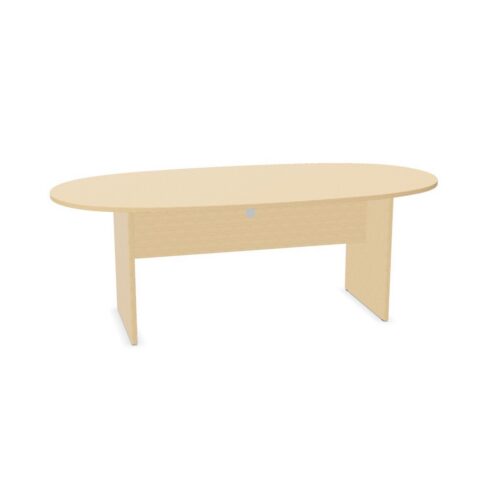
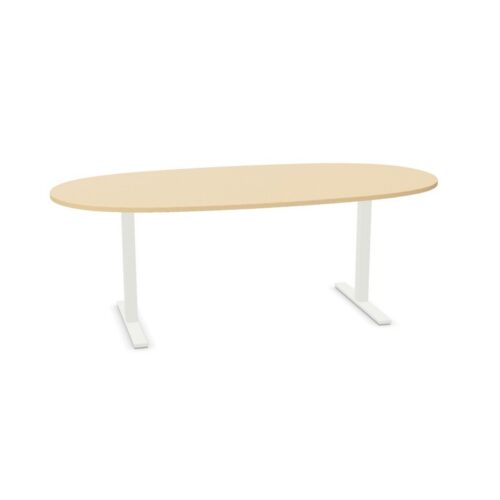
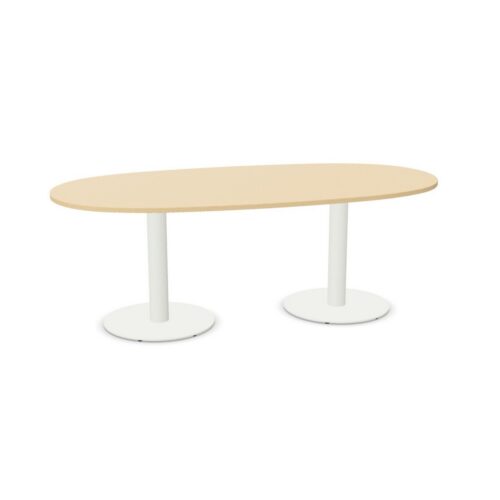



Conference Tables With Oval Tops for Mixed Agendas
A meeting that begins with a presentation may finish with everyone reviewing a shared document. Plan the oval tabletop around both activities. Identify where presentation viewers will sit, then consider how those positions work when attention returns to the table. Avoid making a seat useful for only one part of the agenda. Shared materials should have an agreed place that does not force participants to reach across another person's work. The curved ends deserve particular attention because the relationship between chair direction, tabletop edge and presentation wall can differ from the positions along the sides.
Decide How the Ends Will Be Used
An oval outline has recognizable ends without the corner positions of a rectangular top. Decide whether those ends will serve as regular working places, occasional seats or clear areas during particular meetings. That decision should follow the actual seating arrangement and room use. Do not assume that an end position must belong to the meeting leader. If facilitation rotates, consider how participants can direct attention toward different speakers. Review the approach to each chair as well: a seat may look neatly positioned while still being inconvenient to reach once neighboring chairs are occupied.
