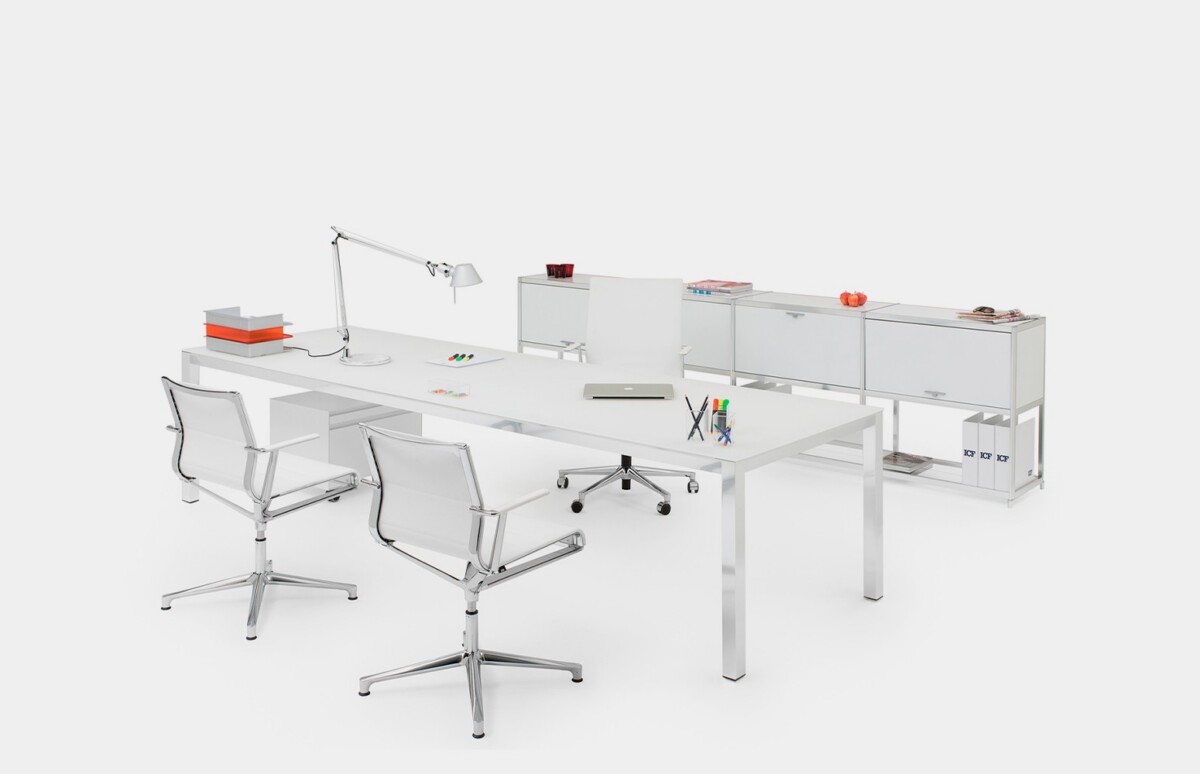
Planning an ICF P50 workstation
The P50 family is a practical choice when a project needs individual desks with a consistent visual language. Use the smaller widths where floor area is limited or where workstations are arranged in compact rows. Wider versions can provide more room for monitors, paperwork and everyday accessories, or support a more generous individual work surface.
The two available depths also help with layout decisions. An 80 cm deep desk can suit a more space-conscious plan, while a 100 cm depth may be preferable when the workstation needs additional front-to-back room. Always compare the selected desk dimensions with circulation space, storage positions and the placement of power and data connections.
Compare the P50 configurations
Begin by identifying whether the desk will be used as a fixed or adjustable workstation. Adjustable models can be considered for workplaces where users need more flexibility in positioning, while fixed models may be appropriate when the desk height is already established across the office.
Next, compare width and depth rather than relying only on the model name. The collection includes 140, 160, 180, 210 and 240 cm widths, with 80 and 100 cm depths represented in the range. Check the individual product details to confirm the dimensions and adjustment specification of the configuration being considered.
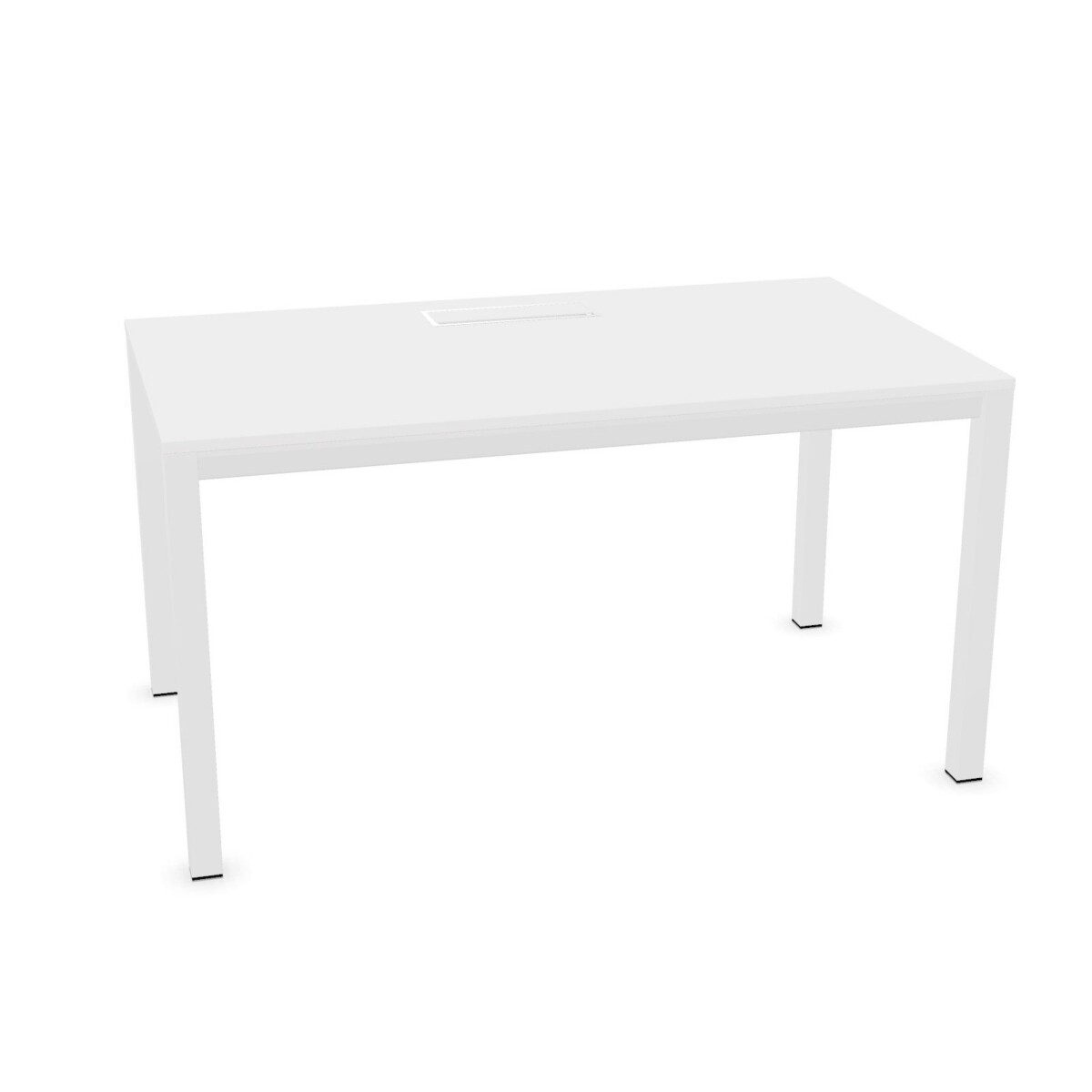
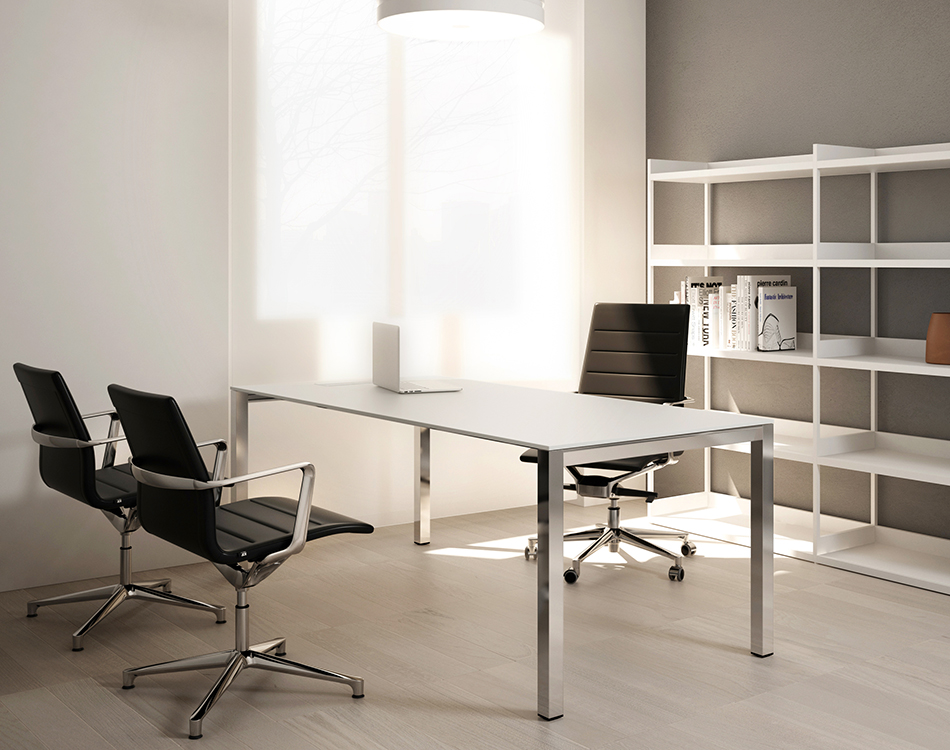
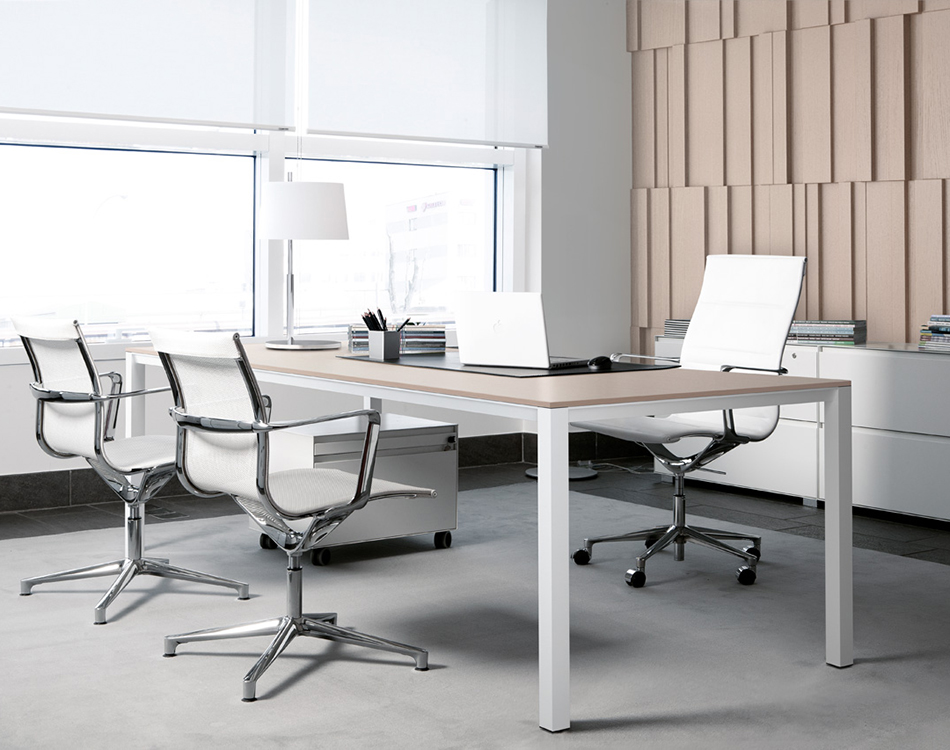
The family uses white melamine worktops with ABS edges and painted steel or metal structures. These materials provide a consistent basis for combining different P50 sizes in one project. The four-leg or straight-leg base format supports the collection’s simple rectangular design.
Cable management and installation checks
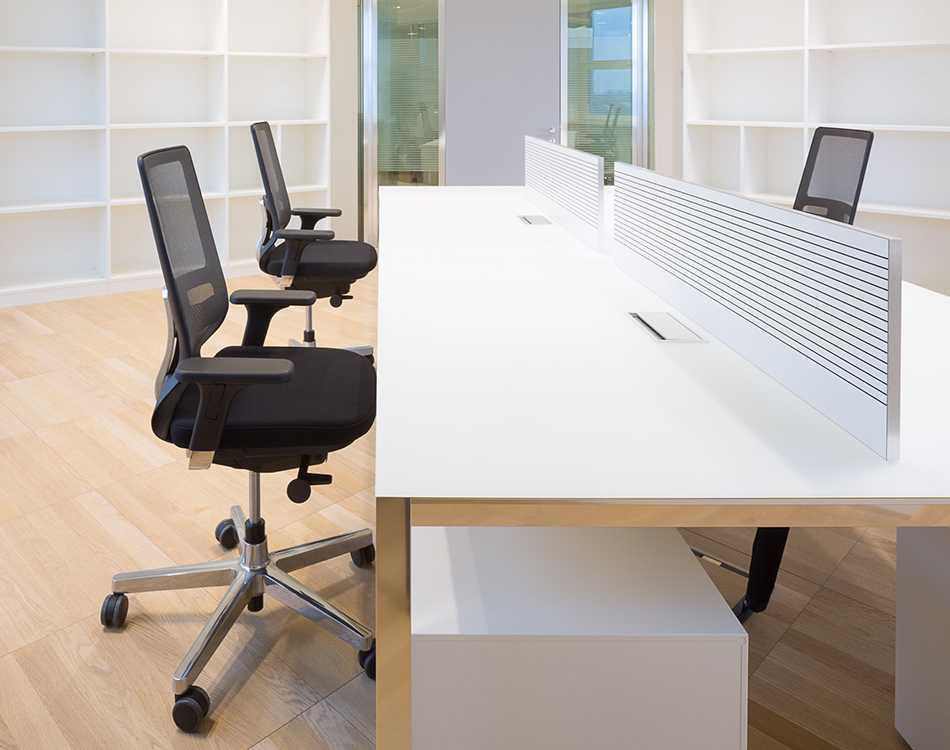
P50 desks are suitable for cable-tray use, but a cable tray is not included. If the workstation will use monitors, docking stations or other powered equipment, plan the cable-management components separately and confirm how they will fit with the selected configuration.
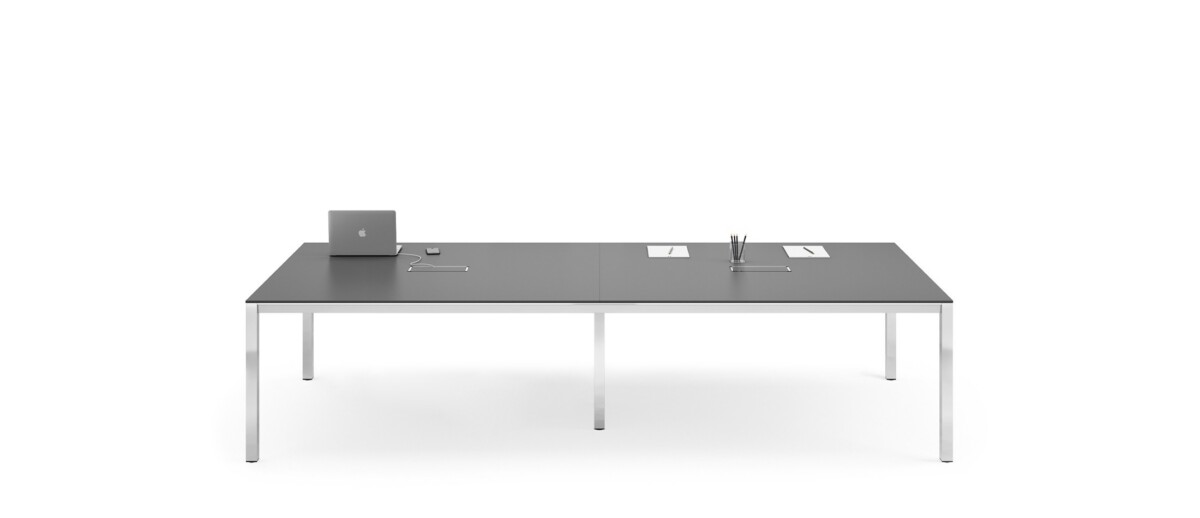
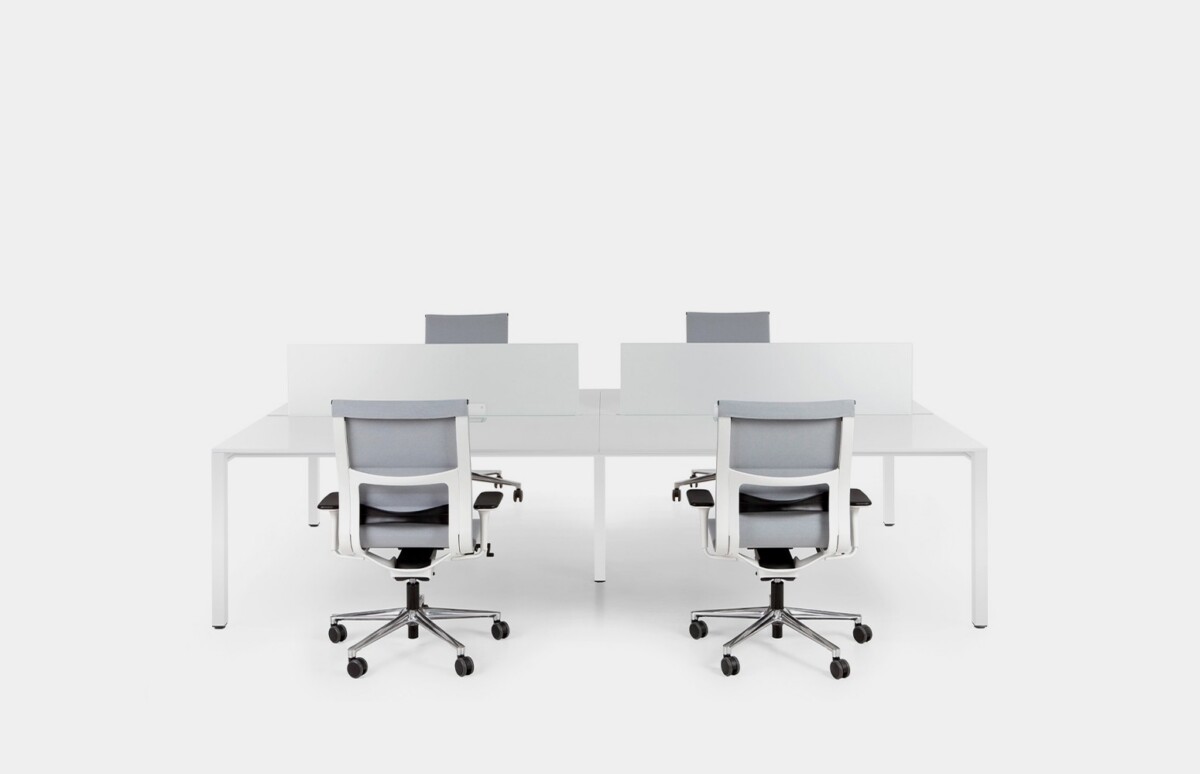
The desks are not linkable, so grouped installations should be planned as separate units. Before ordering, check the required number of workstations, the available room dimensions, power access and the clearances needed for users to sit and move comfortably.
Review the product information
Each P50 configuration should be checked for its exact size, adjustment status and frame description before it is specified. The available documentation includes user manuals, dimension information and an Environmental Product Declaration. The collection carries a two-year warranty, and its circular attribute may also be relevant to projects with longer-term furniture planning goals.
Myntwork offers ICF P50 desks on a monthly lease, allowing businesses to consider the collection as part of a flexible workplace furnishing plan. Compare the available models first, then confirm the selected configuration and the accessories needed for the completed workstation.
Frequently asked questions about ICF Desk P50
What is the main difference between the ICF P50 desk models?
The models differ mainly by available dimensions, adjustment status and product naming around the top or painted structure. All are rectangular, one-person desk configurations with white melamine tops and painted steel or metal bases, so check each listing for its exact specification.
Which P50 desk size should I choose?
Choose from widths of 140, 160, 180, 210 and 240 cm, with depths of 80 or 100 cm. Base the choice on the room layout, circulation requirements and how much equipment or paperwork the user needs on the desk.
Are all ICF P50 desks height adjustable?
No. Adjustment varies within the collection. Compare the individual configurations to confirm whether the selected desk is adjustable or fixed before specifying it for the project.
Can I add a cable tray to an ICF P50 desk?
The P50 desks are suitable for cable-tray use, but the cable tray is not included. Plan the required cable-management accessory separately and confirm compatibility with the chosen desk configuration.
Can P50 desks be linked together?
No. The collection is listed as not linkable. Grouped workstations should therefore be planned as separate desks, with sufficient space for circulation, seating and access to power.